
The most effective 6 ways to speed up your trip to the DMV include booking early morning midweek appointments, auditing vehicle titles for signature errors, securing physical VIN verifications ahead of time, calculating registration fees in advance, carrying state compliance documentation, or choosing remote paperwork support. Using these targeted preparation methods stops counter rejections and eliminates unnecessary waiting room delays.
What Are 6 Ways To Speed Up Your Trip To The DMV for Powersport Owners?
Updated on October 20, 2026
Pre-checking every detail of your motorcycle or side-by-side transaction before entering a state branch cuts counter delays significantly. Powersport titles present unique classification codes that often confuse customer service clerks. Taking specific preparatory measures keeps your application moving forward without friction.
- Schedule Midweek Morning Appointments: Tuesday and Wednesday mornings between 8:30 AM and 10:00 AM experience the lowest foot traffic in county offices. Branch counters see peak crowds during lunch hours, Fridays, and days following federal holidays.
- Audit Title Signatures and Odometer Statements: Counter clerks instantly void transactions when a title document shows crossed-out lines, unverified odometer discrepancies, or signatures in incorrect buyer blocks. Check that the seller signature precisely mirrors the printed name on the face of the document.
- Complete Physical VIN Verifications in Advance: Out-of-state motorcycles, custom choppers, and off-road conversions often demand physical verification of the serial number and engine case stamp. Booking a local peace officer or licensed inspection station before your visit satisfies this step before standing in line.
- Calculate Exact County Fees and Titling Costs: Many state field offices refuse credit cards or charge hefty transaction surcharges, while others reject cash altogether. Contact your county clerk or use state fee charts to bring an exact cashier check or money order.
- Carry Full Street-Legal Compliance Documentation: When titling an off-highway motorcycle or UTV for highway travel, bring safety equipment receipts and signed inspection affidavits. Showing documented proof of DOT-compliant lights, horn, mirrors, and tires prevents an immediate clerk rejection.
- Select Remote Paperwork Support: The fastest way to start the registration process for bespoke powersports is bypassing branch visits entirely through specialized private registration assistance. Using remote paperwork support lets titling specialists manage regional filings and plate delivery directly.
Why Do Motorcycle and UTV Titles Cause Delays at the Counter?
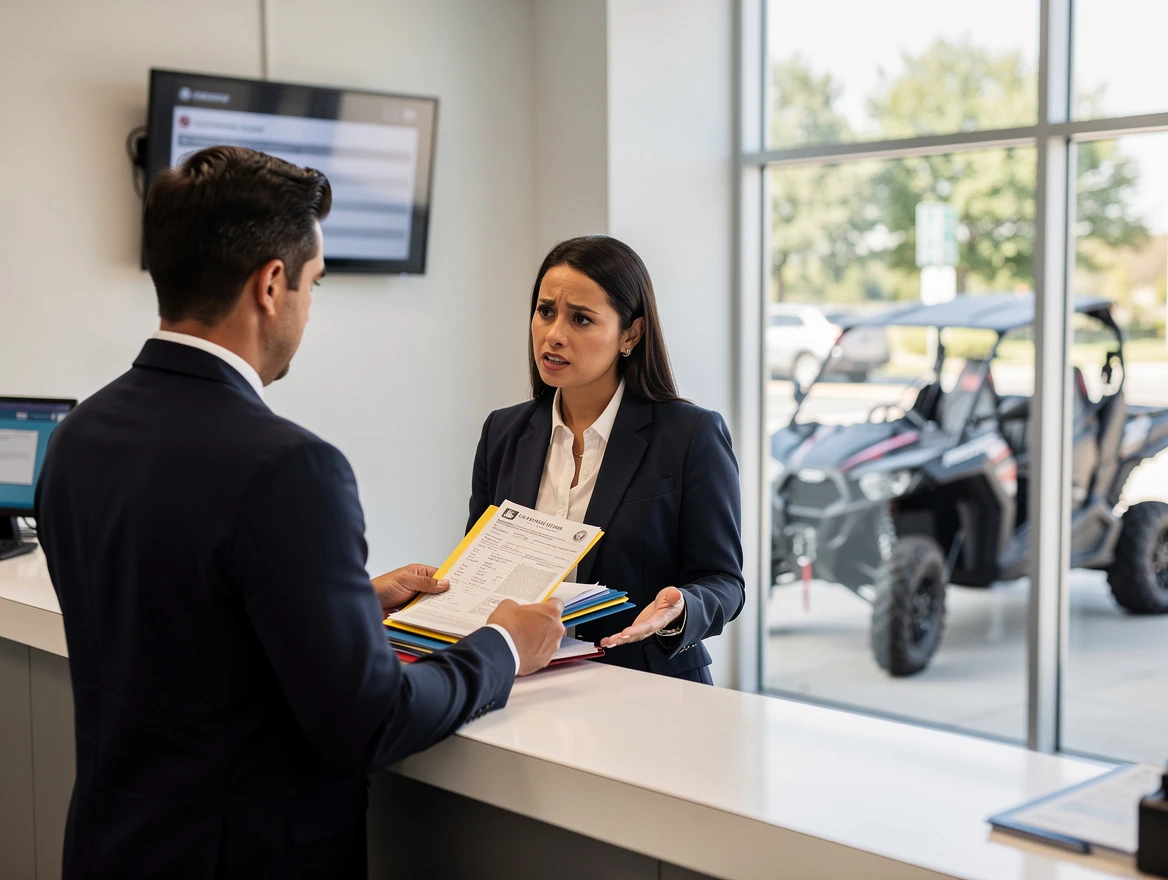
Powersport documents cause extensive counter delays because off-highway vehicles and custom motorcycles rarely fit standard passenger automobile workflows. Clerks must manually verify body type codes, emissions exemptions, and Manufacturer Statements of Origin (MSO). One missing brand mark or off-road disclaimer can halt processing on the spot.
Ready to register your vehicle?
Join thousands of vehicle owners who use Ride Legal to handle their registration quickly.
Start Your Bespoke Registration →
Titling mistakes remain common among riders purchasing machines from private sellers or specialty auctions. When title paperwork lacks clear chain-of-ownership signatures, counter staff are instructed to reject the request immediately. A detailed breakdown of common filing pitfalls is available in common mistakes to avoid when registering your vehicle, and how to do it right, which helps riders correct documentation discrepancies before standing in line.
Older machines present additional hurdles, especially when previous owners misplaced ownership certificates. Before traveling to a state counter, understand how bonded titles or replacement certificates function. Reviewing Have a Motorcycle With No Title? Here’s How to Get One clarifies what records you must gather to prove legal ownership.
| Registration Method | Average Wait Time | Counter Rejection Risk | Preparation Effort |
|---|---|---|---|
| Walk-In DMV Visit | 2 to 4 Hours | High (30% to 45%) | Intense (Manual verification) |
| Scheduled Appointment | 30 to 60 Minutes | Moderate (15% to 25%) | High (Checklist audit) |
| Remote Paperwork Support | Zero Wait Time | Extremely Low (Under 1%) | Minimal (Concierge handling) |
How Can You Prepare Your Powersport Paperwork Before Walking In?
Preparing powersport paperwork requires organizing all title transfers, bills of sale, and proof of identification into a sequential packet. Clerks handle submissions with greater speed when papers follow state intake sequence. Having copies ready prevents having to step out of line for duplicate printouts.
- Obtain the Original Certificate of Title or MSO: Verify that the previous owner signed over the title properly. Make sure no white-out, pen scribbles, or altered dates appear on the certificate.
- Prepare a Bill of Sale With Full Machine Details: Clearly record the vehicle identification number, year, make, engine displacement, purchase date, and agreed purchase price. Both buyer and seller must sign this document.
- Gather Proof of Financial Responsibility: State branches mandate an active insurance card showing the specific motorcycle or UTV VIN with active policy dates. Digital insurance copies on mobile phones are accepted in most states, but printed slips avoid device battery or connectivity failures.
- Complete Pre-Filled State Application Forms: Download your regional vehicle registration form online and complete all sections in blue or black ink. Leaving lines blank forces clerks to pause processing and question your paperwork.
Document management has evolved over recent years. Learning Why Digital Vehicle Paperwork Is Changing the DMV Experience shows how modern databases and digital workflows affect counter transaction speeds.
What Equipment Must You Document for Street-Legal Conversion at the Agency?
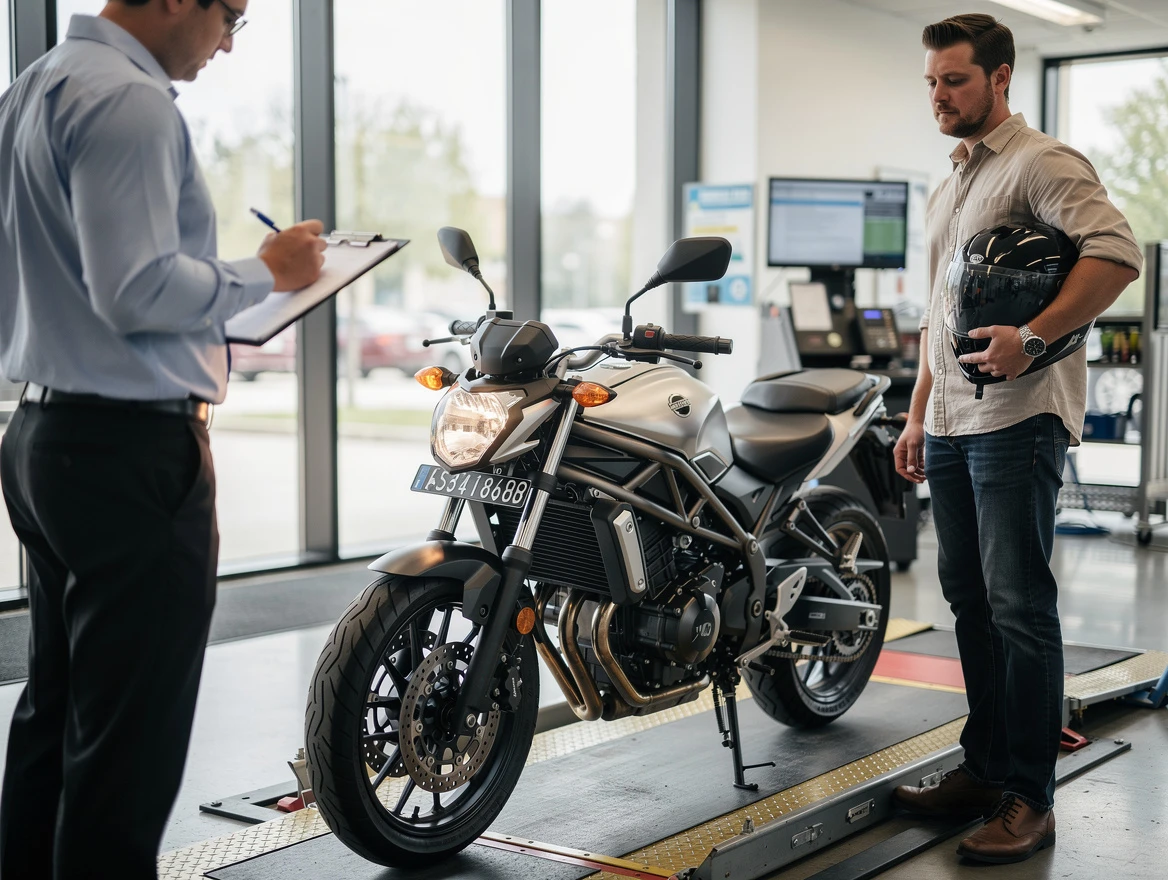
Converting an off-road bike or side-by-side to street-legal highway status requires proving that the machine carries all mandated road equipment. In many states, clerks cannot issue street-legal license plates without a certified inspection slip signed by an authorized mechanic or officer. Checking hardware before booking your trip avoids a failed transaction.
- DOT-Approved Headlight and Tail Lamp: Lights must include high and low beam functionality along with an integrated brake light triggered by foot and hand controls.
- Rearview Mirrors: Most states demand at least one rearview mirror mounted on the driver side, while others require dual mirrors offering 200 feet of unobstructed rear visibility.
- Audible Warning Device: An electric horn audible from a distance of 200 feet is mandatory for road operation.
- DOT-Compliant Street Tires: Motocross knobs lacking DOT stamps fail inspection checkpoints immediately.
- Lighted License Plate Bracket: Rear plate mounts must carry a dedicated white lamp illuminating the plate characters from 50 feet away.
State regulations vary widely regarding converted powersports. For example, the Street Legal UTV Guide: Montana details how Montana accommodates side-by-sides with simple safety hardware compared to strict states like California.
Riders seeking an effortless path for bespoke dual-sport machines frequently evaluate our street-legal registration assistance, which bypasses confusing local counter rules by securing valid plates through friendly jurisdictions.
How Does Serial Number Verification Prevent DMV Return Trips?
Serial number verification confirms that a motorcycle frame and engine match state records and national anti-theft registries. When a rider brings a custom build, an imported motorcycle, or an out-of-state dirt bike, the clerk cannot finalize the title without an official physical check. Verifying these characters in advance eliminates the most common cause of multi-visit DMV trips.
You can run free preliminary checks using the NHTSA VIN Lookup tool to confirm year, make, and safety recalls on standard road bikes. For rare collector motorcycles or custom builds, professional documentation is essential. If you own high-value machines, discovering Why Experience Matters When Registering High-Value Vehicles explains how professional title specialists manage complex VIN verifications.
If you prefer not to wait in lines, many riders look at alternative registration routes. Reviewing What's the Easiest Way to Register a Vehicle? highlights how remote state filings provide efficient compliance for busy vehicle collectors.
Frequently Asked Questions About Agency Visits
What is the best day of the week to visit the agency?
Tuesday and Wednesday mornings between 8:30 AM and 10:00 AM provide the shortest waiting times. Avoid Mondays, Fridays, and any working day immediately before or after a state holiday. Visiting during mid-month dates also reduces lines compared to the first and last days of the calendar month.
Can I register a motorcycle without an appointment?
Many state field offices accept walk-ins, but wait times often exceed two hours depending on branch volume. Booking an appointment online guarantees your place in the processing queue. Some regional branches now operate on an appointment-only schedule, making advance reservations mandatory before entering the facility.
Why do clerks reject dirt bike and UTV titles?
Clerks reject powersport paperwork when titles carry off-road designations, missing emissions certifications, or incomplete equipment checklists. If the certificate states For Off-Road Use Only, the clerk cannot issue a street license plate without a formal conversion inspection report confirming road-legal equipment installations.
How long does a motorcycle VIN inspection take?
A physical serial number verification typically takes ten to fifteen minutes when conducted by a local police officer or licensed inspection mechanic. The inspector examines the frame headstock stamp, matches it against engine casing numbers, and signs an affidavit verifying that the numbers match the title certificate.
What happens if my powersport title has an erasure or strike-through?
Any strike-through, alteration, or correction fluid on a certificate of title immediately voids the document at the counter. The state branch will require a formal affidavit of correction signed by the seller or a duplicate title application, which adds weeks of delay to the registration process.
Stay Updated
Get the latest on registration tips, LLC insights, and exclusive offers.
No spam. Unsubscribe anytime.
This is not legal or financial advice. Please consult your CPA/Attorney for all legal and financial guidance. Ride Legal is a privately owned website and is not operated by any government agency.