
If you've bought an RV without a title and the previous owner registered it in your name, the answer depends on your state's title transfer rules and whether the original owner completed proper paperwork. In most states, the DMV will not issue a new title to you automatically, even if the owner registered the vehicle in your name. You must work through the title transfer process yourself, often requiring the original owner's signature on the title document or working with a bonded title if the title is truly missing.
What Happens When You Buy an RV Without a Title?
Updated on November 16, 2026
Purchasing an RV without a title creates a paperwork problem that you must resolve before you can register and operate the vehicle. The title is proof of ownership, and without it, the state has no documented evidence that the previous owner had the right to sell it to you. Even if the previous owner registered the RV in your name, that registration is temporary and incomplete without the title document backing it up.
- The registration in your name does not replace the need for a title
- RV titles prove ownership and are required for insurance
- Many states will not renew an RV registration without a valid title on file
- You may face penalties if you operate an unregistered RV
Why Didn't the Previous Owner Sign and Transfer the Title?
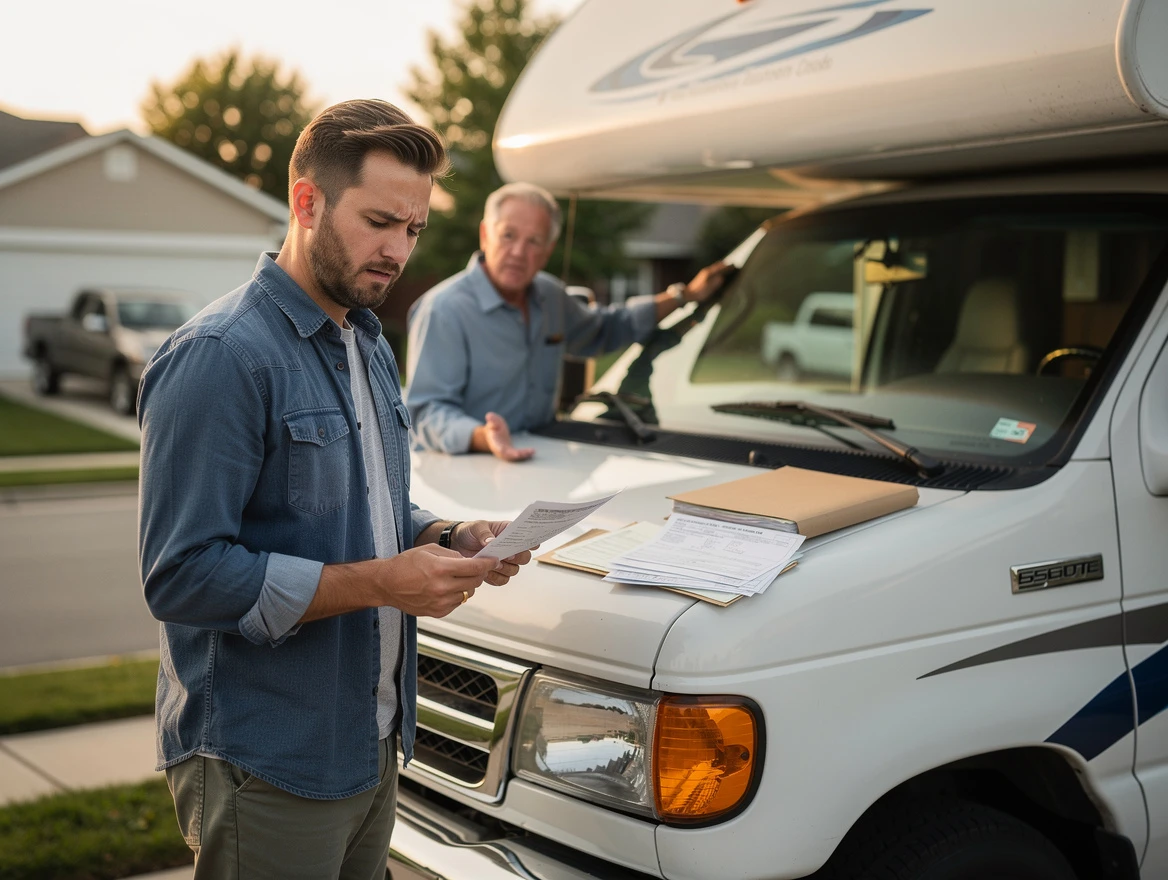
The most common reason you're facing this situation is that the previous owner failed to complete the title transfer paperwork at the time of sale. This can happen for several reasons, and understanding why matters when you approach the DMV or pursue a bonded title.
Ready to register your vehicle?
Join thousands of vehicle owners who use Ride Legal to handle their registration quickly.
Start Your Bespoke Registration →
- The owner lost the title document and never replaced it
- The owner simply forgot or delayed completing the transfer
- The title was damaged or illegible and was never formally replaced
- The owner purchased the RV without a title and never resolved the issue
- The owner bought the RV from a private seller who also didn't have the title
If the original owner is still willing to work with you, they may be able to request a duplicate title from the DMV in their state. If they're unwilling or unreachable, you'll need to pursue a bonded title or other title recovery options.
What Do Most State DMVs Do When a Title Is Missing?
State DMVs handle missing titles through a few standard processes. When you can't produce the original title during registration, the DMV will typically ask you to either locate the title or pursue a formal title replacement process.
| DMV Response | What It Means | Your Next Step |
|---|---|---|
| Request duplicate title from previous owner | The original owner can request a replacement title from their state | Contact the owner and ask them to request a duplicate title |
| Bonded title option available | You can post a bond and obtain a title without the original document | Purchase a title bond and file for a bonded title with your DMV |
| Affidavit of ownership | Some states accept a sworn statement that you own the vehicle | Prepare an affidavit and submit with other ownership documentation |
| Conditional registration only | Your registration is temporary until the title issue is resolved | Resolve the title within the allowed timeframe (typically 30-60 days) |
Can You Get a Title If the Previous Owner Won't Cooperate?
If the previous owner refuses to sign the title transfer or help you obtain a duplicate title, you still have options. A bonded title is the most practical solution when the original owner is unavailable or unwilling to participate in the transfer process.
- A bonded title allows you to claim ownership without the original title
- You purchase a title bond (usually $50-$500 depending on RV value) from an insurance company or title assistance service
- The bond protects the state against claims from the previous owner
- You submit the bond and your documentation to your state DMV
- After a waiting period (typically 3-7 years), you can convert the bonded title to a standard title
Bonded titles are street-legal and fully valid for registration, insurance, and vehicle operation. Many specialty vehicle owners use bonded titles when dealing with classic vehicles, imported motorcycles, or RVs with missing paperwork.
What Does Your State Require to Transfer an RV Title?

Title transfer requirements vary by state, but all require proof that the sale was legitimate and that you have the right to claim ownership. Contact your state's Motor Vehicle Division to confirm exact requirements for your situation.
- Original title signed by the previous owner (or a duplicate from them)
- Bill of sale or proof of purchase agreement
- Proof of your identity and address (driver's license and utility bill)
- Completed registration application form for your state
- Payment of title transfer and registration fees
- Proof of insurance (many states require this before title issuance)
- Bonded title document if the original title is unavailable
If your RV came from out of state or was imported, additional documentation may be required. Working with a title specialist can simplify this process and make sure you don't miss critical paperwork deadlines.
How Long Does It Take to Get a New Title After Registration?
The timeline depends on which path you take. If the previous owner cooperates and provides a signed title transfer, you can receive a new title within 2-4 weeks. If you pursue a bonded title, the initial process takes 1-2 weeks, but you won't have a standard title until the bond period expires (typically 3-7 years).
- Title transfer with signed original: 2-4 weeks
- Bonded title filing: 1-2 weeks to process, 3-7 years for conversion
- Duplicate title request (if original owner helps): 2-3 weeks
- Affidavit of ownership filing: 1-3 weeks
Get Started with Your RV Title Solution
Avoid Future Title Problems: What You Should Know Before Buying an RV
Now that you're dealing with a missing title, here's what to look for when you buy another vehicle. Always verify that the title exists before you hand over money, and never accept verbal promises that the owner will "handle the paperwork later."
- Always request to see the original title before purchase
- Verify the seller's name matches the title exactly
- Check that the title is not marked as a bonded, branded, or salvage title
- Have the seller sign the title transfer at the time of sale, not later
- Confirm the VIN matches the title and the RV's door jamb
- Get a bill of sale signed and dated by both you and the seller
- Complete the registration transfer within your state's required timeframe
FAQ: RV Titles and Missing Documentation
Can I street-legally drive an RV with no title if it's registered in my name?
No. Registration alone does not establish street-legal ownership or allow you to operate the RV. You need both a valid title and current registration. Driving without a title can result in fines, impoundment, or even criminal charges depending on your state. Prioritize resolving the title issue immediately.
What if I can't find the original owner to sign the title?
If the previous owner is unreachable, a bonded title is your best option. You'll purchase a title bond, submit it with supporting documentation, and the state will issue a bonded title in your name. After the bond period expires (typically 3-7 years), you can convert it to a standard title.
How much does a title bond cost for an RV?
Title bond costs range from $50 to $500, depending on the RV's value and your state's requirements. Some states base the bond amount on the vehicle's assessed value or purchase price. Contact your state DMV or a title assistance service for exact pricing.
Will my insurance cover an RV with a bonded title?
Yes, most insurance companies will cover an RV with a valid bonded title. You'll need to provide proof of the bonded title when applying for insurance. Some insurers may require additional documentation to confirm your ownership claim, but bonded titles are widely accepted.
Can I sell an RV with a bonded title?
Yes, you can sell an RV with a bonded title, but many buyers are hesitant because the title isn't standard. Some states allow you to convert a bonded title to a standard title after the bond period expires (typically 3-7 years). Check your state's rules before selling.
What's the difference between a bonded title and a regular title?
A regular title is the original document proving ownership. A bonded title is a court-issued document that substitutes for the original when it's lost or unavailable. After the bond period expires, you can typically convert a bonded title to a regular title without restriction.
Stay Updated
Get the latest on registration tips, LLC insights, and exclusive offers.
No spam. Unsubscribe anytime.
This is not legal or financial advice. Please consult your CPA/Attorney for all legal and financial guidance. Ride Legal is a privately owned website and is not operated by any government agency.