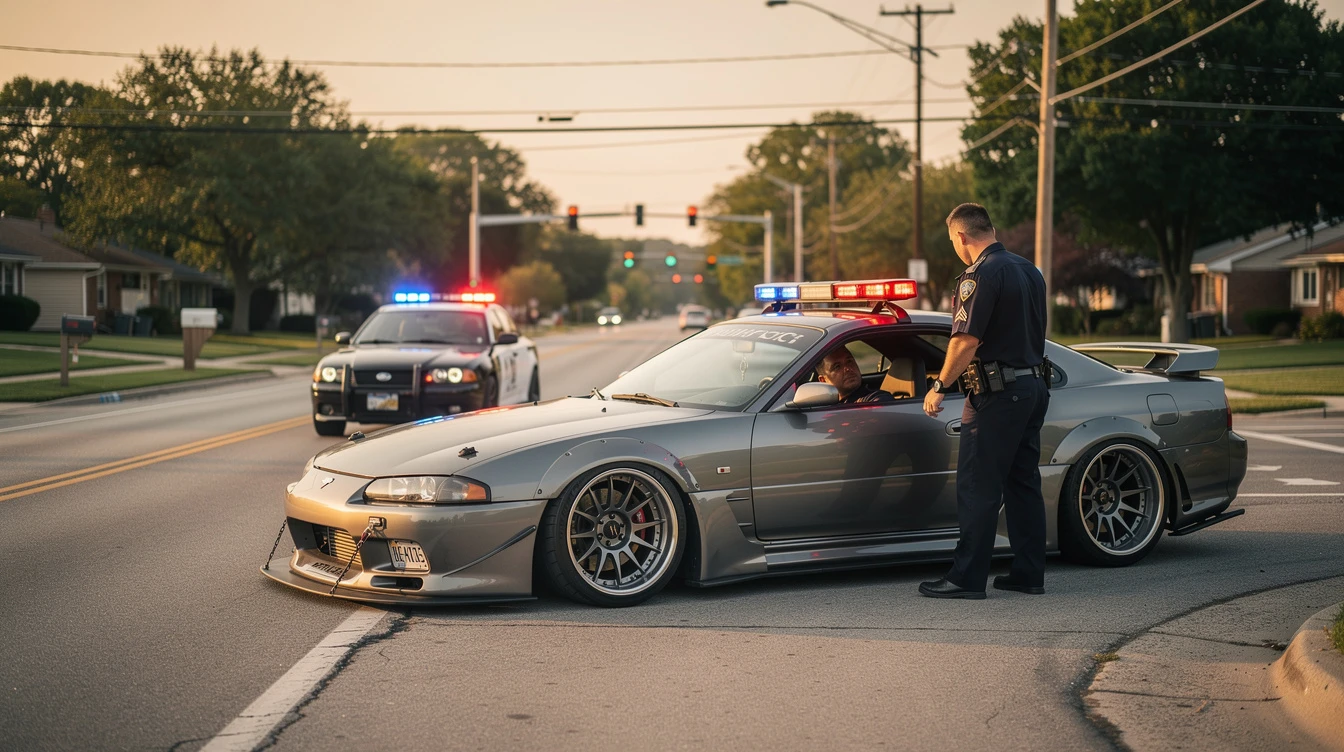
No, you cannot drive a modified car on public roads without registration and insurance anywhere in the United States. Both registration and proof of insurance are required by law, regardless of whether your vehicle is modified or stock. Driving without either one exposes you to citations, fines, vehicle impoundment, and criminal charges in some states.
In This Guide
- Why Is Registration Required for Modified Vehicles?
- What Is Required to Register a Modified Vehicle?
- Do Modified Cars Need Special Insurance?
- Do Modified Vehicles Pass Inspection and Emissions Testing?
- What Are the Consequences of Driving an Unregistered Modified Car?
- Frequently Asked Questions
Why Is Registration Required for Modified Vehicles?
Vehicle registration serves as proof of ownership, establishes liability, and ensures vehicles meet basic safety and environmental standards set by your state. Modifications can affect a vehicle's safety profile, emissions output, and structural integrity, which is why modified vehicles must still comply with registration requirements.
When you modify a vehicle, you're altering its original factory specifications. This changes how it performs, how much pollution it emits, and potentially how safe it is on public roads. Registration tells law enforcement, insurance companies, and other parties that your vehicle is permitted to operate on public roads and that someone is responsible for damages or injuries it causes.
- Registration proves ownership and liability
- It confirms the vehicle meets safety and emissions standards (if applicable in your state)
- Registration allows you to transfer the title if you sell the vehicle
- Insurance companies require registration proof to issue a policy
- Law enforcement uses registration records to verify vehicle compliance during traffic stops
What Is Required to Register a Modified Vehicle with the DMV?

The registration process for a modified vehicle varies slightly by state, but all states require you to report modifications and potentially pass a vehicle inspection. Most states have a formal modification declaration process during registration that documents what changes you've made.
Ready to register your vehicle?
Join thousands of vehicle owners who use Ride Legal to handle their registration quickly.
Start Your Bespoke Registration →
Some modifications are entirely street-legal and don't affect your ability to register (like upgraded wheels, interior modifications, or paint changes). Other modifications, particularly those affecting engine performance, emissions, suspension, or safety systems, may require inspection or engineering certification depending on your state.
- Complete a standard vehicle registration application with modification disclosure
- Provide proof of ownership (title or bill of sale)
- Present a valid driver's license or ID
- Pay the registration fee (amounts vary by state and vehicle type)
- Submit to a vehicle inspection if required by your state for the specific modifications you've made
- Obtain an inspection certificate or modification approval letter from an authorized inspector
- Provide proof of insurance before registration is finalized
Many modified vehicle owners work with private registration specialists who understand state-specific modification rules and can guide you through the approval process. For example, exotic car registration issues and solutions often involve similar compliance steps, especially for performance or high-value vehicles with modifications.
Do Modified Cars Need Special Insurance?
Yes, modified cars typically need special insurance coverage tailored to the vehicle's modifications and actual value. Standard auto insurance policies are designed for factory-stock vehicles and often exclude coverage for damage to custom parts or modifications.
Many insurance companies either deny coverage entirely for heavily modified vehicles or require specific modification endorsements and higher premiums. Some insurers specialize in modified car insurance and understand the unique risks and values involved. It's essential to disclose every modification to your insurer, because failing to do so can result in claim denial.
- Disclose all modifications to your insurance company before purchasing a policy
- Ask about modification coverage or custom parts endorsements
- Some modifications increase insurance rates due to increased performance or replacement costs
- Cosmetic modifications (paint, wheels, interior) typically have less insurance impact than engine or suspension changes
- Engine modifications, superchargers, or turbochargers usually require separate coverage
- Many insurers require a detailed vehicle appraisal for heavily modified cars
Proving insurance is mandatory to complete vehicle registration in every state. When you apply for registration, you must present proof of a current insurance policy that meets your state's minimum liability coverage. Without insurance proof, registration will be denied.
Do Modified Vehicles Pass Inspection and Emissions Testing?
Whether a modified vehicle can pass inspection and emissions testing depends entirely on the type of modification and your state's rules. Some states have no emissions testing at all, while others have strict programs that may reject vehicles with certain modifications.
Engine modifications are the most likely to cause inspection or emissions failures. Turbochargers, superchargers, engine swaps, or tuning changes can alter exhaust emissions and trigger test failures. Suspension, brake, lighting, and body modifications rarely affect emissions results but may require inspection approval depending on how extensively they alter the vehicle's safety systems.
| Modification Type | Likely to Fail Inspection? | Emissions Impact | Requires Certification? |
|---|---|---|---|
| Engine tuning or ECU tune | Yes, often | High risk | Yes, in most states |
| Turbo or supercharger | Yes, often | High risk | Yes, in most states |
| Exhaust system (aftermarket) | Maybe | Medium risk | Depends on state |
| Suspension upgrade | No, usually | None | No |
| Wheels and tires | No | None | No |
| Interior or cosmetic | No | None | No |
| Braking system upgrade | No, usually | None | Maybe, for safety |
Some states offer exemptions or reduced inspection requirements for vehicles registered in states with no emissions testing, such as Montana. If you're considering registering a modified vehicle out of state to avoid emissions complications, consult a registration specialist to understand your options. Learn more about why so many supercars sport Montana plates and how out-of-state registration can simplify compliance for high-performance vehicles.
What Are the Consequences of Driving an Unregistered Modified Car?

Driving an unregistered vehicle, modified or not, carries serious financial consequences. These range from traffic citations and fines to vehicle impoundment, license suspension, and in some states, criminal charges.
If you're stopped by law enforcement, the officer will run your license plate and find that your vehicle is not registered. This immediately becomes a violation. The severity of the penalty depends on your state and whether you're a repeat offender, but every state treats unregistered driving as a serious traffic offense.
- Traffic citation with fines ranging from $100 to $1,000+, depending on state and circumstances
- Vehicle impoundment, with associated storage and release fees
- License suspension or points against your driving record
- Mandatory court appearance in some states
- Increased insurance premiums or policy cancellation
- Criminal charges in some states for habitual registration violations
- Liability for any accidents, damages, or injuries while driving unregistered (insurance will deny claims)
Driving without proof of insurance carries additional penalties on top of the unregistered vehicle violation. Most states impose separate fines for uninsured driving, and your license can be suspended separately for that offense. If you're involved in an accident while unregistered and uninsured, you may face civil lawsuits, wage garnishment, and license revocation.
The simplest way to avoid these consequences is to complete the registration and insurance process for your modified vehicle before driving it on public roads. If you're unsure whether your modifications will pass inspection, seek guidance from a registration specialist or inspector early in the process.
Skip the Paperwork, Let Us Guide You ->
Frequently Asked Questions
Can you drive a monster truck on the road?
Yes, you can drive a monster truck on public roads if it's properly registered and insured. However, most monster trucks are extremely tall and wide, which creates challenges. Many states have height and width restrictions for road-legal vehicles, and your monster truck may exceed those limits. Additionally, monster trucks typically can't meet emissions standards, so they may only be eligible for registration in states with no emissions testing or as specialty vehicles. You'll need to verify with your local DMV whether your specific monster truck configuration is eligible for registration and obtain proper insurance that covers its unique specifications.
What happens if I get pulled over while driving an unregistered modified car?
You'll receive a traffic citation for operating an unregistered vehicle. Law enforcement will likely impound your vehicle on the spot, which means additional storage fees and inconvenience. You'll face fines, possible license suspension, and mandatory court appearance in some states. If you can't prove you have insurance, you'll receive additional citations and penalties for uninsured driving. The incident will appear on your driving record and may increase your insurance rates significantly if you later obtain coverage.
Can I register a heavily modified engine without passing emissions?
It depends on your state. States with no emissions testing programs, such as Montana and South Dakota, can register vehicles with heavy engine modifications without an emissions test. However, states with active emissions programs typically require engine-modified vehicles to pass testing or obtain a waiver. Some states offer exemptions for certain vehicle ages or allow modified vehicles to register as specialty or collector vehicles with restrictions. Check your state's specific rules or consult a registration specialist to determine eligibility for your particular modifications.
Do I need an inspection certificate for cosmetic modifications?
No. Cosmetic modifications like custom paint, interior upgrades, wheels, lighting effects, and body styling typically don't require inspection or special certification. These changes don't affect vehicle safety, emissions, or structural integrity. However, you should still disclose them to your insurance company, as custom parts may increase the vehicle's value and require additional coverage. Always report modifications honestly during registration, even if they don't require inspection.
What documentation do I need to register a modified vehicle?
You'll need a valid driver's license or ID, proof of ownership (title or bill of sale), proof of insurance, and completed registration application. For modifications, include any inspection certificates, approval letters from certified inspectors, or engineering certifications if your state requires them. If you've performed modifications yourself, some states may require a modification affidavit or sworn statement about what changes were made. Contact your state's DMV or a registration specialist to confirm all required documentation before you apply.
Can my insurance company deny coverage if I didn't disclose modifications?
Yes, absolutely. If you don't disclose modifications to your insurance company and file a claim, the insurer can deny the entire claim. Insurance policies are contracts based on accurate information about the vehicle. Undisclosed modifications change the vehicle's risk profile and value, which affects the bespoke and coverage terms. Always tell your insurer about every modification before an accident occurs. Some modifications may increase your bespoke, but that's far better than having a claim denied when you need coverage most.
Take the Next Step with Ride Legal
Navigating modified vehicle registration, emissions compliance, and insurance requirements can be complex, especially across different states. If you're unsure whether your modifications meet registration standards or need help working through the approval process, our specialists can provide tailored guidance for your specific vehicle and state.
Stay Updated
Get the latest on registration tips, LLC insights, and exclusive offers.
No spam. Unsubscribe anytime.
This is not legal or financial advice. Please consult your CPA/Attorney for all legal and financial guidance. Ride Legal is a privately owned website and is not operated by any government agency.