Registering and insuring a camper or RV in California requires a visit to the DMV to process title documentation, pay applicable registration fees, and provide proof of insurance coverage that meets California minimum liability standards. Owners must also verify that their vehicle passes necessary safety inspections and smog checks where applicable based on the vehicle model year and fuel type.

California DMV Registration Requirements Cost $150 to $800 Plus Vehicle Fees
Registration costs in California vary significantly based on the unladen weight of the RV, the vehicle's age, and the current value for tax assessment purposes. Owners typically pay an annual registration fee alongside the California Vehicle License Fee, which is based on the vehicle's purchase price and depreciation schedule.
Initial Title and Registration Processing
To start your registration, you must submit a bill of sale, the previous title, and a completed Application for Title or Registration (REG 343) to the DMV. If the vehicle is purchased out-of-state, a VIN verification performed by a DMV technician or private registration specialist is mandatory.
Insurance Mandates for California RVs
California law mandates that every motor vehicle, including self-driveled RVs, must be covered by a policy with minimum liability limits of $15,000 for injury or death to one person, $30,000 for injury or death to more than one person, and $5,000 for property damage. For towed campers, the liability is generally covered by the towing vehicle's insurance policy, but specialized RV insurance is recommended to protect your asset's full value.
Understanding Vehicle Registration Timelines and Penalties
New residents have 20 days to register their vehicle in California after establishing residency, while new purchases must be registered within 10 days to avoid late fees. Late registration penalties scale based on the number of days past the deadline, often increasing by 10% to 40% of the original registration fee depending on the delinquency duration.
Ready to register your vehicle?
Join thousands of vehicle owners who use Ride Legal to handle their registration quickly.
Start Your Premium Registration →
Navigating Smog and Safety Inspections
California imposes strict emission standards for motorhomes based on their Gross Vehicle Weight Rating (GVWR) and fuel type. Diesel-powered motorhomes weighing over 14,000 pounds often require specialized emissions testing under the Periodic Smoke Inspection Program. Older gasoline-powered RVs may require biennial smog checks to maintain valid registration status.
| Requirement | Action | Timeline |
|---|---|---|
| Registration | Submit REG 343 to DMV | Within 10-20 days |
| Insurance | Verify $15k/$30k/$5k limits | Immediately upon purchase |
| Safety | VIN Verification | Required for out-of-state |
| Emissions | Smog certification | Biennial or upon change |
Alternative Options for Ownership and Asset Privacy
Many owners of high-value recreational assets choose to form a Montana LLC to manage their vehicles, a process that simplifies ownership documentation and provides a clear separation of assets. This structure is often used by collectors who maintain multiple units and prefer a unified, remote-managed filing system that avoids the complexities of regional DMV office hours and state-specific annual requirements. More information on the process is available in why put a car in an llc?.
The Role of Montana LLC Support
Using a Montana LLC can provide a stable framework for holding your recreational assets, as the LLC acts as the legal owner of the vehicle. This approach involves registering the entity through the Montana Secretary of State, Business Entity Search, which then allows for the vehicle to be titled under the business name. This arrangement helps you keep your personal and recreational vehicle assets separate, which is a common practice among enthusiasts who own raised RVs or powersport collections. You can learn more about the mechanics of this in how to start a montana llc for cars.

Frequently Asked Questions About California RV Registration
How do I register an RV in my state if it is an out-of-state purchase?
To register an out-of-state RV, you must present the original title, proof of insurance, and a completed application to the DMV, followed by a mandatory physical VIN inspection to confirm the vehicle matches the ownership documentation provided.
What happens if I lose my camper title in California?
If you lose your title, you must file a Form REG 227 (Application for Duplicate or Transfer of Title) with the California DMV to obtain a replacement, which typically requires a processing fee and your signature as the registered owner.
Are there different requirements for street-legal UTVs or ATVs?
Registering off-road vehicles for street use involves meeting strict lighting, signal, and safety mirror requirements, after which you must apply for a California Street Legal conversion which is only available for specific vehicle classes.
How does the registration process differ for trailers versus motorhomes?
Motorhomes are registered as passenger vehicles requiring insurance, while trailers are registered based on their unladen weight and do not require the same liability insurance coverage as a self-driveled motor vehicle.
Can I get my VIN verified at any location?
No, VIN verifications must be performed by a DMV employee or a licensed vehicle verifier who has been specifically authorized to inspect the chassis, engine, and frame numbers of your RV.
Registering and insuring a camper or RV in California requires attention to detail, including maintaining ac paperwork and meeting all state-mandated safety and emission standards. By staying proactive with your filings and keeping your insurance current, you can enjoy your vehicle with the peace of mind that comes from being compliant with all local regulations.
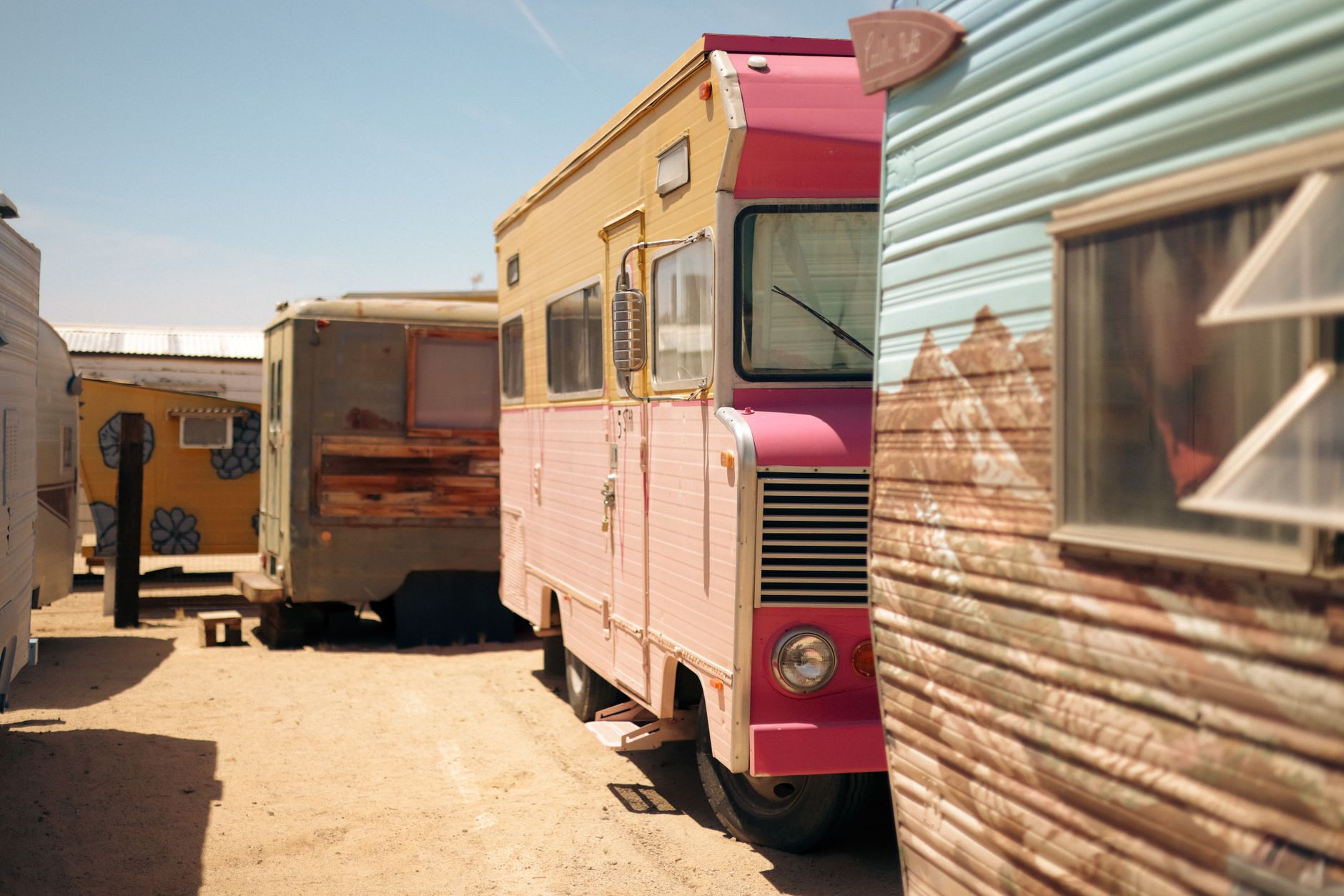
Hero photo by Natalia Ferrara H via Pexels
This is not legal or financial advice. Please consult your CPA/Attorney for all legal and financial guidance. Ride Legal is a privately owned website and is not operated by any government agency.