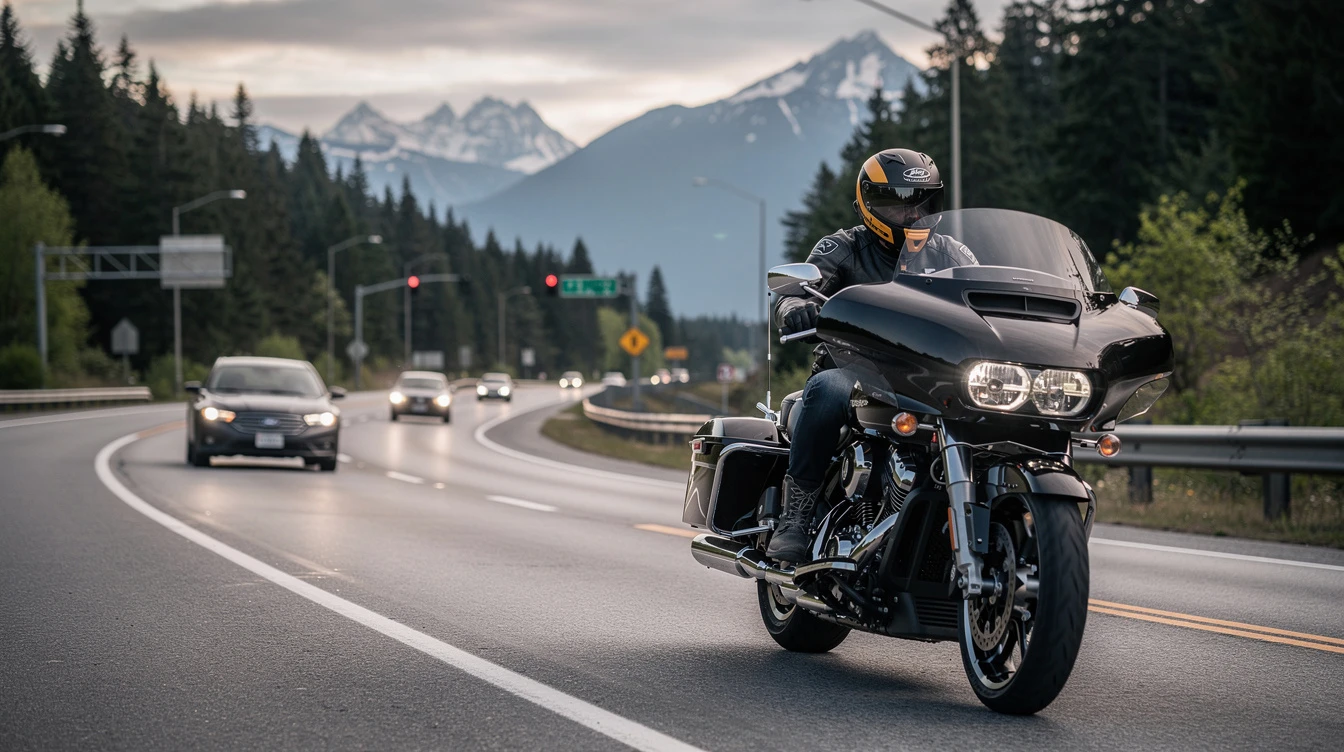
Washington state has some of the most detailed and frequently updated traffic laws in the Pacific Northwest — and if you're behind the wheel of a high-performance vehicle, a custom build, or a recently acquired exotic, knowing the rules isn't optional. Whether you're cruising SR-20 through the North Cascades or navigating Seattle's arterials, this guide covers every major driving law in Washington state for 2025, including the updates that matter most to premium vehicle owners. Let's make sure you're protected, compliant, and — above all — legal.
Washington State Speed Limits: What You Need to Know
Speed limits in Washington are governed by RCW 46.61.400 and vary by road classification. The statewide default speed limits are:
| Road Type | Default Speed Limit |
|---|---|
| Residential streets | 25 mph |
| Business districts | 25 mph |
| State highways | 60 mph |
| Rural highways | 60 mph |
| Interstate freeways | 70 mph (posted) |
| School zones (active) | 20 mph |
| Work zones | As posted — fines double |
Washington enforces speed limits aggressively. Traveling 26 mph or more over the posted limit can result in a misdemeanor charge — not just a ticket. For exotic and high-performance vehicle owners, this distinction matters enormously. A misdemeanor goes on your driving record, can affect insurance premiums, and in some cases can jeopardize your ability to register or transfer an out-of-state title without scrutiny.
Washington State Insurance Requirements
Washington mandates minimum liability insurance for all drivers operating motor vehicles on public roads. As of 2025, the minimum required coverage under RCW 46.29.090 is:
Ready to register your vehicle?
Join thousands of vehicle owners who use Ride Legal to handle their registration quickly.
Start Your Premium Registration →- $25,000 per person for bodily injury
- $50,000 per accident for bodily injury
- $10,000 for property damage
These are state minimums — not recommendations. For owners of luxury, exotic, or collector vehicles, these floors are dangerously low given the replacement cost of your asset. Many high-end vehicle owners pair Washington-compliant minimum coverage with agreed-value exotic auto policies that reflect the true worth of the vehicle. You can explore coverage options through our insurance resource page.
Electronic proof of insurance is accepted during traffic stops. However, failure to carry proof — or lapse in coverage — results in a $550 fine for first-time offenders and potential license suspension.
Distracted Driving and the Hands-Free Law
Washington's Distracted Driving Law (RCW 46.61.672), commonly known as the Driving Under the Influence of Electronics (E-DUI) law, is one of the strictest in the nation. Updated enforcement guidelines reinforce zero tolerance for handheld device use while driving.
Under this law, you may NOT:
- Hold or use a phone, tablet, or electronic device while driving
- Send or read messages, even at a red light
- Video call or stream while the vehicle is in motion
- Use any handheld device for any purpose while operating a moving vehicle
Hands-free Bluetooth or dash-mounted devices that can be operated with a single tap are permitted. First offense fines start at $136. A second offense within five years runs $234. Beyond the financial hit, distracted driving violations are reported to insurance companies and can spike premiums significantly — a real concern for anyone insuring a six-figure vehicle.
Washington State DUI Laws
Washington DUI statutes (RCW 46.61.502) establish a blood alcohol content (BAC) limit of 0.08% for drivers 21 and older. Commercial drivers face a stricter limit of 0.04%, and for drivers under 21, the limit is 0.02% — essentially zero tolerance.
Washington also has specific laws covering driving under the influence of cannabis. Even with recreational marijuana legal in the state, driving with a THC blood concentration of 5 nanograms per milliliter or more constitutes a DUI offense.
Penalties for a first DUI conviction in Washington include:
- Mandatory minimum 24 hours in jail (or 15 days electronic home monitoring)
- Fines between $990 and $5,000
- 90-day license suspension
- Ignition interlock device requirement
- SR-22 insurance filing for three years
SR-22 requirements following a DUI are often incompatible with standard exotic vehicle insurance policies. Owners of high-value vehicles should consult a specialist immediately if facing any DUI-related licensing action in Washington.
Seat Belts, Child Safety, and Passenger Laws
Washington has a primary seat belt law — meaning law enforcement can pull you over solely for not wearing a seat belt. All front-seat and rear-seat passengers are required to buckle up regardless of age. The fine for a seat belt violation is currently $136.
Child passenger safety follows Washington's tiered system:
| Age / Weight | Required Restraint |
|---|---|
| Under 2 years OR under 30 lbs | Rear-facing car seat |
| 2–4 years / 30–40 lbs | Forward-facing car seat with harness |
| 4–8 years / under 4'9" | Booster seat with lap/shoulder belt |
| 8+ years or over 4'9" | Standard seat belt |
Violations of child safety seat laws carry fines and can result in referral to child protective services in extreme cases. Exotic and performance vehicles — particularly two-seaters or vehicles with limited rear cabin space — may face specific challenges meeting Washington's child restraint standards. Consult the vehicle manufacturer's documentation and confirm compatibility before transporting children.
Vehicle Registration and Title Laws in Washington
Washington requires all vehicles operated on public roads to be registered with the Washington State Department of Licensing (DOL). New residents must register their vehicles within 30 days of establishing residency. Out-of-state vehicles must also obtain a Washington title transfer within that window, with applicable taxes and fees assessed at the time of registration.
Washington collects a use tax on vehicles purchased out of state — typically equal to the state's 6.5% sales tax rate, with local taxes added on top. For a $200,000 exotic, that can easily represent a six-figure liability. This is one reason many luxury vehicle owners explore legal alternatives before the 30-day clock starts.
If you're bringing an exotic vehicle into Washington from another state, understanding your title transfer options is critical. Our VIP Ownership service handles out-of-state title transfers and Extraordinary Vehicles with the discretion and precision that high-value asset management demands.
Motorcycles registered for street use in Washington must meet specific lighting, tire, and equipment standards before receiving a street-legal registration. If you ride and want to ensure your build is compliant and properly titled, explore what street-legal registration looks like through Ride Legal's white-glove motorcycle title service.
Washington's registration fees vary by vehicle weight, type, and county. Unlike states with no sales tax — such as Montana — Washington assesses both sales tax and annual excise taxes on registered vehicles. For context on what a no-tax registration alternative looks like, Dirt Legal — Montana Vehicle Registration is a recognized resource for Montana LLC-based registration strategies used by exotic and collector vehicle owners nationwide.
If you're ready to start the process for your car, truck, or SUV, you can get started with Ride Legal's streamlined intake process today.
Washington State Motorcycle and Exotic Vehicle Laws
Motorcyclists in Washington must hold a valid motorcycle endorsement (Class M) on their license, wear a DOT-compliant helmet at all times, and have both working mirrors installed on the bike. Lane filtering — where motorcycles move between lanes of slow-moving traffic — became partially legal in Washington in 2021 under specific conditions, but lane splitting at speed remains prohibited.
Exotic and modified vehicles face additional scrutiny in Washington. Any vehicle with aftermarket modifications affecting lighting, suspension height, or exhaust output may be subject to equipment inspection before registration is approved. Washington enforces decibel limits on exhaust systems, and many performance exhausts installed on high-end vehicles exceed those thresholds.
For RV and trailer owners planning extended travel through Washington, our rv registration resource covers the specifics of getting your rig properly registered and titled for multi-state travel.
For a deeper look at how vehicle history and VIN status affect your ability to register an exotic or modified vehicle, run a vin check before initiating any title or registration process.
Frequently Asked Questions: Washington State Driving Laws
Can I use my phone at a red light in Washington?
No. Washington's E-DUI law prohibits holding or using a handheld electronic device while the vehicle is in a travel lane — including at a red light. You must be fully off the roadway (legally parked) to use your phone handheld.
What happens if I'm caught driving without insurance in Washington?
A first offense carries a minimum $550 fine. Repeat offenses can result in license suspension and vehicle impoundment. Washington uses electronic verification systems, and insurance lapses are flagged at registration renewal.
Does Washington have a grace period for vehicle registration after buying a car?
Yes. You have 15 days from the date of purchase to drive an unregistered vehicle with the signed title as proof of ownership. After that, registration must be completed. New residents have 30 days from establishing residency to register out-of-state vehicles.
Are there any exemptions from Washington's vehicle use tax?
Certain vehicle transfers — such as gifts between immediate family members or inheritance — may be exempt from use tax. Vehicles already registered in Montana under a properly formed LLC prior to Washington residency may be treated differently. Consult a qualified vehicle registration professional or tax advisor for your specific situation.
Is lane splitting legal in Washington state?
Lane filtering at low speeds (under 10 mph) in slow or stopped traffic became legal in Washington in 2021 under specific conditions. True lane splitting — riding between lanes of moving traffic at speed — remains illegal.
What are the penalties for reckless driving in Washington?
Reckless driving in Washington (RCW 46.61.500) is a gross misdemeanor. Penalties include up to 364 days in jail, fines up to $5,000, and a 30-day license suspension. A reckless driving conviction becomes part of your permanent driving record and is visible to insurers, which can have serious implications for exotic vehicle coverage.
Drive Washington with Confidence — and the Right Registration Behind You
Understanding Washington state driving laws is the foundation of responsible, protected ownership — especially when you're behind the wheel of something exceptional. But knowing the rules is only half the equation. The other half is making sure your vehicle is properly titled, legally registered, and positioned to protect your asset from unnecessary tax exposure and compliance risk.
At Ride Legal, we handle the complex paperwork so you don't have to. Whether you're transferring an out-of-state title, registering a high-performance build, or exploring registration solutions that align with how premium vehicle ownership should feel — we've built a service worthy of the vehicles we work with.
This is not legal or financial advice. Please consult your CPA/Attorney for all legal and financial guidance. Ride Legal is a privately owned website and is not operated by any government agency.