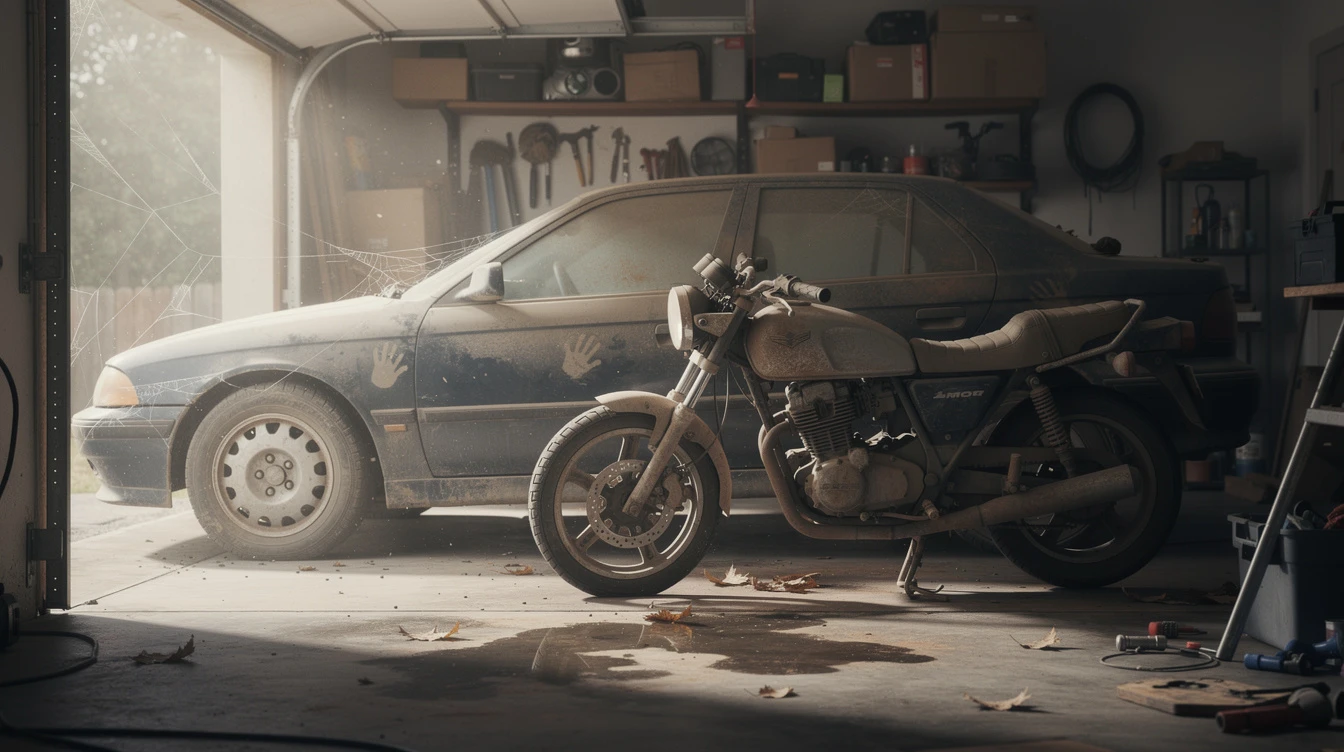
You pulled it into the garage with every intention of getting back to it in a few weeks. Then a few weeks became a few months. Now it's been over a year, and you're not sure what you'll find when you finally lift that cover. If that scenario sounds familiar, you're not alone Rewrite using a comma, or split into two sentences. Never use em dash as a clause separator. and the consequences of leaving a vehicle sitting for long periods go much deeper than a dead battery.
Whether you own a collector car, a high-performance truck, a prized ATV, or a UTV that's been sitting through an off-season, inactive vehicle damage is real, progressive, and surprisingly expensive. The mechanical problems alone can run into thousands of dollars. Add in insurance lapses, registration issues, and title complications, and you've got a situation that requires more than just an oil change to sort out.
This guide breaks down exactly what happens to a vehicle sitting in storage, what it costs you financially and legally, and what you can do about it before problems compound.
The Mechanical Reality of Long-Term Vehicle Storage
A vehicle that isn't driven isn't just sitting still Rewrite using a comma, or split into two sentences. Never use em dash as a clause separator. it's slowly deteriorating. The first thing most people notice is the battery. After about 30 days without being driven or connected to a trickle charger, most 12-volt batteries begin losing the charge needed to start the engine. After three to six months, many batteries are simply dead.
But that's just the beginning. Gasoline begins to degrade in as little as 30 days, leaving behind varnish deposits that clog fuel injectors and carburetors. Ethanol-blended fuels absorb moisture from the air and phase-separate, which means the ethanol and gasoline literally split apart inside your tank. Getting a stored vehicle running after this kind of damage often requires a complete fuel system flush Rewrite using a comma, or split into two sentences. Never use em dash as a clause separator. sometimes a full rebuild.
Tires suffer differently. A vehicle sitting on the same spot for months develops flat spots from the constant pressure of the vehicle's weight. These flat spots can cause vibration at highway speeds and, in severe cases, make the tires unsafe to drive on at all. Rubber also oxidizes and cracks over time, even without UV exposure, so tires that look fine on the outside may be compromised at the sidewall.
Brake rotors rust quickly Rewrite using a comma, or split into two sentences. Never use em dash as a clause separator. sometimes within just a few days of sitting in humid conditions. Surface rust is usually scrubbed off during the first few stops, but deep corrosion that forms over months can pit the rotor surface and ruin brake pads on first contact. Brake fluid also absorbs moisture over time, lowering its boiling point and reducing stopping power.
Beyond that: engine seals and gaskets dry out, coolant degrades and becomes acidic, rodents find their way into engine bays and chew wiring harnesses, and oil loses its protective film and allows metal-on-metal contact during the first cold start. Every month a vehicle sits untouched, the list of problems that need attention gets longer.
See How Proper Maintenance Protects Your Investment →The Financial Hit You Might Not See Coming
Mechanical repairs are only part of the financial story. When a vehicle sits for an extended period, your insurance situation can quietly become a liability. Some owners cancel or reduce coverage on stored vehicles to save money Rewrite using a comma, or split into two sentences. Never use em dash as a clause separator. which makes sense on the surface. But if you cancel your policy entirely and later need to reinstate full coverage, you may be flagged as a lapsed-coverage driver and face higher premiums. Our sister brand Dirt Legal covers this exact scenario in detail: Why You Shouldn't Cancel Car Insurance During Deployment Rewrite using a comma, or split into two sentences. Never use em dash as a clause separator. the same logic applies to any extended storage period, not just military service.
Ready to register your vehicle?
Join thousands of vehicle owners who use Ride Legal to handle their registration quickly.
Start Your Premium Registration →There's also depreciation to consider. A vehicle that sits unmaintained for a year or two doesn't just lose value because of age Rewrite using a comma, or split into two sentences. Never use em dash as a clause separator. it loses value because buyers can see the evidence of neglect. Stuck calipers, fogged headlights, dried-out leather, faded paint, and a musty interior all signal that this vehicle wasn't cared for. On a high-value exotic or collector vehicle, that perception gap can cost you tens of thousands of dollars at resale.
Fuel costs also sneak up on you. If you return to a stored vehicle and find the fuel system compromised, you're not just replacing gas Rewrite using a comma, or split into two sentences. Never use em dash as a clause separator. you're potentially replacing an injector set, a fuel pump, or an entire carburetor assembly. On a modern vehicle, that repair alone can cost $800 to $2,500.
The Legal and Registration Consequences Nobody Talks About
Here's where things get complicated for a lot of owners. If your vehicle's registration lapses while it's in storage, getting it back on the road isn't just a matter of paying a renewal fee. Depending on your state, a lapsed registration can trigger late penalties, require a fresh inspection, or even require you to prove current insurance coverage before the DMV will process your renewal.
Title problems can also surface after long storage periods. If a vehicle changes hands informally Rewrite using a comma, or split into two sentences. Never use em dash as a clause separator. left to a family member, sold without paperwork, or inherited without a formal title transfer Rewrite using a comma, or split into two sentences. Never use em dash as a clause separator. the title situation can become tangled fast. In some cases, a vehicle that's been sitting for years ends up with a title in a deceased owner's name, creating a complex legal situation that requires bonded title processes or court intervention to resolve. A more detailed breakdown is available in Classic Vehicle Title Solutions: How to Title Antique Cars, which covers what to do when a title history gets murky.
For owners who registered their vehicles through a Montana LLC for asset protection or tax purposes, there's another layer to stay on top of. Montana LLCs require annual renewal to remain in good standing, and a lapsed LLC can invalidate your registration. You can check the current requirements directly at the Montana Secretary of State business portal. If you're managing an LLC registration for a stored vehicle, the Montana LLC Renewal (One Time, Valid for One Year) service keeps your registration current without requiring you to track every filing deadline yourself.
If the vehicle you're bringing back from storage is a powersport Rewrite using a comma, or split into two sentences. Never use em dash as a clause separator. an ATV, UTV, or dirt bike Rewrite using a comma, or split into two sentences. Never use em dash as a clause separator. the street-legal registration process may need to restart depending on how long it's been and what state you're in. The street-legal registration process for these vehicles isn't always straightforward, and a lapsed status can mean starting from scratch.
A Quick Reference: Storage Duration vs. Expected Problems
| Storage Duration | Mechanical Risks | Financial Impact | Legal/Registration Risk |
|---|---|---|---|
| 1, 3 Months | Battery drain, mild fuel degradation | Low ($50, $200) | Minimal if registration is current |
| 3, 6 Months | Flat-spotted tires, rust on rotors, fuel varnish | Moderate ($200, $800) | Watch for registration renewal dates |
| 6, 12 Months | Fuel system damage, seal deterioration, rodent risk | High ($800, $2,500) | Registration may lapse; inspection may be required |
| 12+ Months | Engine damage, wiring issues, brake failure risk | Very High ($2,500+) | Title issues, LLC lapse, full re-registration likely |
What to Do Before Your Vehicle Sits Rewrite using a comma, or split into two sentences. Never use em dash as a clause separator. and When It Comes Back Out
If you know a vehicle is going into storage for more than a month, a few steps make the difference between a clean wake-up and an expensive restoration project. Add a fuel stabilizer to a full tank before parking it. Connect a battery maintainer. Lift it on jack stands if you can, or at minimum over-inflate the tires slightly to slow flat-spotting. Place rodent deterrents around the vehicle and keep it in a climate-controlled space if possible.
When you're ready to bring it back out, don't just turn the key and drive. Check the tire pressure and inspect for sidewall cracking. Inspect brake lines and look for fluid leaks. Change the oil before the first start if it's been more than six months. Run the engine briefly before a test drive to let oil pressure build and fluids circulate. Then check your registration status before you put it on public roads.
One Ride Legal customer described putting a premium UTV back into service after 14 months of storage: the fuel system needed a full clean-out, one tire had cracked sidewalls, and the registration had lapsed. Getting everything sorted took three weeks and roughly $1,800. "I wish I'd just done the prep work before I parked it," they said. "Would've saved me the entire headache."
If the registration situation is what's holding you back, the VIP Ownership approach handles the paperwork side so you can focus on the mechanical side. And if you need to confirm your vehicle's history before re-registering, a quick VIN check can surface any liens, title issues, or recall notices that need to be cleared before you hit the road.
Frequently Asked Questions
How long can a vehicle sit before it causes serious damage?
Most vehicles start showing meaningful damage after three to six months of inactivity. Fuel degradation, battery failure, and brake rust are the earliest issues. Beyond six months, you're likely looking at fuel system repairs, tire replacement, and potential seal deterioration. The longer it sits without prep work, the more expensive the repair list becomes.
Does my registration lapse if my vehicle is in storage?
Yes. Registration renewal deadlines don't pause because a vehicle is stored. If your registration lapses during storage, you'll need to renew before legally driving it again, and depending on your state, you may face late fees or be required to show proof of current insurance to complete the renewal.
Will my insurance cover damage that happens while a vehicle is in storage?
It depends on your policy. complete coverage typically covers theft, fire, and some weather-related damage while a vehicle is stored. Rodent damage and mechanical failure from non-use are usually not covered. Review your policy before reducing or canceling coverage on a stored vehicle Rewrite using a comma, or split into two sentences. Never use em dash as a clause separator. the risks of canceling coverage often outweigh the short-term savings.
What is the best way to store a powersport vehicle like an ATV or UTV?
Add fuel stabilizer to a full tank, connect a battery maintainer, clean and lubricate the chain or drivetrain, and store it in a dry, covered space. If storing for more than six months, consider fogging the cylinder with storage oil to prevent internal corrosion. Check the registration status before riding again, especially if the storage period crossed a renewal date.
What should I do if my vehicle's title has issues after long storage?
Title problems from long-term storage are common, especially when vehicles change hands informally or are inherited. The best starting point is a VIN history check to understand the current title status, followed by working with a title recovery service. For powersports and specialty vehicles, the Montana ATV Title Recovery and Street Legal Registration service is a practical option for resolving these situations without dealing with complex DMV paperwork.
Can I register a vehicle in Montana if it's been sitting unregistered for years?
In most cases, yes. Montana's registration process through an LLC is available to out-of-state owners and doesn't require the vehicle to have been recently registered elsewhere. You'll typically need a clear title or go through a title recovery process first. Details on fees and requirements are available through the Montana Vehicle Title and Registration page from the Montana DOJ.
Your Vehicle Deserves Better Than a Forgotten Garage Corner
Every vehicle has a story. And the ones that get pulled out of long-term storage with a clean title, current registration, and a properly maintained engine are the ones whose owners planned ahead. The mechanical prep is something you handle on your end. The registration, title, and LLC side of things Rewrite using a comma, or split into two sentences. Never use em dash as a clause separator. that's exactly what Ride Legal was built to handle for you.
Whether you're bringing a collector piece back to life, sorting out a registration lapse on a stored UTV, or making sure your Montana LLC stays current while your vehicle sits, the process doesn't have to be complicated. It can be handled with precision, without waiting in line at the DMV or sorting through a stack of paperwork yourself.
Start Your Premium Registration →This is not legal or financial advice. Please consult your CPA/Attorney for all legal and financial guidance. Ride Legal is a privately owned website and is not operated by any government agency.