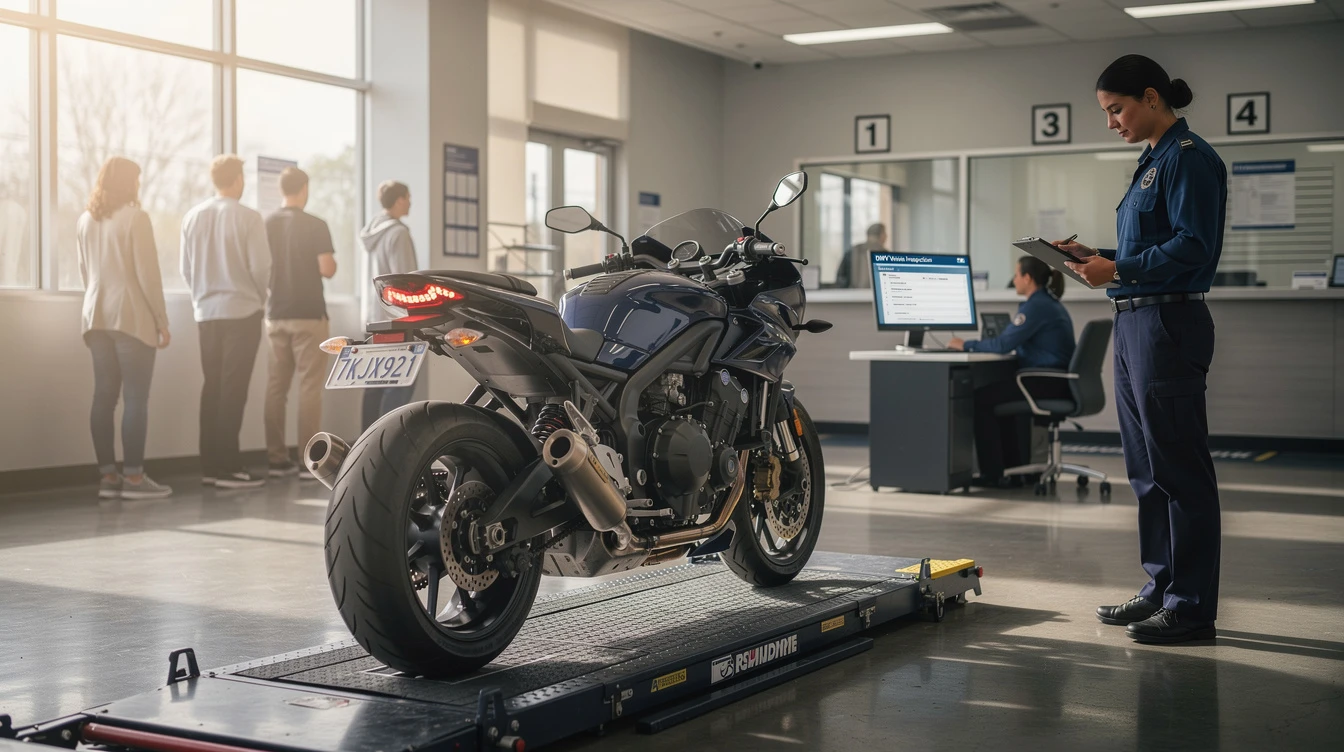
Registering a modified motorcycle or ATV with the DMV requires documentation beyond a standard title, including proof of ownership, a bill of sale for any major aftermarket parts, and in many states, a physical inspection to confirm the bike meets street-legal standards. The specific requirements vary by state, but the core checklist is consistent enough that you can prepare before you walk in.
What Documents Do You Need to Register a Modified Motorcycle or ATV?
Most DMVs require a valid title, a government-issued ID, and proof of insurance as the baseline. For modified powersports vehicles, you'll typically need additional paperwork to account for the changes made to the original build.
- Original title or a bonded title if the title is lost or damaged
- Bill of sale for the base vehicle if purchased used
- Receipts or invoices for major aftermarket parts (engine swaps, frame modifications, suspension lifts)
- Proof of insurance meeting your state's minimum coverage
- VIN verification form, often completed by a licensed inspector or law enforcement officer
- Completed application for title and registration (state-specific form)
If your title has been lost or damaged, the process for title recovery becomes the first step before registration can proceed. A more detailed breakdown is available in our Montana Motorcycle Title Recovery and Registration service page, which covers exactly what's needed when the paperwork chain is incomplete.
Do Modified Motorcycles Need a Special Inspection Before Registration?
Yes, in most states a modified motorcycle or ATV must pass a physical inspection before it can be registered for road use. The inspector checks that the build meets minimum safety and equipment standards.
Ready to register your vehicle?
Join thousands of vehicle owners who use Ride Legal to handle their registration quickly.
Start Your Premium Registration →Common inspection checkpoints for modified powersports vehicles include:
- Functioning headlight, taillight, and brake light
- Horn audible from at least 200 feet
- Mirrors (typically two for motorcycles)
- Turn signals (required in most states, optional in a few)
- DOT-rated tires
- Functional brakes on all wheels
- VIN plate that matches the title
For riders asking how to make a dirt bike or off-road ATV street-legal, the inspection step is usually the hardest part. Many builds fail the first time because of missing lighting or an odometer that wasn't installed. Getting these items right before inspection saves time and fees.
The sister brand resource on UTV street-legal states breaks down which states allow side-by-sides on public roads, which is useful context if you're trying to figure out whether your state even allows the registration you're pursuing.
How Do Modified Vehicles Differ From Standard Registrations in Terms of Cost and Timeline?
Modified powersports registrations typically cost more and take longer than standard registrations because of inspection fees, title corrections, and additional processing steps. Here's how the two generally compare:
| Factor | Standard Registration | Modified Vehicle Registration |
|---|---|---|
| Base registration fee | $20 to $150 (state-dependent) | Same base fee applies |
| Inspection fee | None or emissions only | $25 to $100+ for physical safety inspection |
| VIN verification | Typically DMV counter only | May require law enforcement or licensed inspector |
| Processing time | Same day to 2 weeks | 1 to 6 weeks depending on corrections needed |
| Title correction | Rarely needed | Common if ownership chain has gaps |
Odometer compliance is one of the most frequent reasons modified-vehicle paperwork comes back for correction, which means if your modified build didn't come with a working odometer, that's a detail worth addressing before you submit your paperwork.
Can You Register a Modified ATV or UTV for Street Use in Any State?
Not every state allows ATVs or UTVs on public roads regardless of modifications. Some states have a clear pathway, others require county-level permits, and a few prohibit it outright.
States with relatively accessible street-use ATV pathways include Montana, Utah, Arizona, and Texas. States like California and New York have significantly stricter requirements and limited pathways for modified off-road vehicles seeking road registration.
Montana is a popular option for powersports owners because registration there carries no sales tax and no emissions testing requirements. Owners who form a Montana LLC can register their vehicle through that entity, which is a well-established ownership structure for elevated-value powersports builds. The no sales tax exotic car Montana LLC guide covers how that structure works for high-value vehicles.
If you're asking how to register an ATV or UTV for street use, the first step is confirming your state's classification rules, then matching the build to those minimum equipment standards before scheduling inspection.
What Happens If the Title Is Missing or the Ownership Chain Is Unclear?
A missing title is common with modified powersports vehicles, especially older builds that changed hands without proper paperwork. You'll need to establish ownership before registration can proceed.
Your options typically include:
- Bonded title, where you purchase a surety bond equal to the vehicle's value and apply for a new title. Most states release a clean title after 1 to 3 years with no claims.
- Court-ordered title, used when ownership disputes exist or the vehicle history is complicated.
- Vermont title method, which some owners use for vehicles under a certain value to obtain a registration document without a traditional title.
- Montana title recovery, which works for motorcycles and specialty builds where other avenues have stalled.
Running a VIN check early in the process helps identify any outstanding liens or title issues before they become surprises. Our VIN check service gives you that visibility quickly. For a general overview of the title replacement process, the Dirt Legal guide on how to get the DMV to fix a registration error is a practical starting point.
Should You Register a Modified Motorcycle Under an LLC?
Registering a bespoke or high-value modified motorcycle under a Montana LLC is a strategy some owners use to hold the asset within a business entity. Montana has no sales tax on vehicles, and LLCs formed there can register powersports vehicles regardless of where the owner lives.
This structure makes the most financial sense for builds with significant market value, where the potential tax exposure in the owner's home state is substantial. We handle the required filings to register assets through your newly formed Montana LLC, and our specialists manage the out-of-state paperwork with our paperwork support model.
For owners weighing ownership structure, the guide on 5-figure vehicle sales tax costs and Montana LLC registration walks through the math in detail. The Montana Vehicle Title and Registration page also confirms the state's fee structure and requirements directly.
Frequently Asked Questions
What is required to register a modified vehicle with the DMV?
You'll need a valid title, proof of insurance, a completed registration application, and documentation for any major modifications such as receipts for aftermarket parts or an engine swap. Most states also require a physical safety inspection to confirm the vehicle meets minimum road equipment standards before issuing plates.
Do I need a special title for a heavily modified motorcycle?
Not a separate title type, but the existing title must accurately reflect the vehicle's identity. If the VIN has changed, the engine has been replaced, or the ownership chain has gaps, corrections must be made to the title before registration proceeds. A bonded title or title recovery process may be needed.
Can I get a temporary tag while waiting for a modified vehicle to clear inspection?
In many states, yes. A temporary operating permit or temporary tag can be issued to allow the vehicle to be driven to an inspection location. Our Montana Temporary Tag assistance covers that option for owners registering through Montana. Check your state's DMV for local temporary permit rules.
What are the steps to make a dirt bike street-legal and registered?
First, confirm your state allows dirt bike conversion. Then install required equipment such as lighting, mirrors, horn, and DOT tires. Obtain a VIN inspection, gather purchase documentation, and submit a title and registration application. In states with restricted pathways, Montana LLC registration is a common alternative route used by off-road riders.
How do I register a military vehicle for road use?
Military vehicles must typically go through the same modified-vehicle registration pathway, including a safety inspection and VIN verification. Many lack a standard title, so a bonded title or court-ordered title is often required. Our Montana Military Vehicle Registration service is built specifically for this vehicle category.
Can I register a modified ATV in Montana as a non-resident?
Yes. Non-residents can form a Montana LLC and register a powersports vehicle, including modified ATVs and UTVs, through that entity. Montana requires no sales tax, no emissions testing, and no physical presence in the state to maintain the LLC and registration year over year. Registration specialists manage the out-of-state paperwork with our paperwork support.