
Vehicle registration renewal is required every year because states use it to track ownership, enforce road safety standards, collect revenue, and make sure your vehicle meets current compliance requirements. Without annual registration, you cannot operate your vehicle on public roads.
Check Your Registration Status
Updated on November 16, 2026
What Is Vehicle Registration and Why Does It Exist?
Vehicle registration is a formal record linking your vehicle's identification number (VIN), title, and ownership to a specific state. It serves multiple purposes: proof of ownership, revenue collection for infrastructure, emissions compliance verification, and law enforcement database access. When you register, your vehicle enters the state's motor vehicle system, creating a legal trail that protects both you and the state.
States renew registrations annually to verify that vehicles still meet current standards. A car registered in 2024 might fail emissions testing in 2025, or ownership might change. Annual renewal keeps records current and accurate. This is why registration lapses automatically each year rather than lasting indefinitely.
- Ownership verification: Confirms you own the vehicle and have authority to operate it
- Safety compliance: Ensures the vehicle passes inspections and meets safety standards
- Tax and fee collection: States collect registration fees, often tied to vehicle value and age
- Law enforcement access: Police can verify ownership and check for stolen vehicles or outstanding violations
- Environmental protection: Emissions testing (in many states) confirms pollution compliance
What Are the Legal Requirements for Annual Registration?
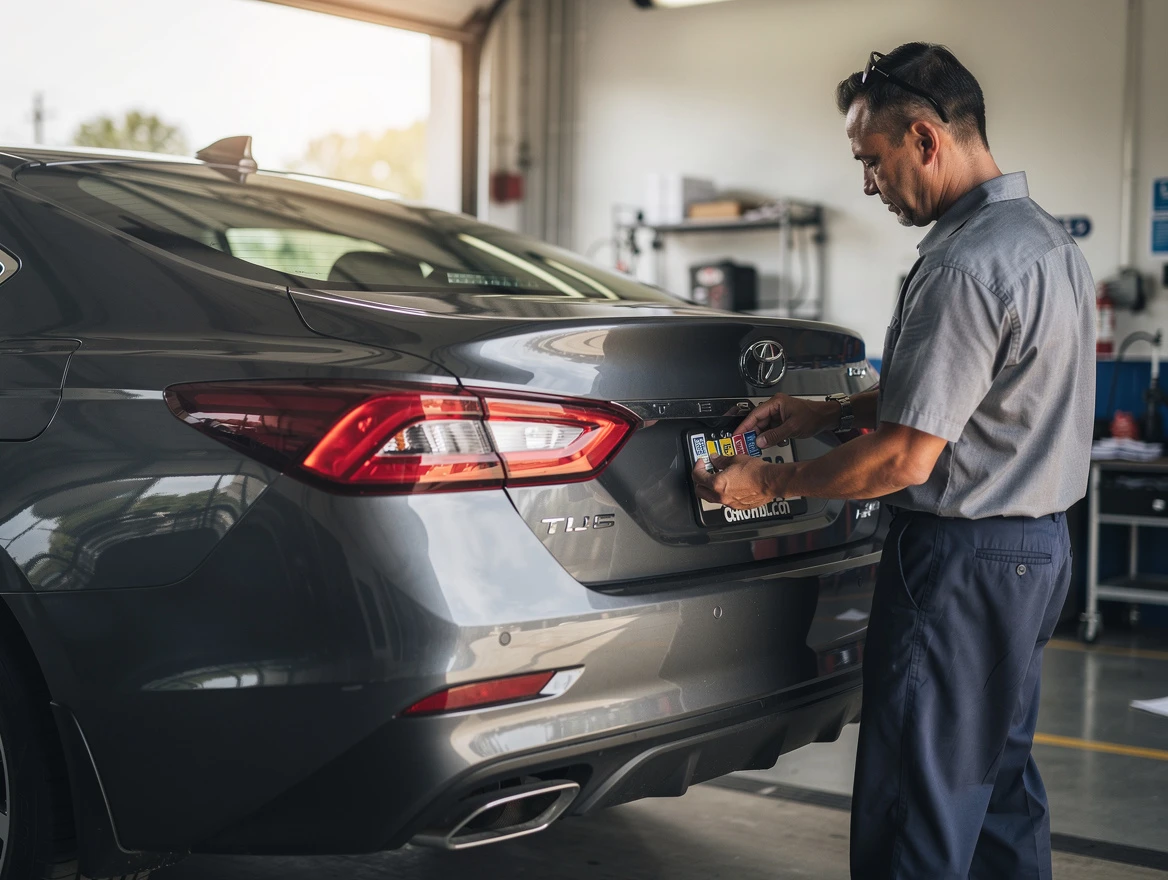
Every state requires annual vehicle registration as a condition of roadway operation. Requirements vary by state but typically include proof of vehicle ownership, proof of insurability, proof of residency or address, and payment of registration fees. Failure to renew results in expired tags, which is a fineable offense in all states.
Ready to register your vehicle?
Join thousands of vehicle owners who use Ride Legal to handle their registration quickly.
Start Your Bespoke Registration →
Your registration documents must be carried in the vehicle at all times. During traffic stops, law enforcement can cite you for expired registration, which may carry fines, points on your driving record, or vehicle impoundment depending on your state. Some states offer grace periods, while others enforce strict expiration dates.
- Proof of vehicle ownership (title or registration card)
- Proof of valid insurance in your state
- Proof of residency or address for registration
- Payment of applicable registration and administrative fees
- Emissions test results (if required by your state)
- Vehicle inspection certificate (some states only)
How Much Does Annual Car Registration Cost?
Registration costs vary dramatically by state and vehicle type. Some states charge flat fees under $100 annually, while others base fees on vehicle value, weight, age, or engine size. A new vehicle in a high-cost state might cost $500 to $1,500 per year, while an older vehicle in a low-cost state might cost $50 to $200.
| Cost Factor | Impact on Registration |
|---|---|
| Vehicle value | Higher-value vehicles often face higher registration fees |
| Vehicle age | Newer vehicles typically cost more to register annually |
| Vehicle type | Commercial vehicles, motorcycles, and specialty vehicles have different rates |
| Vehicle weight | Heavier vehicles (trucks, SUVs) may incur higher fees |
| State location | Montana, South Dakota, and Wyoming offer lower rates; California, New York, and Colorado charge more |
Some vehicle owners look at why vehicle registration is so expensive and alternatives for managing costs. Others investigate whether registering an imported car in Montana offers better tax and fee treatment.
What Happens If You Don't Renew Your Registration?
Operating a vehicle with expired registration is not compliant and can result in fines, citations, points on your driving record, and vehicle impoundment. Law enforcement can cite you during routine traffic stops, even if you weren't stopped for a moving violation. Insurance companies may also deny coverage if you file a claim while driving an unregistered vehicle.
- Traffic citation: Financial penalties ranging from $50 to $500, depending on your state
- Driving record points that may increase insurance premiums
- Vehicle impoundment: Police can tow your vehicle if registration is expired
- License suspension: Some states suspend your driver's license if you ignore registration notices
- Insurance denial: Claims filed while unregistered may be rejected
- Compounding penalties: Late fees and processing costs add up if you renew after expiration
Can You Register a Vehicle Without Living in That State?

Yes, you can register a vehicle in a state where you don't live. Many vehicle owners register in Montana, South Dakota, or other low-fee states even though they reside elsewhere. This is accomplished through forming a business entity (like an LLC) in that state or using a registered agent address.
Non-resident registration is entirely street-legal and commonly used by exotic car collectors, motorcycle owners, and business owners seeking lower fees and simpler compliance. However, your home state may still consider you subject to its registration rules, so consult a tax professional before proceeding.
Learn more about why some vehicle owners choose Montana registration for elevated and specialty vehicles.
How Do You Renew Your Vehicle Registration?
Most states offer online registration renewal, by mail, or in person at your local motor vehicle office. The process typically takes minutes if you renew before expiration. You'll need your registration card or letter, proof of insurance, and payment method.
- Check your registration expiration date on your current registration card or renewal notice
- Gather required documents: proof of insurance, ID, and vehicle information
- Visit your state's motor vehicle website or office to renew online, by mail, or in person
- Pay the applicable registration fee
- Receive your renewed registration card and updated license plates or sticker (if required)
- Display your updated registration and plates while driving
Some vehicle owners with multiple registrations find it helpful to work with registration specialists who can manage renewals across different states and entities. This is particularly valuable for fleet owners or high-net-worth individuals with specialty vehicles.
Skip the Paperwork, Start HereFrequently Asked Questions
How to Register Cars in Montana?
Register in Montana by obtaining a Montana address (via an LLC or registered agent), gathering your vehicle title and proof of insurance, and submitting your application to the Montana Motor Vehicle Division. Montana offers no sales tax, no annual emissions testing, and reasonable registration fees, making it popular for out-of-state vehicle owners.
Can You Register a Car in Montana Without Living There?
Yes. Form a Montana LLC or use a registered agent address in Montana to register a vehicle there regardless of where you live. Many non-residents successfully register vehicles in Montana to benefit from lower costs and simplified compliance. This strategy is street-legal when done correctly and transparently.
Can You Register a Car Under an LLC?
Yes. You can register a vehicle title and registration under a business entity like an LLC instead of your personal name. This is common for asset protection, business use, and tax planning. The LLC must be in good standing and you must hold the proper ownership documents to register the vehicle in the entity's name.
What Do You Need to Register a Car in Florida?
Florida requires proof of ownership (title), proof of insurance, proof of residency, and payment of registration fees. Florida's fees vary by vehicle type and age. You'll register at your county tax collector's office in person or online through Florida's electronic system.
Can You Register a Car With a Bill of Sale and No Title?
In most states, you cannot register a vehicle without a title. However, if the title is lost or the vehicle is undocumented, you may apply for a bonded title through your state's motor vehicle office. A bonded title allows registration while protecting the state from title disputes. Requirements vary by state.
How to Register a Motorcycle?
Register a motorcycle by submitting proof of ownership, proof of insurance, your rider's license, and completing your state's motorcycle registration application. Motorcycle registration processes are similar to car registration but may have different fee structures. Many states allow motorcycle registration renewal online.
Stay Updated
Get the latest on registration tips, LLC insights, and exclusive offers.
No spam. Unsubscribe anytime.
This is not legal or financial advice. Please consult your CPA/Attorney for all legal and financial guidance. Ride Legal is a privately owned website and is not operated by any government agency.