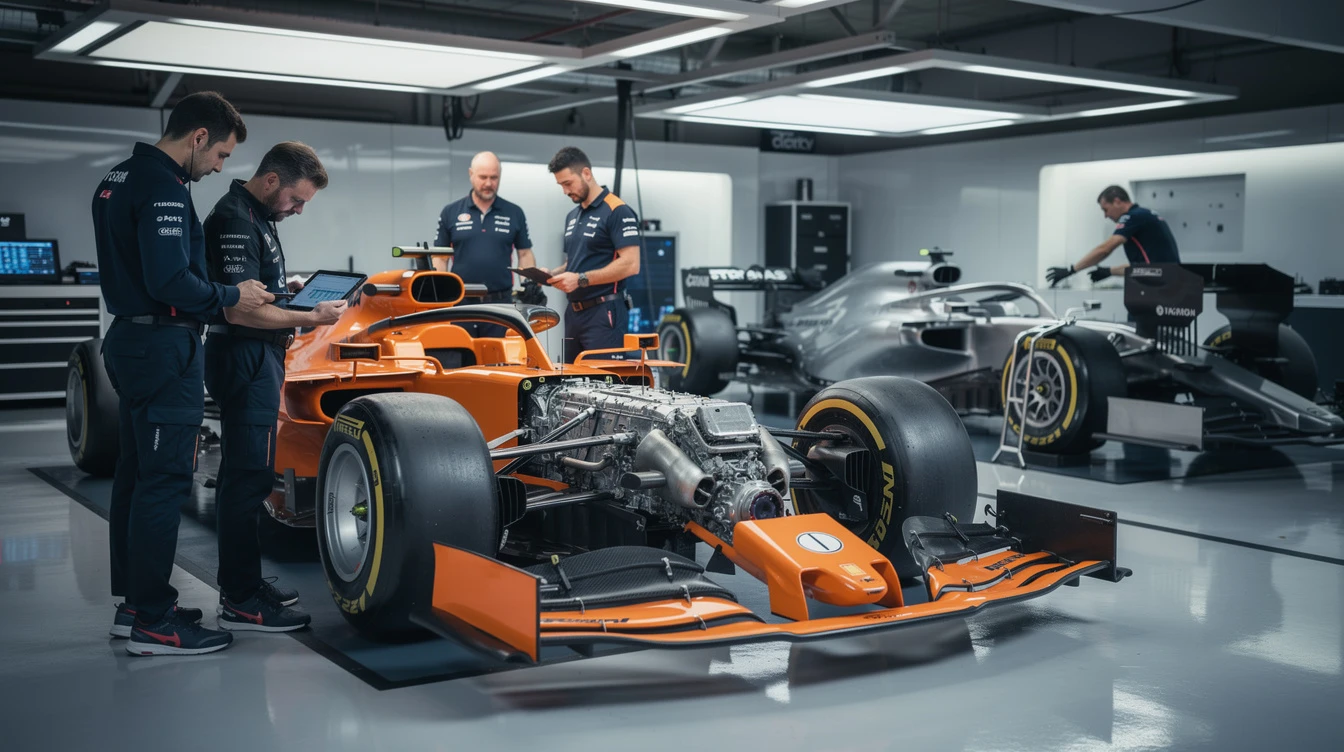
McLaren uses Mercedes engines in Formula 1 because Mercedes-AMG High Performance Powertrains provides proven reliability, benchmark thermal efficiency, and guaranteed hardware parity under FIA technical regulations without requiring McLaren to spend over $100 million annually developing an independent power unit. Why does McLaren use Mercedes engines in Formula 1 comes down to championship-caliber performance, controlled operating budgets, and a strategic focus on chassis aerodynamics.
What Is the History Behind the McLaren and Mercedes F1 Partnership?
McLaren and Mercedes-Benz share one of the most successful technical alliances in modern motorsport history. The duo originally teamed up from 1995 through 2014, securing three Drivers Championships and a Constructors title during their iconic works era.
After testing difficult partnerships with Honda and Renault between 2015 and 2020, McLaren re-signed with Mercedes for the 2021 season. The reunion instantly restored competitiveness, podium consistency, and race-winning performance to the Woking-based outfit.
High-performance engineering heritage runs deep across both racing paddocks and street vehicle builds. If you follow historic track machines, read our story on florida supercar saturday crowd awestruck: survivor’s triumph and a track for insight into legendary British engineering.
Why Doesn't McLaren Build Its Own Formula 1 Engine?
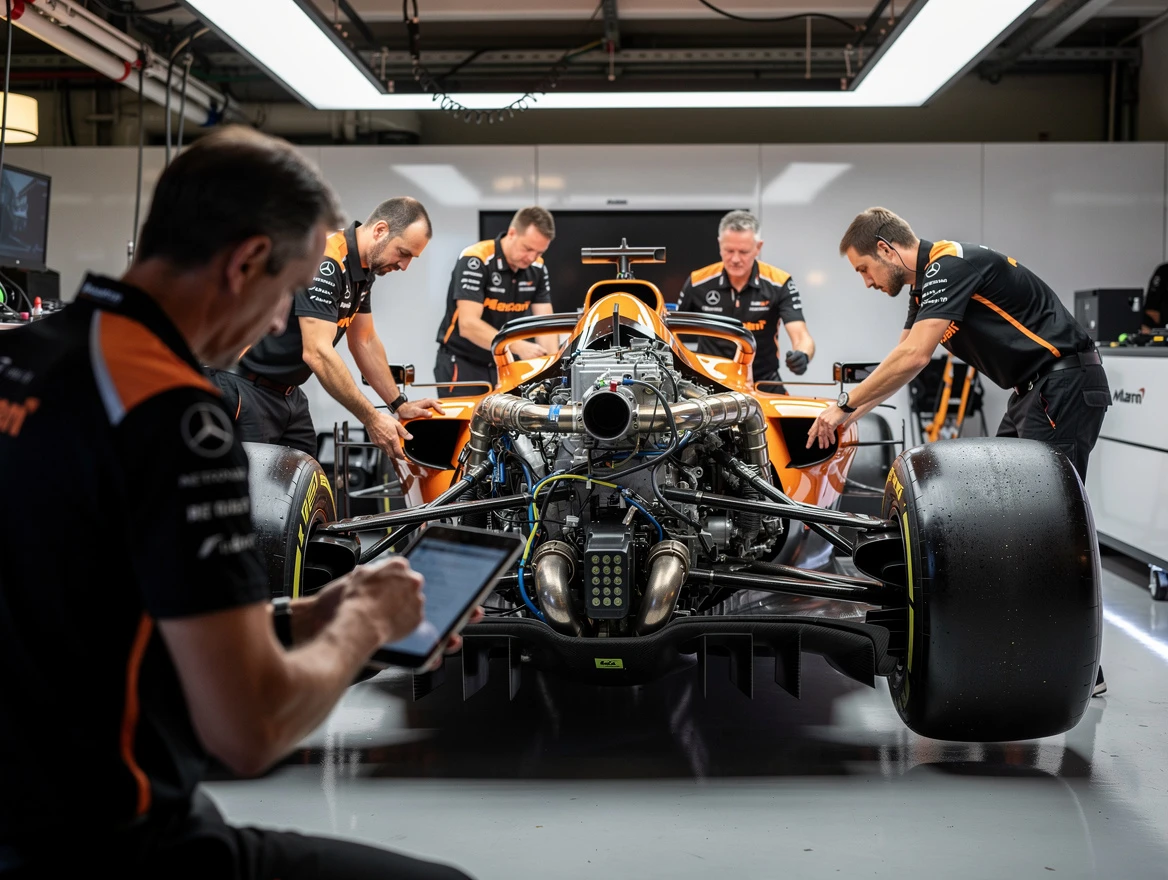
Building a contemporary 1.6-liter turbocharged V6 hybrid Formula 1 power unit requires specialized manufacturing infrastructure, test dynos, and hundreds of dedicated powertrain engineers. Independent supercar manufacturers like McLaren cannot justify the capital expenditure when customer power units deliver identical track potential.
Ready to register your vehicle?
Join thousands of vehicle owners who use Ride Legal to handle their registration quickly.
Start Your Bespoke Registration →Developing an in-house engine division would divert crucial resources away from chassis aerodynamics, suspension tuning, and race strategy under the strict FIA Financial Regulations. Outlawing excessive testing and capping operational costs makes buying turnkey power units the smarter move.
- Capital savings: Developing an F1 engine program from scratch requires upwards of $200 million to $300 million in facility investment alone.
- Budget cap efficiency: Buying customer engines keeps McLaren well within the sport's mandated annual cost limits.
- Direct focus: Engineers at the McLaren Technology Centre focus purely on downforce, vehicle weight, and tire management.
- Road car separation: McLaren Automotive road cars rely on distinct twin-turbo V8 platforms engineered with Ricardo, keeping racing development fully separate.
How Do FIA Parity Rules Protect Customer Teams Like McLaren?
Article 5 of the FIA Technical Regulations dictates that power unit manufacturers must provide customer teams with identical hardware, software calibrations, and operating modes as their own works team. Mercedes cannot hold back performance software, higher engine modes, or superior fuel mixes from McLaren.
This rule guarantees that customer teams receive equal straight-line horsepower, equal electrical deployment, and matching reliability bulletins throughout the entire racing calendar. In the past, engine suppliers often favored their primary factory entries, but modern sporting regulations ban the practice entirely.
High-value competition and road assets demand careful structural protection both on and off the circuit. Learn how private collectors manage bespoke title structures in Protecting High-Value Vehicles: The Right Registration Strategy.
How Does Mercedes Compare to Other Formula 1 Engine Suppliers?
Mercedes-AMG has remained the gold standard for packaging, kinetic recovery, and durability since the 1.6-liter hybrid era began in 2014. The Brixworth facility provides power units to four separate teams on the grid, gathering four times more track telemetry during every grand prix session.
| Engine Manufacturer | Estimated Horsepower | Key Strength | Customer Teams Supplied | Parity Standard |
|---|---|---|---|---|
| Mercedes-AMG | 1,020+ hp | Thermal efficiency and reliability | McLaren, Williams, Aston Martin | FIA Mandated Parity |
| Ferrari | 1,025+ hp | Raw straight-line electrical punch | Haas, Sauber | FIA Mandated Parity |
| Honda RBPT | 1,020+ hp | Compact packaging and energy harvest | Red Bull Racing, RB | FIA Mandated Parity |
| Renault / Alpine | 990-1,000 hp | Lower procurement price point | Alpine only | FIA Mandated Parity |
Motorsport competitors and private team owners know that power unit reliability dictates weekend results. Racers looking at grassroots dragways and oval facilities can review IHRA-Owned Tracks Up for Auction: What Racers Need to Know to see how circuit management impacts vehicle operations.
What Are the Key Steps for Integrating a Customer Power Unit?
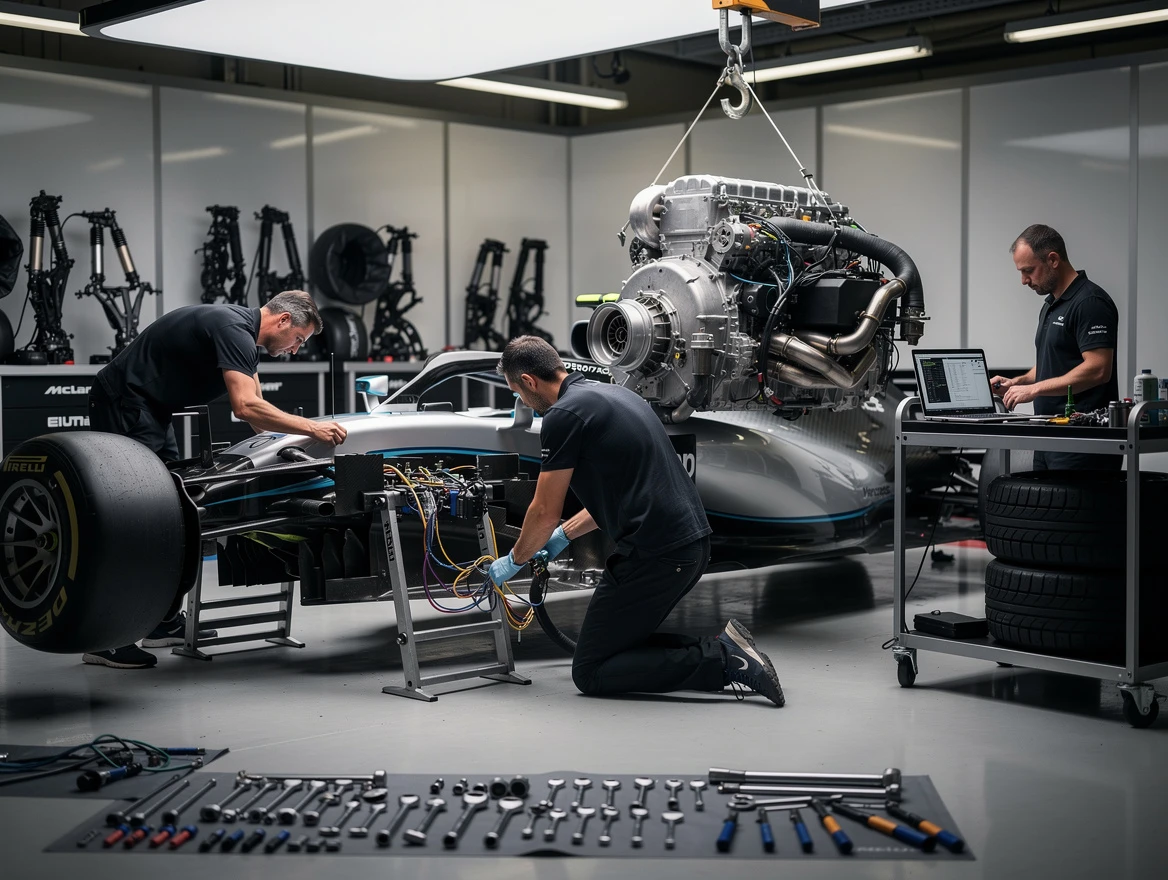
Integrating a third-party engine into a custom carbon-fiber monocoque requires precise engineering coordination between Brixworth and Woking long before pre-season testing begins.
- CAD Architecture Sharing: Mercedes delivers exact 3D models of the engine block, turbochargers, and MGU-K units to McLaren designers months in advance.
- Cooling and Packaging Design: McLaren shapes bespoke sidepods and radiator ducts around the fixed physical dimensions of the Mercedes engine.
- Gearbox Casing Fabrication: McLaren designs its own carbon composite gearbox casing to mate directly to the Mercedes crankshaft and rear suspension pickups.
- Bench Dyno Testing: The entire powertrain and chassis assembly undergoes simulated high-load dyno trials to verify cooling flow rates and electrical safety.
- Trackside Parity Calibration: Mercedes powertrain engineers embed inside McLaren's garage on race weekends to monitor real-time sensor telematics.
When Does McLaren's Current Mercedes Contract End?
McLaren announced a multi-year contract extension securing Mercedes-AMG power units through at least the 2030 Formula 1 season. This agreement covers the major regulatory overhaul scheduled for 2026, which removes the complex MGU-H unit and increases electrical battery output to nearly 50 percent of total vehicle horsepower.
Committing to Mercedes ahead of the 2026 engine freeze provides McLaren with absolute developmental stability. Rather than gambling on an unproven newcomer or an expensive custom program, McLaren locks in proven German hybrid technology for the long haul.
Protecting race-bred assets for road driving requires compliant paperwork structures and zero sales tax friction. Look at our guide on Montana Exotic Car Registration: No Sales Tax, Simple Process or find how clients handle rare supercars in How We Help clients Avoid California Sales Tax on a Lamborghini Aventador.
Track cars converted for road use face unique state-level hurdles across the nation. For a deep look at converting purpose-built chassis, review the guide on Registering a Street-Legal Stock Car: Complete Guide. When you are ready to plate your high-end machinery, consult with the specialists at Extraordinary Vehicles or complete your street-legal registration.
Frequently Asked Questions
Does McLaren pay Mercedes for Formula 1 engines?
Yes. Under FIA financial limits, customer teams pay a capped annual supply fee of approximately $15 million to $20 million per season. This standardized lease covers hardware, scheduled maintenance, software updates, and embedded trackside technical technicians from Mercedes-AMG High Performance Powertrains during every race weekend.
Can McLaren win a championship as a customer team?
Yes, customer teams can win championships under modern FIA sporting regulations. Stringent hardware and software parity rules prevent Mercedes from withholding engine performance from McLaren. If McLaren develops superior aerodynamics, tire preservation, and vehicle balance, their Mercedes-powered chassis can beat the Mercedes factory team directly.
Why did McLaren leave Honda to return to Mercedes?
McLaren parted ways with Honda after three difficult seasons marked by recurring hybrid unreliability, lack of thermal performance, and continuous retirements between 2015 and 2017. Following a temporary interim stint with Renault engines, McLaren rejoined Mercedes in 2021 to secure elite reliability, higher horsepower, and proven podium stability.
Are McLaren road cars powered by Mercedes engines?
No. McLaren Automotive produces road supercars using twin-turbocharged V8 and V6 hybrid engines designed in partnership with British engineering specialist Ricardo. Outside of the historic 2003-2010 Mercedes-Benz SLR McLaren collaboration, McLaren road vehicles maintain distinct propulsion systems that share no internal components with Mercedes-AMG street engines.
Who supplies the fuel and oil for McLaren's engine?
McLaren uses lubricants and racing fuels developed by BP and Castrol, which are specifically formulated and calibrated to match Mercedes-AMG power unit specifications. Developing fluids to improve combustion while adhering to Mercedes internal tolerances requires continuous chemical collaboration between McLaren's technical suppliers and engine dyno engineers in Brixworth.
Stay Updated
Get the latest on registration tips, LLC insights, and exclusive offers.
No spam. Unsubscribe anytime.
This is not legal or financial advice. Please consult your CPA/Attorney for all legal and financial guidance. Ride Legal is a privately owned website and is not operated by any government agency.