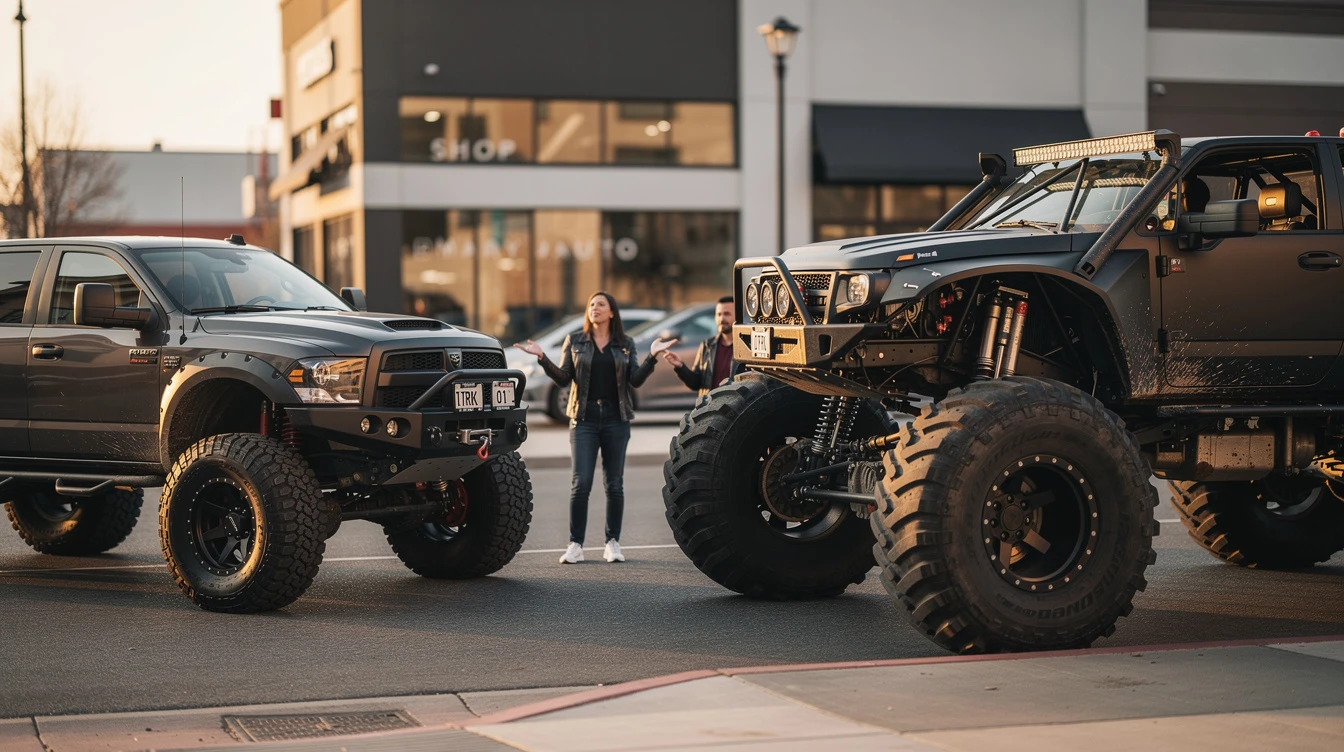
Most monster trucks you see at shows and exhibitions are not street-legal, but some modified pickup trucks with elevated suspensions can be, depending on lift height, lighting, brake compliance, and state regulations.
Check My Options ->In This Guide
- What Defines a Street-Legal Vehicle?
- Why Most Monster Trucks Fail Street-Legal Requirements
- How Jacked-Up Pickups Can Stay Street-Legal
- Height, Brakes, Lights: The Real Dividing Line
- State-by-State Lift Kit and Modification Rules
- How to Register a Modified or Lifted Truck
- Frequently Asked Questions
What Defines a Street-Legal Vehicle?
A street-legal vehicle must meet federal safety standards set by the National Highway Traffic Safety Administration (NHTSA) and pass state-specific inspection and registration requirements.
Street-legal status means a vehicle can be operated on public roads without special permits or restrictions. This includes compliance with:
- Lighting systems, including headlights, taillights, brake lights, and turn signals that meet brightness and color specifications
- Brake performance, requiring the vehicle to stop within a specific distance and with balanced force across all wheels
- Emissions standards, where applicable (many states require emissions testing)
- Vehicle height restrictions, typically capping total height between 13 and 14 feet, depending on state law
- Tire specifications, including DOT-approved tread patterns and load ratings
- Visibility and safety equipment, such as functioning windshield wipers, mirrors, and horn
Each state operates its own vehicle registration and inspection system, so compliance varies by location. A truck that's street-legal in Montana might fail inspection in California due to stricter emissions or height rules.
Why Most Monster Trucks Fail Street-Legal Requirements
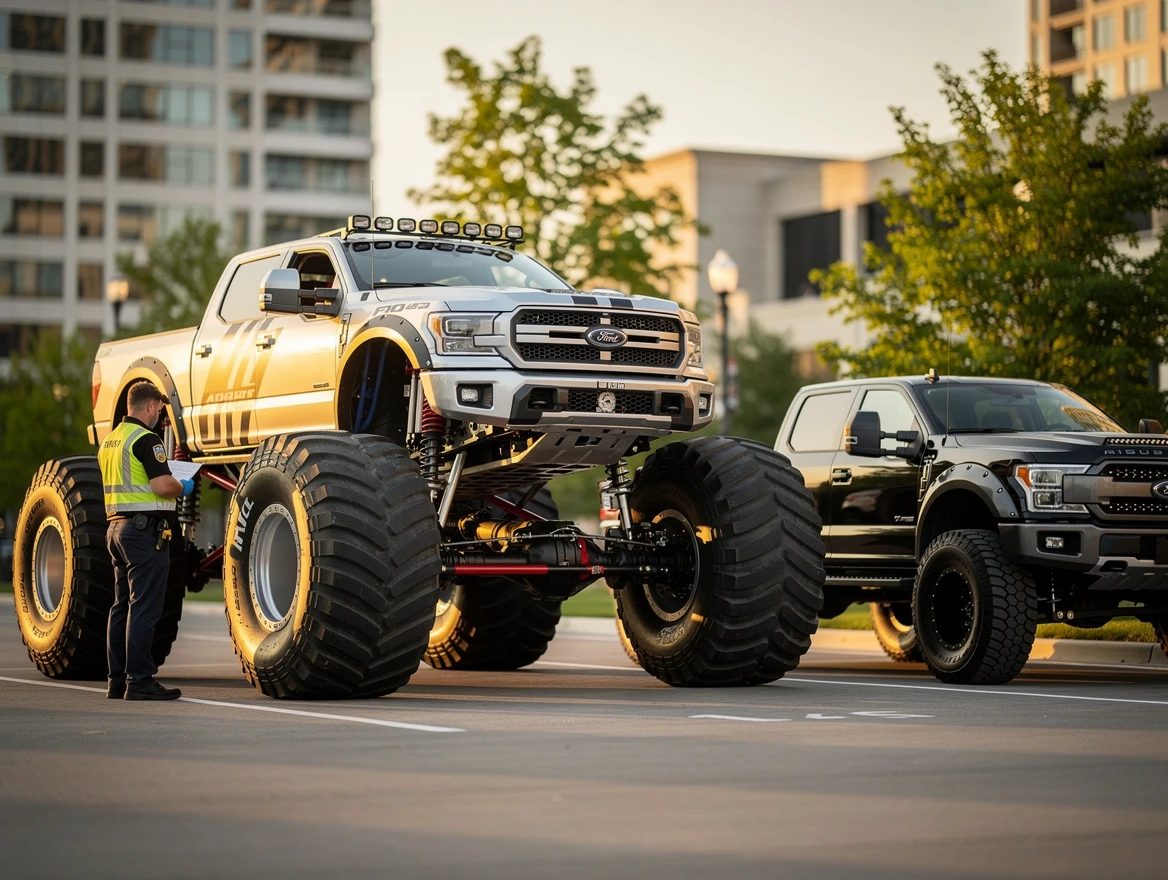
Monster trucks are engineering spectacles built for entertainment, not highway compliance. A typical monster truck stands 10 to 12 feet tall, weighs 4 to 5 tons, and uses engines producing 1,000+ horsepower, making them fundamentally incompatible with street regulations.
Ready to register your vehicle?
Join thousands of vehicle owners who use Ride Legal to handle their registration quickly.
Start Your Bespoke Registration →
Here's why they can't register for street use:
- Height violations: Most monster trucks exceed 13-14 feet, putting them over federal height limits for highway vehicles.
- Brake system inadequacy: Monster truck brakes are designed for show performance, not the consistent stopping power required for public roads. A street-legal truck must be able to stop from 60 mph within 156 feet.
- Lighting and visibility issues: Most show trucks lack the required headlight brightness (700-1,200 lumens per NHTSA standard), functioning turn signals, and brake light redundancy systems.
- Emissions failures: Many monster trucks run custom engines without emissions control systems, immediately disqualifying them in states that test for pollutants.
- Tread depth and tire compliance: Off-road tires used on monster trucks often fail DOT (Department of Transportation) tread depth requirements of a minimum of 2/32 inch depth.
- Structural and safety concerns: Monster trucks lack the side-impact protection, airbag systems, and crumple zones required by modern safety standards.
The definition of a monster truck is a vehicle with oversized wheels (typically 48-66 inches in diameter), extreme suspension lift (20-30 inches), and a body lifted 4-6 feet off the ground. These modifications are intentional for show appeal, not road safety.
How Jacked-Up Pickups Can Stay Street-Legal
A lifted pickup truck can remain street-legal if modifications are done thoughtfully and comply with state regulations. The key is understanding that a lift kit itself isn't compliant, but what you do with it matters.
Compliant lifted trucks typically feature:
- Modest lift heights between 4 and 8 inches, keeping the total vehicle height under state maximums (typically 13.5 feet)
- Properly adjusted headlights that don't blind oncoming traffic, meeting NHTSA brightness standards while still providing adequate illumination
- Functional brake systems upgraded or retained to meet stopping distance requirements (60 to 0 mph within 156-180 feet)
- DOT-approved tires with proper tread depth (minimum 2/32 inch) and sidewall markings indicating they meet federal safety standards
- Factory or upgraded lighting that maintains all required colors (red rear, amber turn signal, white front)
- Properly operating windshield wipers, mirrors, and horns at factory specifications or better
A jacked-up pickup remains street-legal because it prioritizes safety compliance over show performance. The suspensions are engineered for highway use, brakes are sized for the additional weight, and lighting is maintained to factory or aftermarket standards.
Height, Brakes, Lights: The Real Dividing Line
The practical dividing line between a street-legal modified truck and a monster truck is measurable: total vehicle height, brake stopping distance, and headlight compliance.
| Specification | Street-Legal Range | Monster Truck Typical | Status |
|---|---|---|---|
| Total Height | 12-13.5 feet (varies by state) | 10-12 feet (often exceeds limits) | Often fails (borderline) |
| Brake Stopping Distance (60 mph) | 156-180 feet | 200+ feet (inadequate) | Fails |
| Headlight Brightness | 700-1,200 lumens per lamp | Often 400-600 lumens (custom shows) | Fails |
| Tire Tread Depth | Minimum 2/32 inch (DOT required) | 1/16 inch or less (show tires) | Fails |
| Suspension Lift | 4-8 inches typical | 20-30 inches | Fails height and center-of-gravity tests |
A lifted pickup with a 6-inch suspension upgrade, adjusted headlights, DOT-rated tires, and maintained brakes can pass inspection in most states. A monster truck with a 25-inch lift, custom lighting, and show tires will fail every inspection.
State inspectors look for these specific metrics. If your truck checks all three boxes (height under limit, brakes stop within spec, lights meet brightness), you can drive it. Monster trucks intentionally exceed these limits for spectacle.
State-by-State Lift Kit and Modification Rules
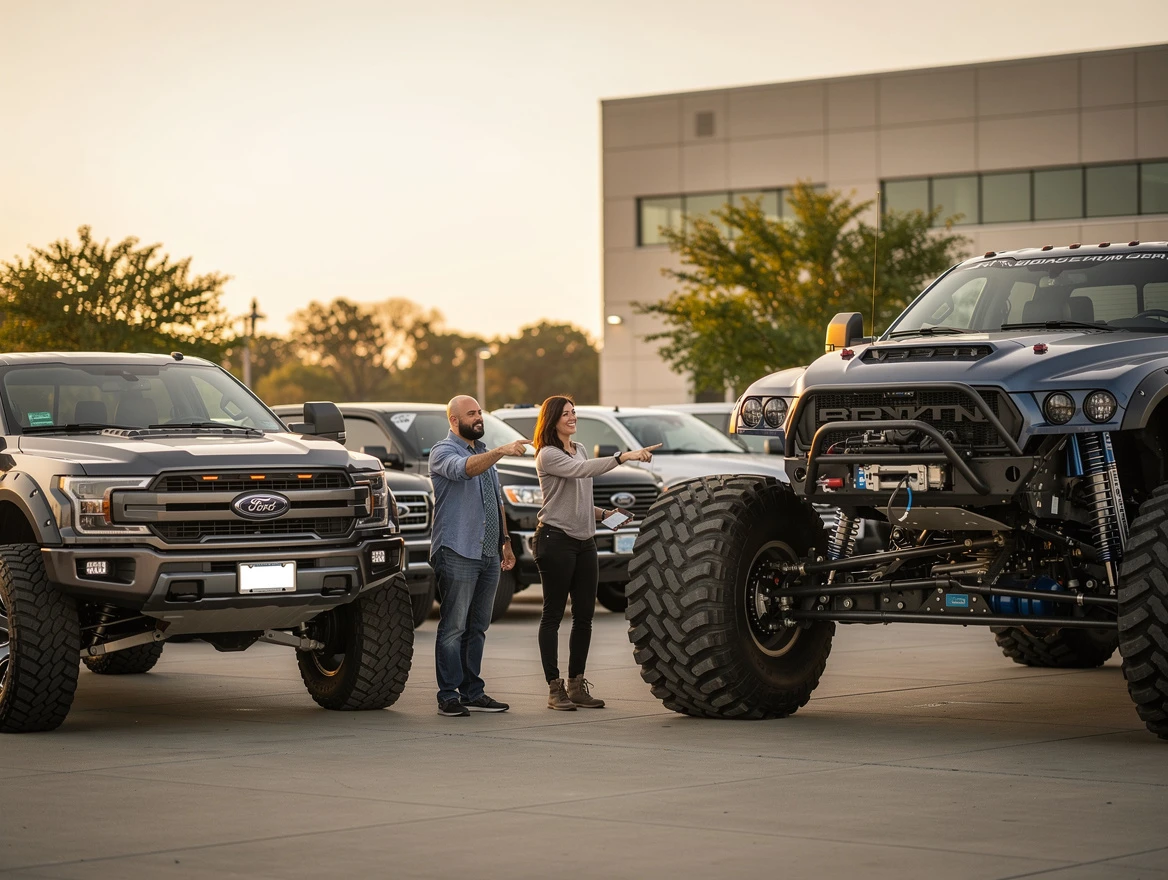
Vehicle modification regulations vary significantly across the United States. What's compliant in one state may be not in another, making it crucial to understand your state's specific requirements.
A few states have published explicit lift height limits, while others rely on general safety inspections and headlight regulations. Here's how major states handle lifted trucks:
- California: Height limit of 13 feet, 6 inches. Aftermarket headlights require specific DOT certifications. Lift kits must include brake adjustments to maintain stopping capability.
- Texas: No explicit lift height cap, but vehicles exceeding 14 feet may face issues at port-of-entry weigh stations. Headlights must not blind oncoming traffic (often a subjective inspection point).
- Colorado: Allows lifts up to 12 inches if the vehicle maintains proper brake performance and lights. Inspection focuses on functional safety, not aesthetics.
- Montana: Does not have strict lift height regulations at registration, but vehicles must pass safety inspection. Light adjustment and brake maintenance are critical.
- Florida: Vehicle height must not exceed 13.5 feet. Lift kits are common, and inspectors focus on brake and light functionality rather than lift measurement alone.
The safest approach is to confirm your state's height limit before purchasing a lift kit. A 6-inch or 8-inch lift keeps most trucks well within bounds, while anything above 12 inches requires state-specific verification.
If you're registering a modified vehicle across multiple states or planning to move, the registration process for lifted trucks can become complex. Our VIP Ownership solutions help owners work through state-specific compliance when managing modified vehicles.
How to Register a Modified or Lifted Truck
Registering a lifted or modified truck involves additional steps beyond a standard vehicle registration. The process differs whether your vehicle is newly modified or you're transferring a title for a pre-modified truck.
For newly lifted trucks:
- Perform modifications first: Install your lift kit, upgrade brakes if necessary, adjust headlights, and make sure all lights function properly.
- Request a pre-inspection: Many states allow informal inspections before formal registration. Contact your state's vehicle division to confirm what they'll test.
- Get your inspection: Bring your truck to a certified inspection station. They'll check height, brakes, lights, tire tread, and emissions (if required).
- Submit registration documents: Include your current title, proof of residency, identification, and the inspection certificate.
- Pay registration fees: Costs vary by state and the truck's weight. Modified vehicles sometimes incur higher fees.
- Receive your registration: Once approved, you'll get your registration card and license plates (if required in your state).
For pre-modified vehicles or title transfers:
If you're buying a truck that's already lifted, the process is similar, but you'll need the seller's title and may require a mechanical inspection to verify the modifications are compliant.
Many owners of exotic and modified vehicles use out-of-state registration to simplify compliance. Street-legal registration specialists can guide you through state-specific requirements, especially if your lifted truck has unusual modifications or you're managing multiple vehicles across states.
Frequently Asked Questions
Can a monster truck be street-legal?
Most commercially-built monster trucks cannot be street-legal because they fail federal safety standards in multiple ways: excessive height (typically 10-12 feet, exceeding state limits), inadequate braking systems, non-compliant lighting, and custom engines without emissions control. However, a monster truck could theoretically be modified to meet street-legal requirements if its owner retrofitted DOT-approved lights, upgraded brakes to stop within 156 feet from 60 mph, reduced its height below 13.5 feet, and installed emissions-compliant engines. In practice, the cost and engineering required make this extremely rare. Monster trucks are designed and built exclusively for entertainment venues and shows, not highway use.
What makes a car street-legal?
A car is street-legal when it meets National Highway Traffic Safety Administration (NHTSA) federal standards and passes state registration and inspection requirements. This means the vehicle must have functioning headlights (700-1,200 lumens), taillights, brake lights, turn signals, windshield wipers, mirrors, a working horn, and properly-inflated DOT-approved tires with a minimum 2/32-inch tread depth. The vehicle must stop from 60 mph within 156-180 feet (depending on state), stay under state height limits (typically 13-14 feet), produce emissions within limits (where tested), and have a valid title and registration. Any vehicle that meets these criteria can operate on public roads.
What does a vehicle need to be street-legal?
A vehicle needs: (1) valid title and registration, (2) functioning headlights and taillights meeting brightness standards, (3) brake system capable of stopping from 60 mph within distance, (4) working windshield wipers and mirrors, (5) horn, (6) DOT-approved tires with adequate tread depth, (7) total height under state limits (typically 13-14 feet), (8) emissions compliance where required, and (9) proper visibility (no cracks in windshield blocking driver view). Additionally, the vehicle must have side markers, turn signals, and license plate lighting. These requirements exist across all U.S. states, though some state-specific rules vary slightly. Failure to meet any of these can result in inspection failure and registration denial.
How do I know if my lift kit is street-legal?
Your lift kit is street-legal if it keeps your truck's total height under your state's maximum (typically 13-13.5 feet), doesn't interfere with brake performance (vehicle must still stop within 156-180 feet), and allows proper headlight alignment. Most lift kits under 8 inches meet these standards if brakes are maintained and lights are adjusted. To confirm, measure your truck's height from the ground to the highest point (including roof antenna or light bar), check that your headlights don't blind oncoming drivers, and test your brakes on a safe surface. Many aftermarket suppliers include compliance documentation with their kits. When in doubt, have a pre-inspection performed by your state's vehicle division before registering.
Are lifted trucks considered modified vehicles for insurance?
Yes, lifted trucks are typically considered modified vehicles by insurance companies, and disclosure is important. Most insurers require you to notify them of significant modifications (typically those over 4-6 inches of lift or engine changes) to keep your policy valid. Failure to disclose can result in claim denial if the modification contributed to the damage or loss. Some insurers charge higher premiums for lifted trucks due to increased risk of rollover (higher center of gravity) and potential brake strain. A few insurers specialize in modified vehicles and may offer better rates. Always contact your insurance provider before lifting your truck and again before registering it to avoid coverage gaps.
What happens if I drive a monster truck on the road without registration?
Driving an unregistered vehicle can result in fines ranging from $100 to $1,000 (depending on state), vehicle impound, license suspension, and civil liability if involved in an accident. If your monster truck cannot pass street-legal inspection, you cannot register it and therefore cannot drive it on public roads. If you own a monster truck, it must remain at authorized show venues or private property (with owner permission). Attempting to register a non-compliant monster truck is considered fraud and can result in criminal charges. If you want to drive a modified truck on roads, it must first pass a safety inspection in your state.
Understanding the line between street-legal lifted trucks and show-only monster trucks comes down to measurable safety standards: height, brakes, lights, and tires. Most jacked-up pickups with reasonable lifts (under 8 inches) and properly maintained systems can stay street-legal. Monster trucks, built for spectacle, cannot meet these standards without major engineering retrofits that rarely happen in practice.
If you own a modified truck and need help navigating registration requirements across states, or if you're considering a lift kit and want to confirm compliance, specialized guidance makes the process clearer.
Stay Updated
Get the latest on registration tips, LLC insights, and exclusive offers.
No spam. Unsubscribe anytime.
This is not legal or financial advice. Please consult your CPA/Attorney for all legal and financial guidance. Ride Legal is a privately owned website and is not operated by any government agency.