
How to Avoid Title Transfer Delays After Buying a Used Vehicle
05/13/2026 · Ride Legal
To avoid title transfer delays after buying a used vehicle, you must make sure all documents, including the bill of sale, odometer statement, and title, are correctly signed and free of alterations before submission. Addressing potential discrepancies in the chain of ownership or missing lien releases immediately upon purchase is the most effective way to prevent long processing wait times with the state agency.
Proactive Steps to Identify Title Discrepancies Before You Pay
Updated on August 12, 2026
Buying a used motorcycle or powersport asset is an exhilarating experience, but the administrative aftermath often holds hidden hurdles. Before finalizing any purchase, you should scrutinize the physical title for signs of tampering, such as white-out, erasures, or smudged ink. If a title is not pristine, the state office will likely reject it, causing a significant delay in your ability to register and operate the asset.
The Importance of Verifying the VIN Early
Every vehicle identification number (VIN) must match perfectly between the title document and the physical frame of the bike. If you find a mismatch, you must pause the transaction immediately and consult the seller to rectify the documentation. A simple typo on a title can turn a routine registration into an ordeal that spans weeks of follow-up requests. For peace of mind regarding the history of your purchase, consider using our VIN check service to verify that the numbers are consistent and the record is clean.
Ensuring Odometer Compliance and Signatures
Odometer readings are a primary point of failure for new owners. Always make sure that the odometer reading is recorded in the exact format required by the state, and verify that every registered owner listed on the title has signed the transfer section exactly as their name appears on the face of the document.
How to Properly Prepare Your Documentation for Submission
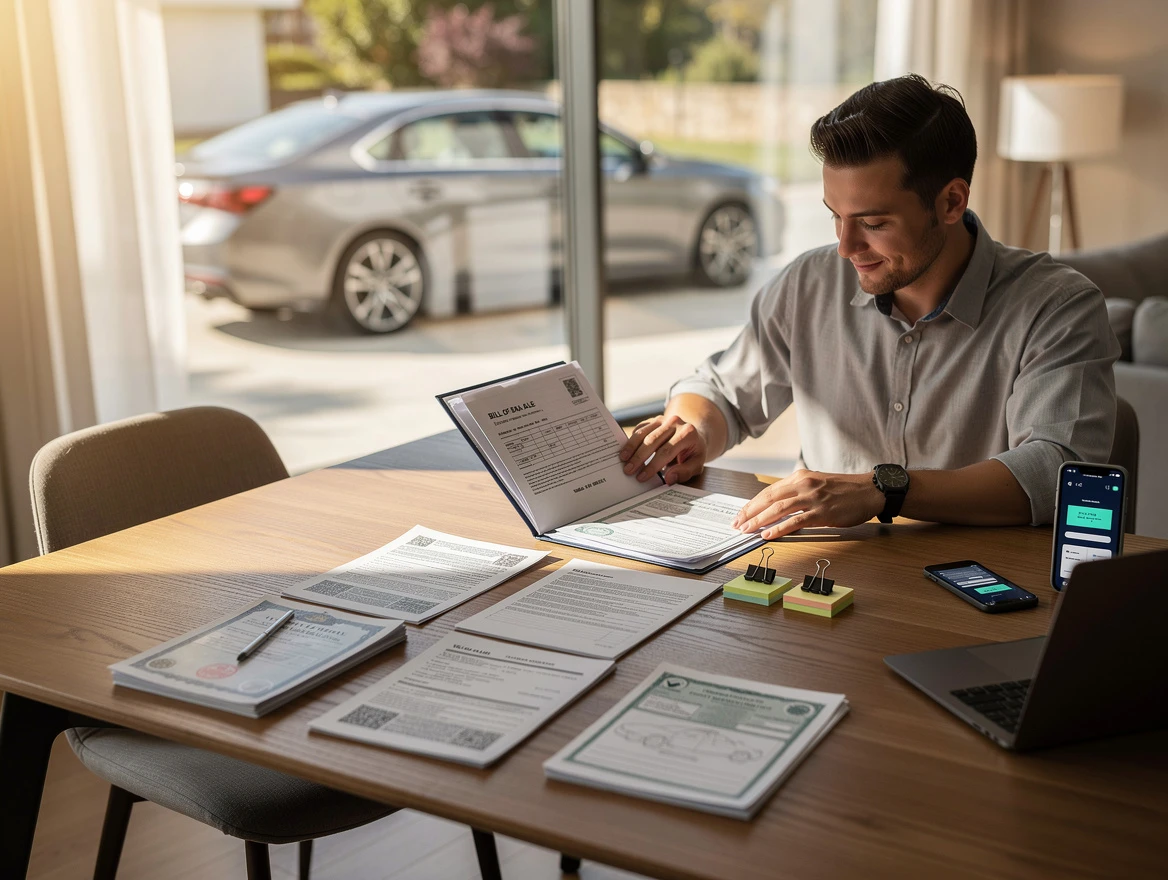
Once you have secured the paperwork, the preparation phase begins. Organizing your documentation into a clear, chronological order helps when you present the materials for registration. Many owners find that creating a checklist of required items prevents them from forgetting small but critical components, such as a bill of sale or a specific affidavit of origin.
Ready to register your vehicle?
Join thousands of vehicle owners who use Ride Legal to handle their registration quickly.
Start Your Premium Registration →Handling Missing Lien Releases
One of the most common reasons for title rejection is an unreleased lien. If the seller has a loan on the bike, the lender remains a legal interest holder until they issue a lien release. Do not accept a verbal promise that a lien is paid; you must have the physical lien release document in hand to clear the title for your name. If you encounter a situation where the seller has lost the title or is struggling with a lien release, motorcycle title transfer service options may provide the support you need to resolve the matter.
The Role of the Bill of Sale
While the title is the gold standard for ownership, a bill of sale is often mandatory for confirming the purchase price and sales tax liability. Make sure the document includes the purchase price, the date of sale, and full contact details for both parties. Without a clear bill of sale, the state may assign a valuation to the vehicle based on current market data, which can result in higher registration fees than expected.
| Factor | Common Risk | Mitigation Strategy |
|---|---|---|
| Title Condition | Alterations or erasures | Reject damaged titles at point of sale |
| VIN Match | Digit discrepancies | Verify against physical frame before paying |
| Lien Status | Pending lien release | Require formal release document from lender |
| Odometer | Formatting errors | Use exact reading; confirm state requirements |
Strategies for When You Are Facing Complex Title Issues

Even with the best intentions, some titles are simply problematic. If you find yourself holding a vehicle with a missing title, a bonded title may be a necessary avenue to look at. This process involves posting a surety bond to protect the state against future claims of ownership, essentially allowing you to register the bike while you build your own record of ownership. Understanding how to avoid paying sales tax on a new car in Florida or similar high-tax jurisdictions can also be a vital part of your overall financial strategy during this phase.
Working with Specialized Registration Support
Attempting to handle complex titling issues at a local office can lead to circular conversations and repeated denials. Working with specialists who understand the nuances of state-by-state requirements can save you significant time. In our experience, this work has provided us with unique insights into the most common pitfalls owners face today.
Maintaining a Clear Chain of Custody
Whenever you transfer ownership, keep a copy of every document submitted. If an agency loses your file, having a scanned backup can make the reconstruction process much faster. Digital backups should include the bill of sale, the old title, and any correspondence with the previous owner, as these records provide the evidentiary support required to move the process forward after an unexpected delay.
Frequently Asked Questions About Title Transfers
What should I do if the seller signed the wrong spot on the title?
If a seller signs the wrong spot, do not attempt to cross it out or use correction fluid. The document is likely ruined. The best course of action is to request a duplicate title from the seller, who must apply for it through their local motor vehicle office. Attempting to fix a signature error usually results in an automatic rejection, which is why it is critical to inspect the document carefully before the seller leaves.
How long does it typically take to receive a new title?
Processing times vary by state and the current volume of requests at the agency. In some cases, it can take 30 to 60 days to receive a paper title via mail. Using private registration assistance can often help you keep track of your status, but the final printing of the document remains subject to state agency timelines.
What is a bonded title and do I need one?
A bonded title is a document that establishes ownership for a vehicle that lacks a traditional title, usually due to loss or theft from the previous owner. You apply for this by posting a surety bond for a specific amount. You generally only need this if you cannot reach the previous owner to get a replacement title, making it a last resort for difficult title transfers.
Can I register a vehicle without a title?
It is generally not possible to register a vehicle without a valid title or a state-authorized alternative like a bonded title. The title is the only proof of ownership that the state recognizes. If you purchased a vehicle without one, you must address that hurdle before you can register the asset for road use.
Are there specific requirements for transferring out-of-state titles?
Yes, out-of-state titles often require a VIN inspection to confirm the vehicle is not reported stolen and matches its official description. Check the requirements in the state where you intend to register, as some locations require a physical inspection by a law enforcement officer or a state-authorized technician before they will issue a new title.
What if the previous owner is deceased?
If you purchased a vehicle from an estate, you need the legal documents confirming the executor's authority to sell the asset. This usually includes a death certificate and a copy of the letters of administration or the probate court order. Without these documents, the state cannot verify that the person signing the title had the legal authority to do so.
Avoiding title transfer delays after buying a used vehicle comes down to precision and preparation. By verifying the VIN, ensuring signatures are correct, and securing all necessary supporting documents like lien releases or bills of sale, you can minimize the risk of rejection. If you require assistance, our team is ready to guide you through the process to make sure your asset is ready for the road.
This is not legal or financial advice. Please consult your CPA/Attorney for all legal and financial guidance. Ride Legal is a privately owned website and is not operated by any government agency.