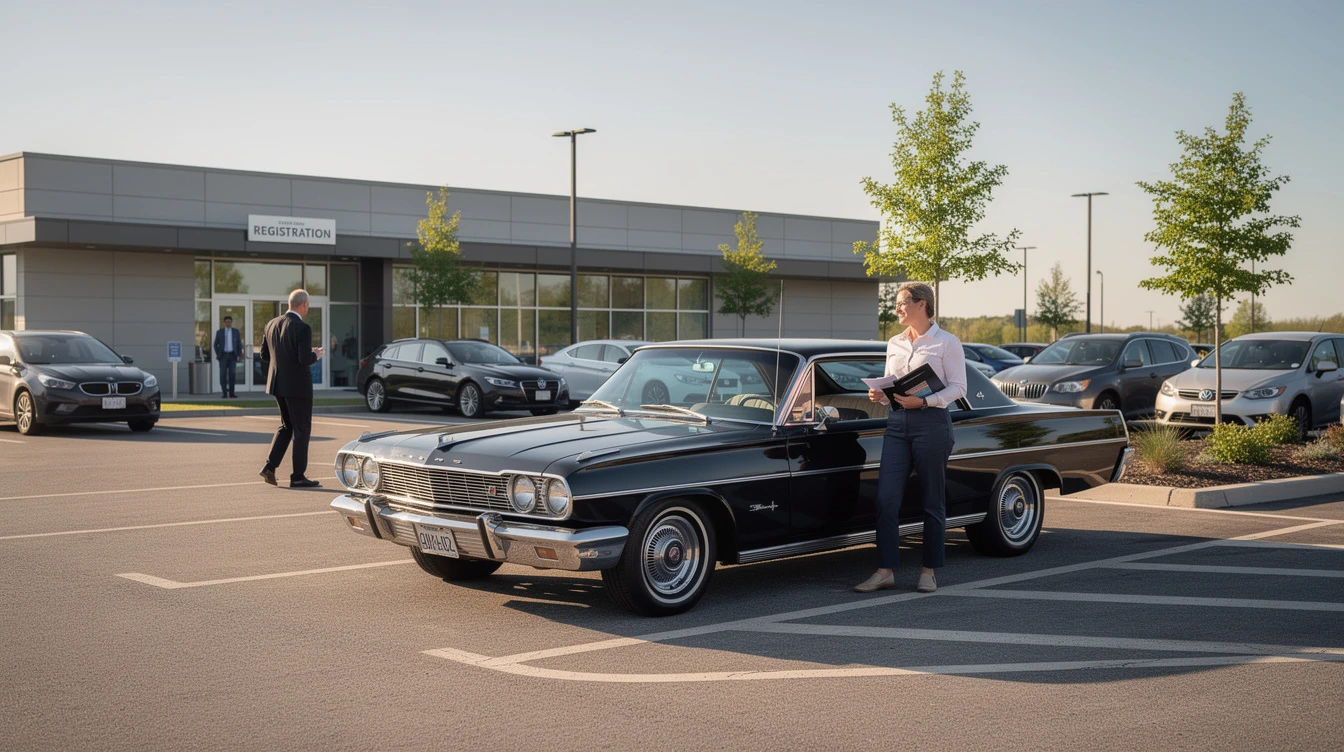
Classic car registration comes down to two things: proving your vehicle meets the age and eligibility requirements, then filing the right paperwork with your state. Most states require the car to be at least 25 or 40 years old to be eligible for vintage registration, and that status gets you reduced fees, plus an exemption from emissions testing in most cases.
Check Your Registration Options
What Defines a Classic Car for Registration Purposes?
Updated on November 18, 2026
A classic car, also called a vintage or antique vehicle, is typically any car at least 25 or 40 years old, depending on where you live. Some states use the term "historic vehicle" instead. The exact cutoff varies, but most states land at either 25 or 30 years from the model year. Classic status carries real benefits: lower registration fees, emissions test exemptions, and specialty license plates that signal collector-grade status to anyone paying attention.
- Age requirement ranges from 25 to 40 years old in most states
- Defined by model year, not purchase date
- Some states distinguish between "classic" and "antique" (antique is typically older)
- Exempt from emissions and safety inspections in most jurisdictions
- Registration renewals often cost significantly less than standard vehicles
What Documents Do You Need to Register a Classic Car?

To register a classic car, you need proof of ownership (the title), proof of residency, and a government-issued ID. Things get more involved if your car is imported, transferred from out of state, or is missing its title. Many classic car owners work with registration specialists to handle bonded titles or out-of-state transfers without losing weeks to DMV back-and-forth.
Ready to register your vehicle?
Join thousands of vehicle owners who use Ride Legal to handle their registration quickly.
Start Your Bespoke Registration →
- Signed title from the previous owner (front and back)
- Proof of residency (utility bill, lease agreement, or government letter)
- Government-issued photo ID
- Application for registration (form varies by state)
- Proof of insurance (some states require this before registration)
- VIN verification (some states require in-person inspections)
If your title is missing, damaged, or the seller never signed it, you'll need a bonded title or a replacement title before you can move forward. For more on that process, review unsigned vehicle title solutions, which covers recovery options for compromised or incomplete titles.
What Are the Steps to Register a Classic Car?
Once you have your documents together, the process moves quickly. Most states let you file by mail or online; a few still require an in-person DMV visit. Here's the typical sequence.
- Confirm your vehicle meets the classic car age threshold in your state
- Gather all required documents (title, ID, proof of residency, insurance)
- Complete the classic car registration application form
- Submit documents by mail, online, or in person to your state DMV
- Pay the registration fee (significantly lower for classic vehicles)
- Receive your classic car registration certificate and special plates
- Display plates and keep proof of registration in your vehicle
How Long Does Classic Car Registration Take?
Timelines vary by state and by how you file. Mail-in applications typically take 2, 4 weeks. Online submissions usually process in 1, 2 weeks. In-person filings are often approved the same day, though some states still run a 7, 10 day processing window even for walk-ins. If you have title issues or need a bonded title first, budget an extra 2, 6 weeks on top of that.
| Processing Method | Typical Timeline | Best For |
|---|---|---|
| Mail-in Application | 2-4 weeks | Out-of-state owners, remote processing |
| Online Submission | 1-2 weeks | States with digital portals |
| In-Person Filing | Same day approval | Local owners, immediate verification |
| With Title Issues | 4-10 weeks | Missing title, bonded title needed |
Skip the Paperwork, Start Your Registration
Classic Car Registration Requirements by State
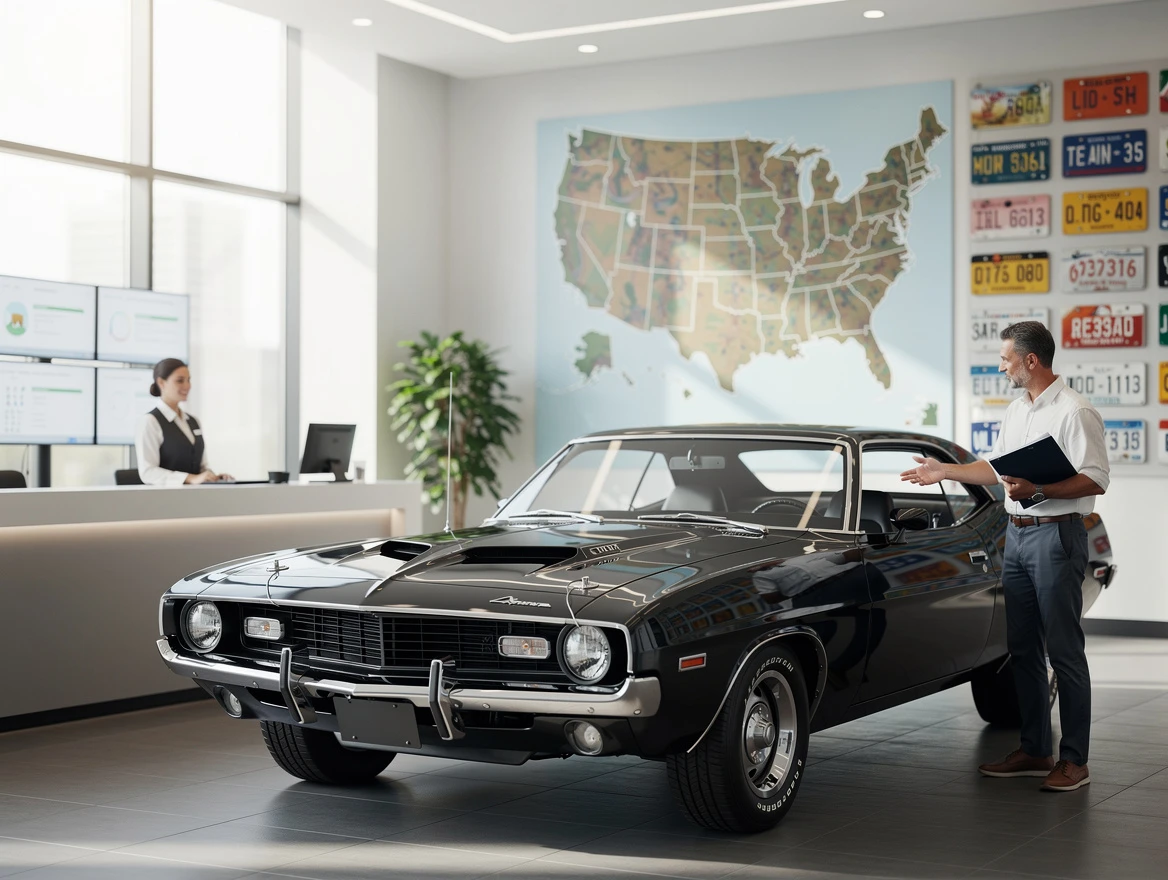
Every state sets its own rules. Some, like California, Texas, and Florida, offer reduced registration fees for vehicles over 25 years old, while others waive emissions testing entirely. A few states require annual registration renewals, while others allow multi-year registrations. Always check your specific state's requirements before you file; don't rely on what your neighbor told you worked for their car.
- Age thresholds vary from 25 to 40 years
- Some states exempt classics from safety inspections
- Some states exempt classics from emissions testing
- Registration fees are typically 50-80% lower than standard vehicles
- Multi-year registration is available in some states
- Special "vintage" or "historic" plates indicate collector status
If you own an exotic or high-value classic, standard registration alone won't protect you. Why Classic Car Collectors Are Protecting Their Investments with Proper Titling explains how smart registration and titling strategies shield collectors from liability and tax complications.
What if Your Classic Car Has Title Problems?
Missing or damaged titles are common with classic cars, especially older vehicles that have changed hands multiple times. If the original title is lost, your state DMV can issue a replacement. If the previous owner never signed the title, some states allow a correction by affidavit; others require a bonded title. A bonded title is a court-issued document used when the original title can't be found or is incomplete. It's more common than people expect.
- Lost title: Request a replacement from your state DMV
- Unsigned title: May be corrected by affidavit or bonded title
- Damaged title: Request certified replacement from DMV
- Bonded title cost: Typically $100-$300 depending on vehicle value
- Bonded title duration: Usually 3-5 years before full title is issued
For detailed guidance on title recovery, consult car title not signed by seller, which walks through your options when you receive an incomplete title.
Frequently Asked Questions
How to title a classic car in Montana?
Montana classic car titling requires proof of ownership and a completed application for a classic vehicle title. If your title is missing, file for a bonded title or replacement first. Montana charges no vehicle sales tax and allows multi-year registrations for classics; that combination makes it one of the most popular jurisdictions for vintage car ownership in the country.
How to make a car street-legal?
To make a car street-legal, it must meet your state's safety and emissions standards, carry a valid title and registration, have liability insurance, and display current license plates. Classic cars are often easier to register because they're exempt from modern emissions and safety requirements. Some modifications, like engine swaps or lighting changes, require specific state approvals before you hit the road.
How to start a Montana LLC for a car?
Form a Montana LLC through the Montana Secretary of State's office, then register your classic car under the LLC's name. This structure protects personal assets and simplifies managing multiple vehicles. You'll need to file articles of organization and get an EIN from the IRS. Many collectors use LLCs to manage entire car collections and work them into their estate planning.
How to register cars in Montana?
Register in Montana by submitting your title, proof of residency, ID, and a completed application to the state Motor Vehicle Division. Classic cars are eligible for reduced fees and exemptions from emissions testing. You can file by mail or visit a local county treasurer's office. Out-of-state owners can register remotely; that's a big part of Montana's appeal.
Why are expensive cars registered in Montana?
Montana charges no vehicle sales tax, keeps registration fees low, and skips emissions testing for most vehicles. For a $200,000 exotic, that sales tax exemption alone can save $15,000 to $20,000, depending on your home state. That makes Montana a genuinely cost-effective choice for high-value and exotic vehicle owners who want to cut ownership costs without cutting corners on compliance.
Can an LLC buy a car?
Yes, an LLC can purchase and own a vehicle. Register the car under the LLC's legal name using its EIN. This setup separates personal assets from liability claims tied to the vehicle and keeps corporate ownership clean. Talk to a tax advisor before forming an LLC strictly for vehicle ownership; the structure needs to make sense for your specific situation.
Stay Updated
Get the latest on registration tips, LLC insights, and exclusive offers.
No spam. Unsubscribe anytime.
This is not legal or financial advice. Please consult your CPA/Attorney for all legal and financial guidance. Ride Legal is a privately owned website and is not operated by any government agency.