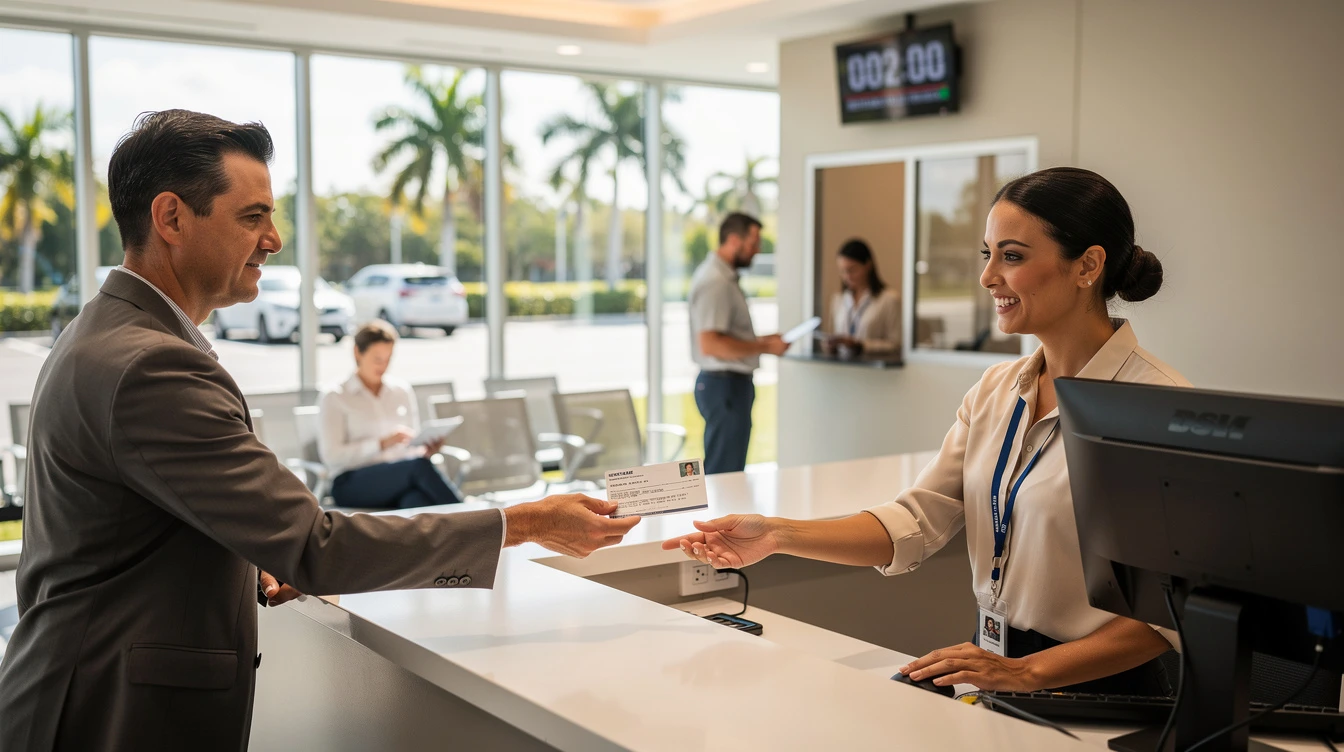
A paper car title in Florida is a certificate of ownership issued by the Florida Department of Motor Vehicles that proves your right to own a vehicle. You can obtain one by submitting the required documents, paying applicable fees, and following the state registration process for your vehicle's title transfer or replacement.
In This Guide
- What Documents Do You Need for a Florida Paper Title?
- How Do You Transfer a Car Title in Florida?
- How Do You Replace a Missing Vehicle Title in Florida?
- What Happens When a Seller Forgot to Sign the Title?
- What Do You Need to Register a Car in Florida?
- Frequently Asked Questions
What Documents Do You Need for a Florida Paper Title?
To obtain a paper title in Florida, you'll need to gather specific documents that verify ownership, identity, and the vehicle's condition. The exact documents depend on whether you're transferring a title from another state, replacing a lost one, or getting your first title after a purchase.
Core documents required for most Florida title applications include a completed application form, proof of ownership or previous title, government-issued identification, proof of residency, and proof of insurance. When registering a vehicle in Florida, these documents form the foundation of your application.
- Completed Florida Motor Vehicle title application form
- Previous out-of-state title or bill of sale (if applicable)
- Government-issued photo ID or driver's license
- Proof of Florida residency (utility bill, lease, mortgage statement)
- Proof of vehicle insurance meeting Florida minimum coverage
- VIN verification form (if required by FLHSMV)
- Lien release document (if vehicle has an outstanding loan)
- Import duty or emission testing documents (for vehicles from other states)
If the vehicle was previously registered in another state, that out-of-state title must be signed by the seller. This prevents title jumping and protects both buyer and seller from fraud. When a seller forgets to sign the title, the process becomes more complicated and may require bonded title or affidavit remedies.
How Do You Transfer a Car Title in Florida?
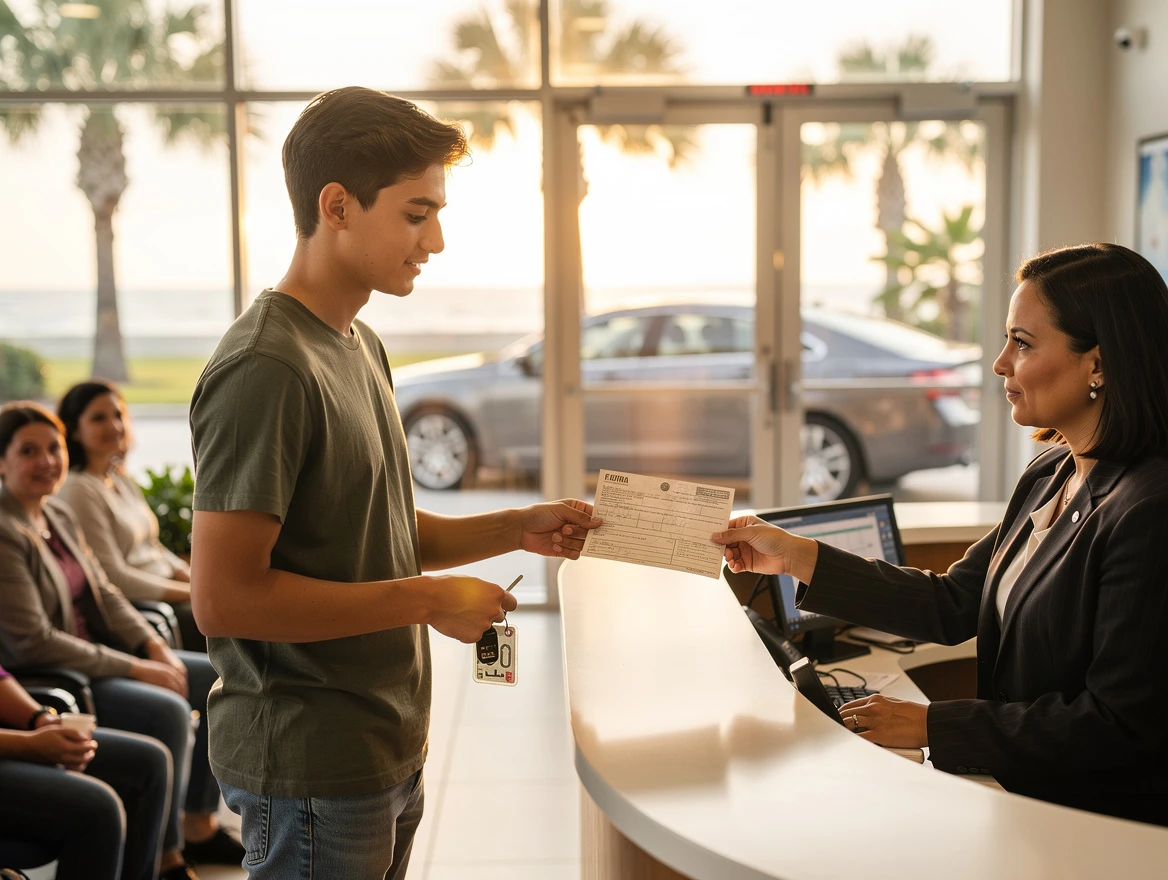
Transferring a car title in Florida involves submitting your documentation to the Florida Department of Motor Vehicles, paying transfer fees, and waiting for the new title to be issued in your name. The transfer process varies slightly depending on whether you're buying from a private party or a dealership, and whether the vehicle is financed.
Ready to register your vehicle?
Join thousands of vehicle owners who use Ride Legal to handle their registration quickly.
Start Your Bespoke Registration →
The standard timeline for receiving your paper title in Florida is 7 to 10 business days after submission. Some expedited options may reduce this, but paper titles always take longer than electronic processing.
- Gather all required documents listed above
- Complete the Florida Motor Vehicle title application (Form HSMV 82101)
- Have the seller sign the back of the out-of-state title or bill of sale
- Visit a Florida DMV office in person or use an authorized county tax collector's office
- Submit documents and pay applicable transfer fees
- Receive a temporary registration receipt
- Wait for the paper title to arrive by mail (typically 7-10 business days)
If you're buying a vehicle from a private seller, make sure the seller provides a signed title or bill of sale. Never accept a vehicle without documentation of ownership transfer. This protects you legally and ensures your title application won't be rejected.
For high-value vehicles, exotic cars, or multi-state ownership situations, working with VIP ownership solutions can simplify the process and avoid common delays. Specialists familiar with complex registrations can guide you through Florida's specific requirements and help avoid costly mistakes.
How Do You Replace a Missing Vehicle Title in Florida?
If your original title has been lost, damaged, or never received, Florida allows you to request a duplicate. The process for replacing a missing vehicle title differs from a first-time title transfer because you don't have the original document to submit as proof of prior ownership.
To replace a missing title, you'll submit an affidavit or bonded title application proving you own the vehicle, along with proof of registration, insurance, and identity. This protects the state's records and prevents title fraud.
- Complete the Duplicate Title application (Form HSMV 82101)
- Provide proof of current Florida registration
- Submit government-issued identification
- Include proof of vehicle insurance
- Pay the duplicate title fee
- Provide VIN verification if requested
- Wait 7-10 business days for delivery
If you've never transferred a car title and cannot locate it, Florida may require an affidavit of ownership or a bonded title. An affidavit is a sworn statement declaring your ownership. A bonded title is obtained through a surety bond and protects both you and the state against future ownership disputes.
How to title a vehicle without a title becomes easier when you understand Florida's bonded title process. A detailed guide explaining bonded title options and requirements is available through compliance options and documents needed for vehicle titling.
What Happens When a Seller Forgot to Sign the Title?
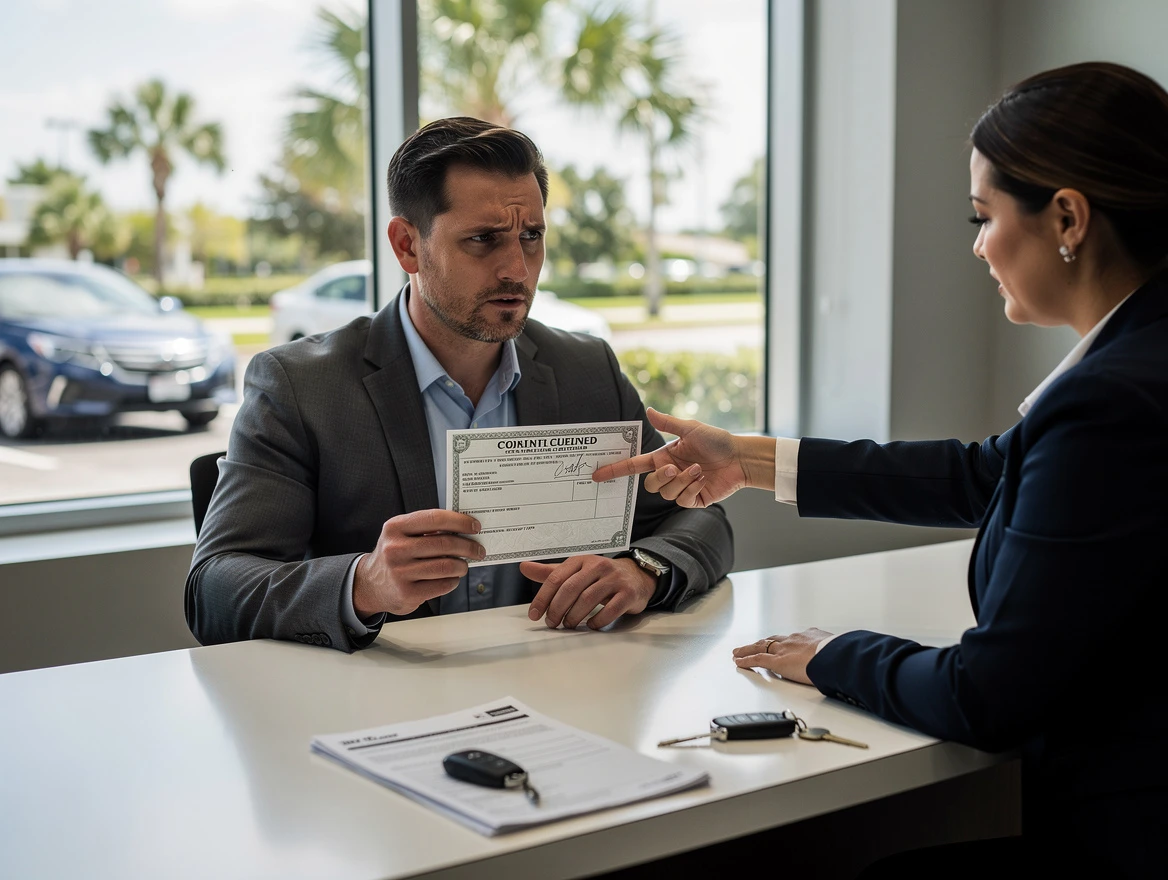
An unsigned vehicle title is a common problem that delays or blocks registration in Florida. When a seller forgot to sign the title, you cannot legally transfer ownership or register the vehicle in your name until the signature issue is resolved.
If you've already purchased the vehicle and the seller's signature is missing, your options depend on whether you can still contact the seller and whether the vehicle was recently purchased or long ago.
- Contact the seller immediately and request their signature on the back of the title
- Have the signature notarized to add legal weight to the correction
- If the seller is unavailable, they can legally authorize someone else to sign on their behalf
- File an affidavit of ownership if the seller cannot be located or refuses to sign
- Apply for a bonded title if signature issues cannot be resolved through affidavit
- Use a bill of sale as supplementary evidence of purchase
An unsigned title creates a gap in the ownership chain. Florida's DMV won't issue a new title until the previous owner's signature is verified. This is a consumer protection measure, but it can delay your registration by weeks or months if you can't reach the seller.
Many buyers face this issue when a car title was signed by the original owner. Understanding what happens if seller does not sign title prevents this problem before it happens. For complete guidance, review the resource on unsigned vehicle title resolution.
What Do You Need to Register a Car in Florida?
Vehicle registration in Florida is separate from obtaining a title, though both are required for legal vehicle ownership and operation. Registration proves you've met insurance requirements and paid applicable fees. A title proves you own the vehicle.
Florida registration requirements include proof of ownership (title or bill of sale), proof of insurance, proof of residency, government-issued ID, and payment of registration fees. The state issues a registration card and license plates that must be displayed on your vehicle.
| Document / Item | Purpose | Notes |
|---|---|---|
| Vehicle Title | Proof of Ownership | Must be signed by previous owner if transfer |
| Proof of Insurance | Liability Coverage Requirement | Minimum coverage varies by vehicle type |
| Government ID | Identity Verification | Driver's license or passport required |
| Proof of Residency | Address Verification | Utility bill or lease agreement accepted |
| VIN Inspection Form | Vehicle Verification | Required for certain transfers or first registrations |
If you're registering a motorcycle or powersport vehicle in Florida, additional requirements may apply. For clarification on motorcycle or exotic vehicle registration, refer to motorcycle registration resources and street-legal requirements.
Skip the Paperwork, Let Us Handle It ->
Frequently Asked Questions
What is a bonded car title?
A bonded car title is a certificate of ownership obtained through a surety bond when the original title is lost, unavailable, or cannot be located. The bond protects the state and future owners by guaranteeing that no one else will claim ownership of the vehicle. If a legitimate owner surfaces within a set period (typically 3-5 years), the bond pays them compensation. This option is used when you can prove you own the vehicle but cannot access the original title documentation. Florida accepts bonded titles for registration and transfer purposes when standard title methods are unavailable.
How hard is it to get a title for a car that has no title?
Getting a title for a car without one ranges from straightforward to moderately complex, depending on your situation. If you have a bill of sale and proof of purchase, an affidavit of ownership may be sufficient. If the original seller is unreachable or refuses to sign, a bonded title becomes your path forward. The hardest cases involve vehicles with unknown history, salvage records, or liens. Florida allows multiple remedies, so there's almost always a legal route to obtain a title. The timeline varies from two weeks (affidavit method) to several weeks (bonded title process).
What do you need to register a car in Florida?
To register a car in Florida, you need a valid title or bill of sale, proof of insurance meeting state minimums, government-issued photo identification, proof of residency, and payment of registration fees. If the vehicle is financed, you'll also need a lien release document or proof from the lender that the loan is current. For imports from other states, you may need emissions testing certificates or import compliance documents. First-time Florida registrations sometimes require a VIN verification by a law officer or authorized inspector. All documents must be submitted to a Florida DMV office or authorized tax collector location in person.
Can you register a car without a title?
You can register a car in Florida without an original title if you provide alternative ownership proof. A bill of sale signed by the previous owner serves as evidence of purchase. An affidavit of ownership (a sworn statement declaring you own the vehicle) may be accepted in place of a title for registration purposes. If neither option works, a bonded title allows registration while protecting ownership rights. However, some lienholders or financing institutions may not accept vehicles registered without an original title, so clarify with your lender if applicable. Registering without a title is legal, but obtaining an actual paper title afterward is recommended for resale and security.
How to title a classic car in Montana?
If you're titling a classic car in Montana, the process is similar to standard vehicle titling but may involve age-specific classifications and reduced fees. Montana has no sales tax on vehicles, making it an attractive jurisdiction for classic car owners. You'll submit the vehicle's current title or bill of sale, proof of ownership, government ID, proof of residency (which can be an out-of-state address if using Montana LLC registration), and inspection documentation if required. Classic cars often Eligible for special registration plates that are cheaper than standard registration. Montana's streamlined process and lack of emissions testing make it a popular choice for collectors. If you're considering Montana registration for asset protection, review how Montana LLC structures can benefit classic car owners.
Can you get a title for a car that has no title?
Yes, you can get a title for a car that has no title through Florida's bonded title or affidavit of ownership process. If you have proof of purchase (bill of sale, payment receipts) and can provide identity and residency documentation, you're eligible for a bonded title. The bond amount is typically based on the vehicle's estimated value and protects against future ownership claims. The process takes 4-8 weeks and costs less than litigation. For older vehicles or those with unclear history, the bonded title is Florida's primary legal remedy. Once obtained, a bonded title functions as a regular title for registration, transfer, and sale purposes, though some buyers may request the bond to expire before purchasing from you.
Stay Updated
Get the latest on registration tips, LLC insights, and exclusive offers.
No spam. Unsubscribe anytime.
This is not legal or financial advice. Please consult your CPA/Attorney for all legal and financial guidance. Ride Legal is a privately owned website and is not operated by any government agency.