
How to Title a Vehicle Without a Title: Compliance Options
09/24/2026 · Ride Legal
To title a motorcycle or powersport machine without an existing title, you must prove ownership through compliant pathways such as bonded titles, prior registration transfers, or out-of-state corporate title transfers through states like Montana or South Dakota. The core documents needed typically include a notarized bill of sale, an active VIN verification or pencil tracing, completed state title applications, and a statement of facts detailing how you acquired the machine. Working through these pathways establishes a clean, compliant certificate of ownership while eliminating registration headaches.
Whether you picked up a vintage motorcycle at an estate auction, bought a customized side-by-side on an unsigned title, or inherited an abandoned trail bike, missing paperwork brings your plans to a dead halt. Traditional state motor vehicle agencies offer little guidance when title chains break, leaving riders stuck with machines they cannot ride on public roads.
This guide breaks down every compliant option available for titling untitled motorcycles, ATVs, and UTVs. You will find out which documents state agencies demand, how out-of-state ownership structures work, and how to get your ride fully street-legal without unnecessary delays.
Look at VIP Ownership Solutions →
Establishing Ownership for Motorcycles and Powersports Requires Specific Compliant Pathways
A missing vehicle title does not mean you do not own your machine, but state motor vehicle offices operate strictly on documentation. When public road privileges, asset protection, and resale value depend on a state-issued certificate of title, you must establish an unbroken paper trail. Riders facing missing paperwork typically rely on three compliant pathways: surety bonded titles, out-of-state registration exchanges, or formal corporate ownership transfers through business entities.
Understanding which route matches your situation depends on vehicle age, state residency rules, and what paperwork you received from the previous owner. If the machine arrived on a missing certificate or the seller forgot to sign title paperwork, standard procedures stall out quickly.
The Surety Bonded Title Route
A bonded title requires purchasing a security bond from an authorized surety underwriter equal to one and a half to two times the assessed value of your motorcycle or powersport asset. The state then issues a title branded as bonded for three to five years, protecting any prior lienholder or owner if a legitimate claim surfaces. While effective, bonded titles involve strict vehicle inspections, appraisal paperwork, and lengthy holding periods before clearing the brand.
The Out-of-State Non-Title Transfer Route
Several states allow older motorcycles or specific off-road machines to register and transfer using only a bill of sale and active registration documentation. South Dakota, for example, allows non-resident powersport registrations under specific conditions, providing a path to convert registration documents into transferable titles once statutory standards are satisfied.
The Montana LLC Ownership Structure
Forming a dedicated Montana entity allows your business to compliantly own and register powersport assets without standard retail sales tax or intrusive local inspection red tape. We handle the required filings to register assets through your newly formed Montana LLC, giving high-end collectors and weekend riders a reliable, permanent title record. Learn more about how this structure operates by reading our detailed breakdown on Montana LLC for vehicle registration.
Core Documents Needed to Obtain a Compliant Certificate of Title
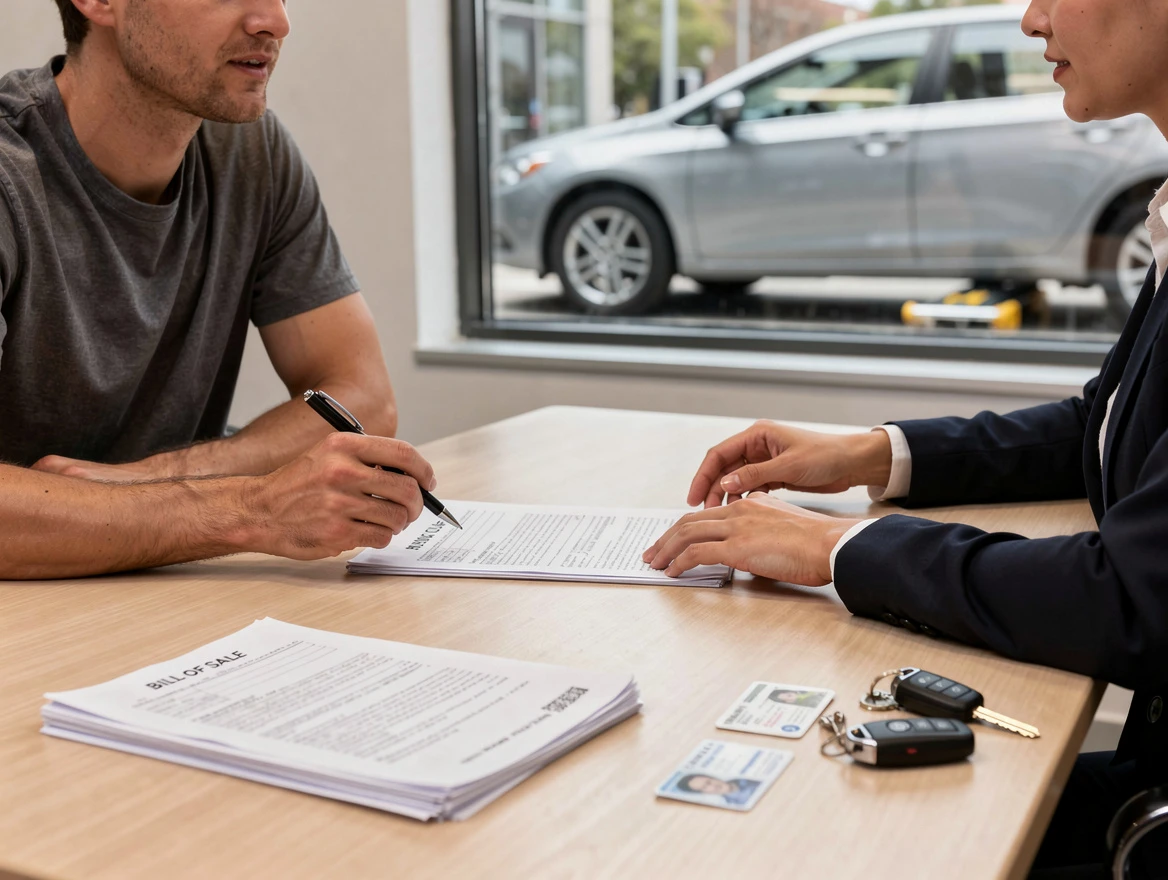
Every motor vehicle division demands evidence showing that your motorcycle, ATV, or UTV was obtained compliantly and possesses an unencumbered serial number. Gathering the right documentation before starting your title application prevents immediate rejection at state offices. Missing even one supporting form or signature will leave your machine grounded in your garage.
Ready to register your vehicle?
Join thousands of vehicle owners who use Ride Legal to handle their registration quickly.
Start Your Bespoke Registration →
If you encounter an unexpected roadblock during your initial filing, reviewing our checklist on vehicle registration denied what to do will help clarify common administrative tripwires.
Bill of Sale and Chain of Custody
Your bill of sale serves as the bedrock of your ownership claim when no title exists. The document must list the complete names, addresses, and signatures of both buyer and seller, alongside the transaction date, purchase amount, make, model, year, and entire 17-digit VIN (or frame number for vintage bikes). A notarized bill of sale dramatically improves approval speeds across all state agencies.
Physical VIN Verification and Tracing
State agencies require certified proof that the physical vehicle matches your submitted paperwork. A certified peace officer or licensed inspection agent must examine the stamped frame VIN, engine numbers, and secondary safety tags. In many jurisdictions, an adhesive pencil rubbing of the stamped headstock frame number is accepted as secondary verification. You can check recall status and verify technical factory specifications compliantly through the NHTSA VIN Lookup before submitting verification records.
Affidavit of Ownership and Statement of Facts
When the original certificate is lost or destroyed, agencies demand a sworn statement explaining the absence of the title. You must outline the complete history of how you acquired the bike, efforts made to locate the previous registered owner, and confirmation that no undisclosed liens exist against the machine. Submitting false statements on state ownership affidavits carries severe criminal penalties, so every detail must remain completely factual.
Comparing Titling Solutions for Untitled Powersport Assets
Different titling methods offer varying balances of speed, administrative burden, and total financial outlay. Evaluating your machine's value, intended usage, and paperwork trail helps determine the most practical path forward.
| Titling Pathway | Core Documentation Needed | Estimated Timeline | Best Suited For |
|---|---|---|---|
| Surety Bonded Title | Notarized Bill of Sale, Certified VIN Inspection, Bond Policy | 4 to 8 Weeks | High-value street bikes with verifiable local history |
| Out-of-State Registration Transfer | Prior Registration Card, Bill of Sale, Odometer Statement | 3 to 5 Weeks | Vintage motorcycles over 15 to 25 years old |
| Montana LLC Entity Titling | LLC Formation Articles, Bill of Sale, VIN Verification Form | 2 to 4 Weeks | Exotic motorcycles, UTVs, custom builds, and side-by-sides |
| Court-Ordered Title Transfer | Formal Court Order, Sheriff Bill of Sale, Certified Petition | 8 to 16 Weeks | Complex estate disputes, unreleased liens, mechanics liens |
Choosing the right avenue saves thousands of dollars in wasted administrative fees and months of bureaucratic gridlock. If your powersport machine also features performance modifications, light kits, or exhaust upgrades, make sure you understand the rules outlined in how to make a UTV street-legal or the guide on how to title a track or parts motorcycle from our sister specialists at Dirt Legal.
Start Your Street-Legal Registration →
Addressing Title Irregularities: Unsigned Titles and Prior Liens
Not every missing title situation involves completely lost paperwork. Often, buyers receive a physical certificate of title that suffers from fatal administrative flaws, such as missing seller endorsements, erroneous strike-throughs, or lingering third-party liens.
Taking possession of a motorcycle on an never transferred car title or an unsigned document creates major title problems if not handled methodically. State departments of motor vehicles flag jumped titles immediately, assuming potential fraud.
Handling the Unsigned Vehicle Title
If you purchase a motorcycle and find an unsigned vehicle title, your first objective should be contacting the registered owner listed on the face of the document. State agencies reject titles when the seller signature does not match official state database records. If the seller has moved, vanished, or become unreachable, you cannot compliantly forge a signature; you must instead pivot to a bonded title application or a corporate registration exchange.
Securing a Formal Lien Release
An untitled machine carrying an active financial lien cannot receive a clear title until the balance is resolved. You must request a formal lien satisfaction letter on financial institution letterhead, bearing the stamp and signature of an authorized loan officer. If the lending institution went out of business, state banking regulators or the Federal Deposit Insurance Corporation (FDIC) can issue letters of non-interest to clear the title record.
Replacing a Missing Title Through Previous Owners
If you maintain contact with the person who sold you the machine, the simplest approach involves having them submit a duplicate title application in their home state. Once the duplicate arrives, they sign it directly over to you. However, when private sales break down or previous owners refuse to cooperate, alternative administrative filings remain your only viable remedy.
Why Montana Corporate Structuring Solves Powersport Titling Hurdles

High-end powersports, including custom dual-sports, exotic superbikes, and high-performance side-by-sides, frequently face title discrimination at traditional state motor vehicle counters. Local agencies often classify UTVs and off-road bikes strictly for agricultural or off-highway use, refusing to issue highway titles regardless of added street equipment.
The state of Montana offers a clear, business-friendly regulatory framework administered through the Montana Motor Vehicle Division. By establishing a bespoke holding company, your enterprise compliantly acquires, titles, and registers powersport machinery. The official rules maintained by the Montana Department of Revenue confirm that Montana assesses zero percent general sales tax on vehicle purchases, saving owners substantial upfront capital.
Montana allows permanent registration tags on eligible motorcycles and powersport vehicles aged eleven years or older, eliminating the burden of annual renewal paperwork. To find out if your machine qualifies, look at our complete resource on the easiest way to register a vehicle or find how alternative title solutions can clear your title logjam.
Frequently Asked Questions
How to register a vehicle in Montana without living there?
You can compliantly register a vehicle in Montana without residing in the state by creating a Montana limited liability company (LLC). The Montana LLC functions as an independent resident business entity that holds ownership of your motorcycle or powersport machinery. Because the business resides in Montana, all title filings, registration tags, and license plates are issued through the Montana Motor Vehicle Division. We manage the out-of-state paperwork with our paperwork support, establishing your business entity with the Montana Secretary of State and managing all state motor vehicle filings.
Can you register a boat without a title?
Ride Legal focuses strictly on street-legal motorcycles, ATVs, UTVs, and powersports machinery rather than marine watercraft. Titling protocols for marine vessels depend heavily on state watercraft commissions and Coast Guard documentation rules rather than standard motor vehicle titling statutes. While some states allow older boats to register using a notarized bill of sale or prior watercraft registration slip, watercraft documentation pathways differ substantially from land-based powersport titles.
What should I do if a motorcycle seller forgot to sign the title?
If a seller neglected to sign the title, your cleanest option is returning the physical document to the seller for proper endorsement. If the seller cannot be contacted, do not attempt to sign for them, as altering a title document voids the paperwork and triggers potential fraud penalties. Instead, you must pursue a bonded title through your local agency or transfer ownership using a compliant out-of-state corporate structure backed by a notarized bill of sale and certified VIN inspection.
How much does it cost to get a bonded title for an untitled motorcycle?
The total expense for a bonded title depends on your machine's calculated market value and your state's administrative fees. Surety bond companies typically charge a minimum bespoke for motorcycles valued under ten thousand dollars, with the rate scaling upward for high-value or vintage machines. When factoring in certified VIN inspection charges, title application fees, and state filing expenses, bonded titling costs vary widely across jurisdictions.
Can an off-road ATV or UTV be titled for street-legal use without an existing title?
Yes, untitled ATVs and UTVs can obtain compliant street-legal titles through specialized out-of-state jurisdictions like Montana or South Dakota. By verifying the machine's VIN, outfitting it with mandatory highway safety gear such as DOT-approved mirrors, turn signals, and horns, and submitting compliant ownership proofs through an established corporate entity, your off-road machine can receive a clear, transferable title and road-ready license plate.
What documents are mandatory for a pencil tracing or physical VIN verification?
To complete a certified VIN inspection, you need the physical vehicle accessible for examination, state-specific VIN inspection forms, and a valid government identification card. An inspection official inspects the headstock frame stamp, secondary serial decals, and engine stamping. For jurisdictions accepting manual pencil rubbings, you place lightweight paper directly over the stamped metal VIN on the frame and rub gently with a standard pencil to capture a physical carbon relief of the characters.
Start Your Concierge Vehicle Registration Today
Navigating how to title a vehicle without a title: compliance options and documents needed no longer requires endless hours of confusion, administrative rejections, or abandoned projects. Whether you hold a bill of sale for a vintage superbike or an untitled performance UTV, compliant pathways exist to establish clear ownership and secure official road plates. With our concierge paperwork support, you can protect your investment, bypass complex paperwork, and focus on enjoying the ride.
This is not legal or financial advice. Please consult your CPA/Attorney for all legal and financial guidance. Ride Legal is a privately owned website and is not operated by any government agency.