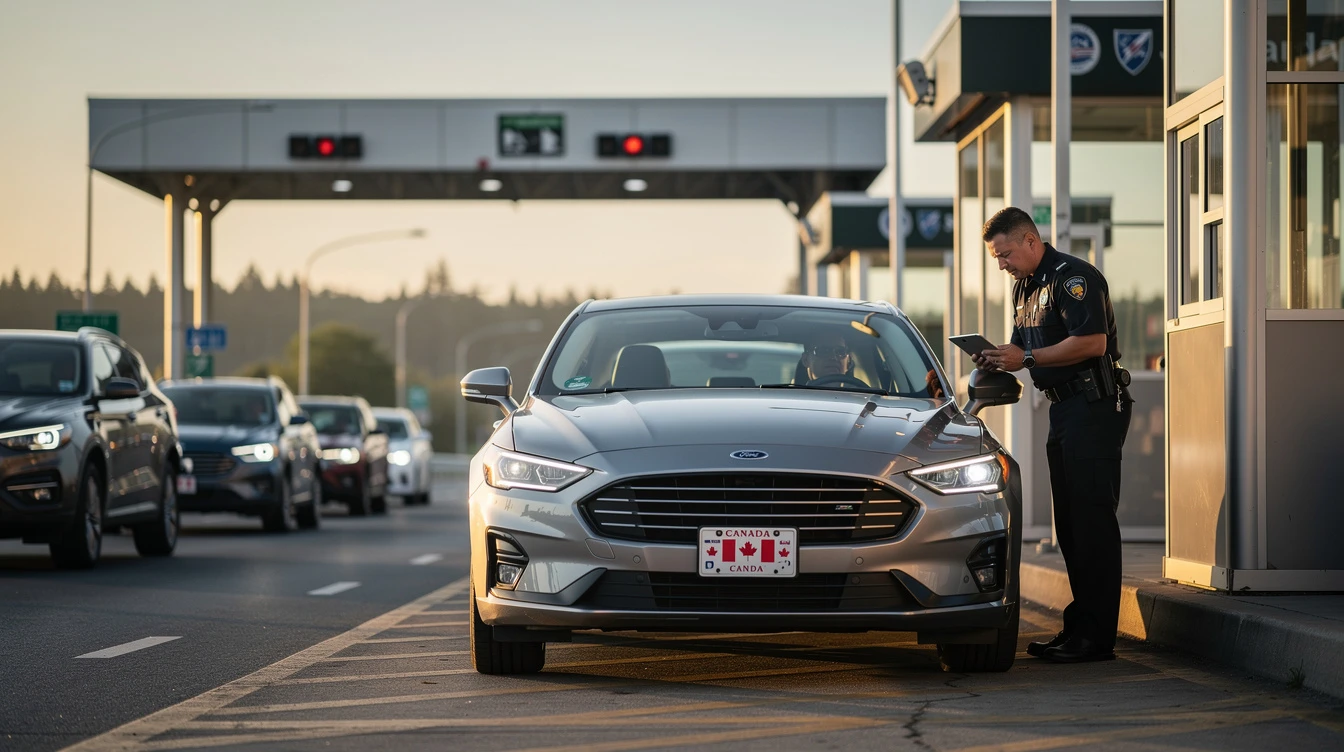
Importing a car from Canada to the USA involves meeting federal customs requirements, paying import duties, completing paperwork, and registering the vehicle in your state. The process typically takes 2-6 weeks and costs between $1,000-$3,000 in fees and duties, depending on the vehicle's value and origin.
Look at VIP Ownership Solutions
In This Guide
- What Are the Federal Requirements for Importing a Car From Canada?
- How Much Do Customs Duties and Fees Cost When Importing a Car?
- How Do You Title and Register an Imported Canadian Vehicle in the USA?
- What Emissions and Safety Requirements Apply to Imported Vehicles?
- What Are the Most Common Problems When Importing a Vehicle From Canada?
- Frequently Asked Questions
What Are the Federal Requirements for Importing a Car From Canada?
The USA allows vehicle imports from Canada, but only if the vehicle meets specific federal standards and you follow a structured customs process. The vehicle must be at least 25 years old to be eligible for certain exemptions, or it must meet current EPA and NHTSA safety and emissions standards.
Before moving the vehicle, you'll need:
- Bill of sale or proof of ownership from the Canadian seller
- Canadian title or registration document showing the vehicle's status
- VIN (Vehicle Identification Number) confirmation that the vehicle exists in public records
- Import declaration form (Form 3520 for personal vehicles)
- Proof of funds to cover customs duties and fees
- Valid driver's license or passport for customs entry
Vehicles manufactured in Canada, Mexico, or the USA under USMCA (United States-Mexico-Canada Agreement) may be eligible for preferential tariff treatment, reducing or eliminating duty costs. Vehicles manufactured elsewhere face a standard tariff of 2.5% of the declared value, plus any additional duties based on origin.
How Much Do Customs Duties and Fees Cost When Importing a Car?
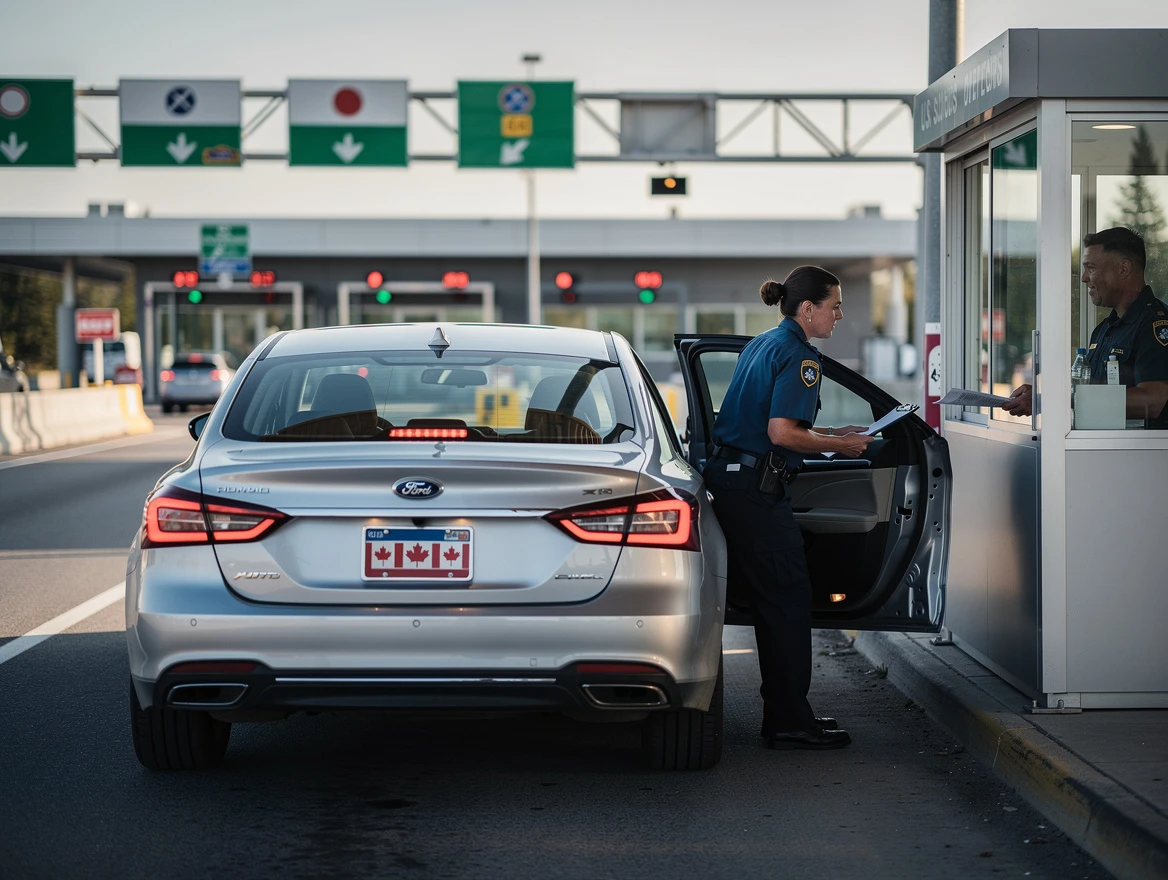
Importing a vehicle involves multiple layers of costs. The primary expense is the customs duty, calculated as a percentage of the vehicle's fair market value. Additional fees include U.S. Customs and Border Protection processing fees, International Registration Plan (IRP) surcharges, and state-specific registration costs.
Ready to register your vehicle?
Join thousands of vehicle owners who use Ride Legal to handle their registration quickly.
Start Your Bespoke Registration →
| Fee Type | Cost Range | Notes |
|---|---|---|
| Customs Duty (Standard) | 2.5% of vehicle value | USMCA-eligible vehicles may be eligible for 0% duty |
| CBP Processing Fee | $25-$100 | Depends on port of entry and documentation completeness |
| Freight and Transport | $500-$1,500 | Border crossing to your destination state |
| Customs Broker (Optional) | $150-$500 | Recommended for complex imports or first-time owners |
| State Registration | $150-$1,200 | Varies by state; foreign titles may require additional steps |
| Emissions/Safety Inspection | $50-$300 | Required in most states; some vehicles exempt if 25+ years old |
Example: Importing a 2020 Honda Civic worth $18,000 from Canada would cost approximately $450 in customs duty (2.5%), plus $75-$500 in CBP fees, $750 for transport, and $200-$600 in state registration and inspection. Total out-of-pocket costs would typically range from $1,500-$2,300.
USMCA-eligible vehicles (made in Canada, Mexico, or the USA) may avoid the 2.5% duty entirely, cutting your import costs significantly. Verify the vehicle's country of origin before import to confirm eligibility.
Skip the Paperwork, Let Us Handle It
How Do You Title and Register an Imported Canadian Vehicle in the USA?
Once the vehicle clears U.S. Customs at the port of entry, you'll need to complete title and registration in your home state. This process varies significantly by state, but all require proof that the vehicle met import requirements before registration can occur.
The standard process includes:
- Obtain a CBP Release Certificate after customs clearance, confirming the vehicle passed inspection and duties were paid
- Convert the Canadian title to a U.S. title by submitting the Canadian registration document, bill of sale, and CBP release to your state DMV
- Apply for a U.S. title through your state's motor vehicle office (this may be called a "vehicle registration," "title application," or "import certificate")
- Get emissions and safety certification from an approved testing facility in your state
- Register the vehicle with your state and obtain license plates
Some states, like California and New York, have stricter emissions rules and may require additional modifications or documentation for Canadian imports. If the vehicle doesn't meet these standards, you may need a bonded title or registration waiver. For high-value or exotic vehicles, working with a registration specialist can simplify the import and reduce delays caused by missing paperwork.
Learn more about titling a vehicle without a standard title, which is helpful for imports with documentation gaps.
What Emissions and Safety Requirements Apply to Imported Vehicles?
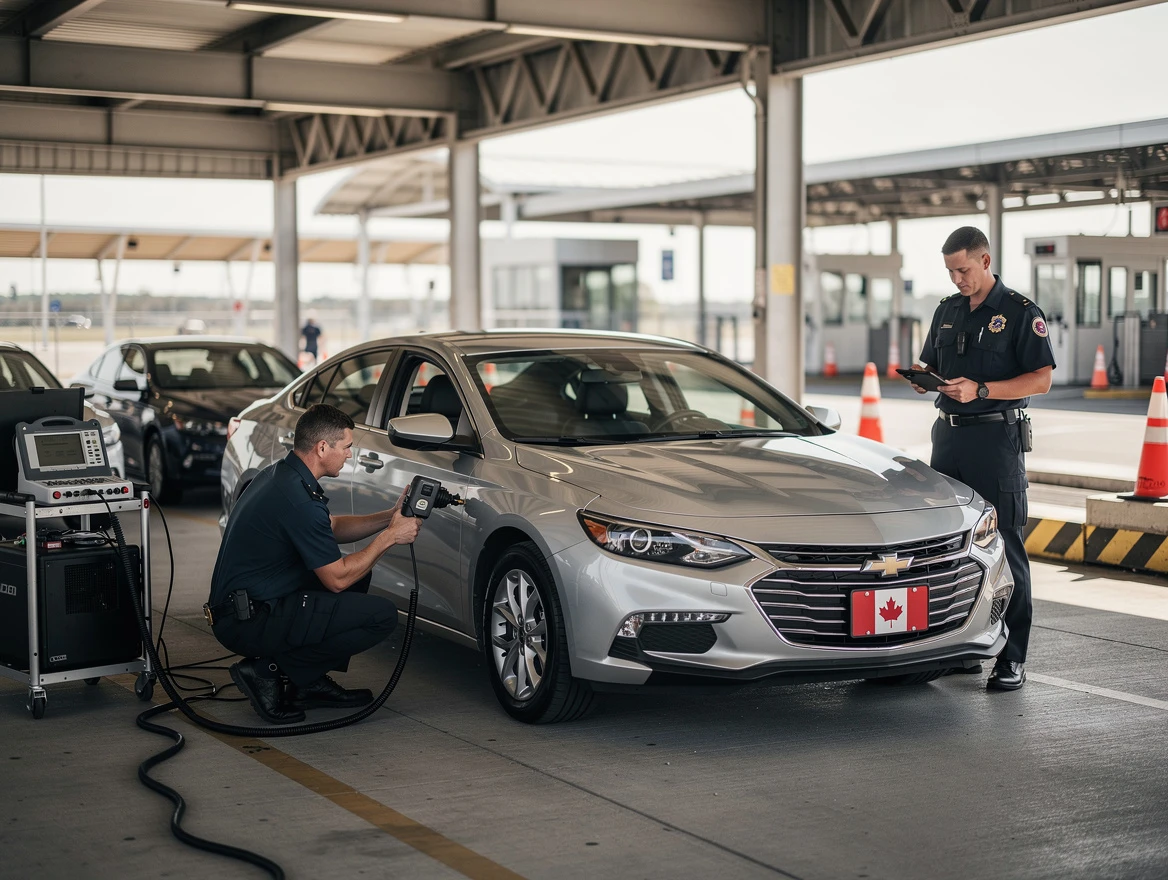
All vehicles imported into the USA must meet EPA emissions standards and NHTSA safety standards. However, vehicles 25 years old or older are exempt from both emissions and safety requirements in most states, making older classic or collector vehicles easier to import.
For vehicles newer than 25 years:
- EPA Emissions Compliance: Requires a smog check or emissions certificate from a state-approved lab. The vehicle must meet the EPA standards that apply to its model year and country of manufacture.
- NHTSA Safety Standards: Vehicles must have working safety systems (brakes, lights, seat belts, airbags). A certified inspector confirms compliance before registration.
- State-Specific Rules: California, New York, Massachusetts, and Vermont have additional emissions requirements. Some imported vehicles may need modifications or aftermarket equipment to pass.
- Documentation Requirements: You'll need factory emissions documentation from Canada, the vehicle's service history, and proof of any modifications made.
If a vehicle fails emissions or safety inspection, you have options: modify the vehicle to meet standards, appeal the decision with engineering documentation, or pursue a bonded title (which allows registration while you work toward compliance). Some states also allow a "conditional registration" for vehicles undergoing repairs.
What Are the Most Common Problems When Importing a Vehicle From Canada?
Even straightforward imports can encounter delays or complications. Understanding the most frequent issues helps you prepare and avoid costly mistakes.
Missing or Incomplete Paperwork: The single largest cause of import delays. Canadian titles may lack information required by U.S. DMVs (like VIN confirmation or lienholder details). Missing bills of sale, export permits, or customs documentation can halt the process for weeks. Solution: Gather all documentation in advance and have a customs broker or registration specialist review it before crossing the border.
VIN Mismatch or Title Discrepancies: The VIN on the vehicle may not match the Canadian title if the vehicle was previously registered under a different VIN, salvaged, or rebuilt. This requires investigation and may necessitate a bonded title. Solution: Run a VIN check on both the Canadian and U.S. systems before purchase to confirm the vehicle's history.
Emissions Non-Compliance: Canadian vehicles may use different fuel grades, emission controls, or engine calibrations than U.S. standards. Vehicles that pass in Canada may fail U.S. emissions tests. Solution: Research your state's specific emissions requirements before importing, and confirm the vehicle's fuel type and emission system are compatible.
Title Lien or Lender Conflict: If the Canadian vehicle has an outstanding loan or lien, the lender must release the title before import. Failure to discharge the lien blocks U.S. registration. Solution: Confirm the vehicle is lien-free in Canada and obtain a lien release letter from any Canadian lender before crossing the border.
Customs Delays at the Border: High cargo volumes, missing CBP documentation, or incomplete customs paperwork can create unexpected delays. Solution: Use CBP's Port of Entry Pre-Clearance Program (PEPC) or hire a customs broker to simplify the process and reduce wait times.
State Registration Rejection: Some state DMVs reject foreign titles or require additional documentation (such as proof of import or a translated Canadian title). Solution: Contact your state DMV in advance to confirm their requirements for Canadian imports and have all documents translated or notarized if needed.
Frequently Asked Questions
How do you register cars in Montana?
Montana registration is available to vehicle owners nationwide, including those with imported vehicles. You can register your imported Canadian vehicle in Montana by filing an application with the Montana Motor Vehicle Division, providing the vehicle's title, VIN, and proof of legal import (CBP release). Montana charges no sales tax on vehicles, making it an attractive option for high-value imports. Registration can typically be completed remotely, and Montana plates are mailed to you within 2-3 weeks of approval. Ride Legal specializes in helping owners of imported vehicles or multi-state registration needs use Montana registration for asset protection and simplified compliance.
What is a street-legal car?
A street-legal car meets all federal, state, and local safety and emissions standards required to operate on public roads. For imported vehicles, this means passing EPA emissions and NHTSA safety inspections, having proper title and registration, valid insurance, and working safety equipment (lights, brakes, wipers, seat belts). The term "street-legal" does not refer to the import process itself, but to the vehicle's compliance with operating laws once it's registered. Some states allow "conditional" or "bonded" registration for vehicles being brought into compliance, which grants temporary legal operation while you complete repairs or modifications.
Can an LLC buy a car?
Yes, an LLC can purchase and own a vehicle. Many high-net-worth individuals, business owners, and exotic vehicle collectors use LLCs for asset protection, tax efficiency, and streamlined registration. When an LLC buys a car, the title is registered in the LLC's name, not the individual owner's name. This provides privacy, reduces personal liability in accident claims, and can simplify estate planning. For imported vehicles, an LLC structure can be particularly useful because it allows you to register the vehicle in a state like Montana (which has no sales tax) regardless of where you personally live. Consult a tax professional to confirm that an LLC vehicle purchase aligns with your financial and legal goals.
How much is car tax?
Car tax varies dramatically by state and is calculated on the purchase price of the vehicle. Some states charge a flat percentage (typically 5-10% sales tax), while others use a tiered system based on the vehicle's value. A few states, like Montana and South Dakota, charge no sales tax on vehicles at all, which is why many imported vehicle owners choose to register out of state. Import duties (2.5% for non-USMCA vehicles, 0% for USMCA-eligible vehicles) are separate from state sales tax. The total tax burden on importing a $20,000 vehicle could range from $1,000 to $2,500 depending on your state and the vehicle's origin. Using an LLC registered in a no-sales-tax state can reduce or eliminate this cost entirely for high-value imports.
What is a bonded title?
A bonded title is a document issued when a vehicle's original title is missing, lost, or cannot be transferred cleanly. For imported vehicles, a bonded title is sometimes necessary if the Canadian title is incomplete, damaged, or if there's a dispute about ownership or prior liens. To obtain a bonded title, you purchase a surety bond (typically 1.5-3% of the vehicle's value) that guarantees the state against claims from previous owners or lienholders. Once the bond is in place, you can register the vehicle and receive a "bonded" title. After 3-5 years of trouble-free ownership, you can usually convert the bonded title to a standard title. Bonded titles add cost and complexity but allow registration when traditional title transfer isn't possible.
What documentation do I need from Canada before importing a vehicle?
Before importing a vehicle from Canada, gather the Canadian vehicle registration, bill of sale, proof of ownership, the vehicle's service history, and any export documents from the Canadian province. You'll also need the vehicle's country of origin (to confirm USMCA eligibility), proof that any outstanding loans or liens have been discharged, and the original VIN. Have the Canadian title translated into English if necessary, and obtain notarized copies of key documents. A customs broker can help compile and verify these documents before you cross the border, reducing delays and rejection risk. Missing any of these items can slow the customs process significantly.
Stay Updated
Get the latest on registration tips, LLC insights, and exclusive offers.
No spam. Unsubscribe anytime.
This is not legal or financial advice. Please consult your CPA/Attorney for all legal and financial guidance. Ride Legal is a privately owned website and is not operated by any government agency.