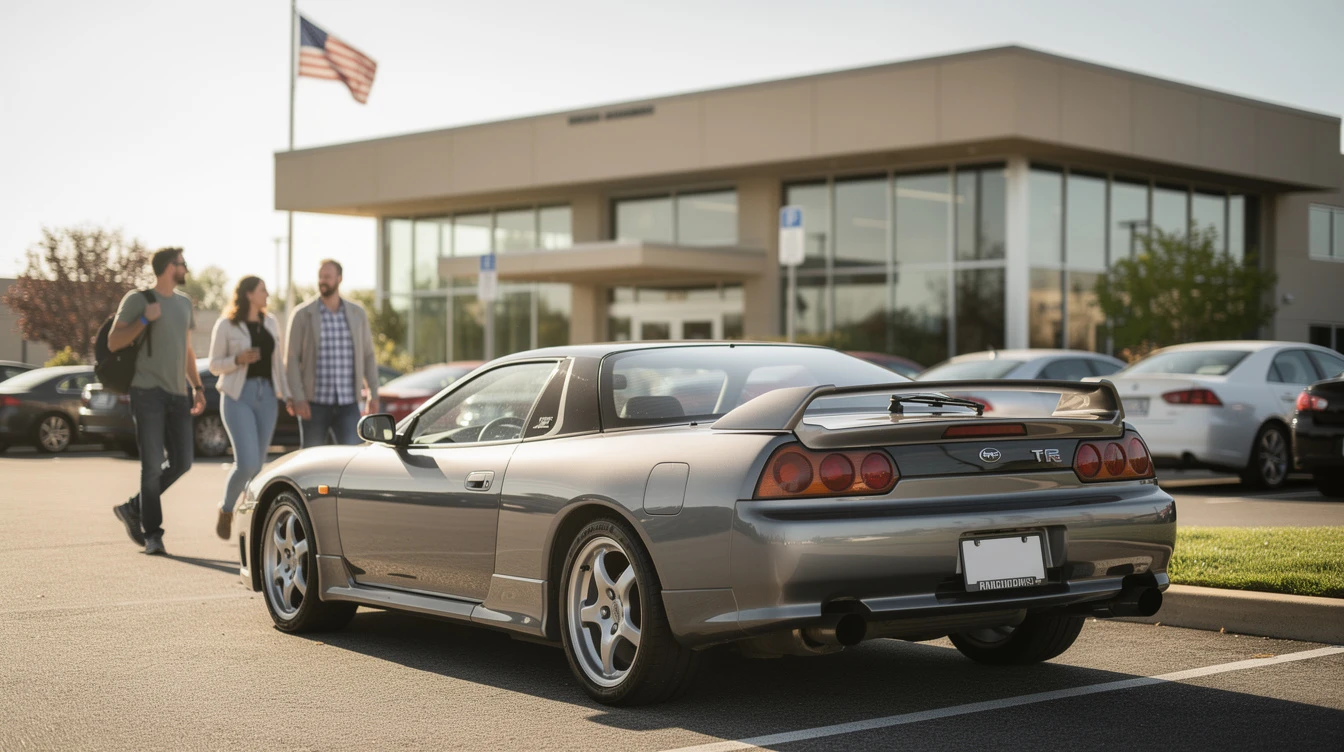
Can You Compliantly Register a JDM Supercar in the U.S.?
05/27/2026 · Ride Legal
You've been watching the auctions. You know the VIN. The car is a 1999 Nissan Skyline GT-R R34, and you've wanted one since you were old enough to understand what one was. The question that keeps stopping you isn't the price. It's this: can you actually register it and drive it compliantly on U.S. roads?
The short answer is yes, with conditions. The federal 25-year import rule is the key threshold. Once a vehicle passes that age, it's exempt from the NHTSA and EPA compliance requirements that typically block foreign-market cars from U.S. roads. Clear that hurdle, and state registration becomes your next step.
This guide walks you through exactly how that process works, what it costs, and where most buyers trip up. No jargon, no guessing. Just the real picture so you can make a confident move.
The 25-Year Rule: Why It Exists and What It Actually Means
The federal government restricts importing foreign-market vehicles through two agencies: NHTSA (National Highway Traffic Safety Administration) and the EPA. Vehicles sold in Japan weren't built to U.S. safety or emissions standards, which is why you can't just ship one over and drive it home from the port.
The exception is age. Under federal law, any vehicle that's at least 25 years old from its original manufacture date qualifies for the NHTSA exemption. The EPA has a similar 21-year threshold. In practice, the 25-year mark is the one that matters, because once a vehicle clears NHTSA, it's effectively free from both barriers.
What does that mean for you? A 1999 JDM supercar cleared the 25-year window in 2024. A 2000 model clears in 2025. The calendar is your compliance roadmap, and right now, some of the most coveted Japanese performance cars in history are becoming importable for the first time.
Before you commit, run a VIN check on any vehicle you're considering. Confirming identity, history, and any outstanding issues before you import is far easier than sorting it out after the car arrives. The NHTSA also maintains a free VIN lookup tool worth using as a second verification step.
Ready to start your registration? Let us handle it →How Registration Actually Works After Import
Clearing the federal threshold is step one. State registration is step two, and the two processes are separate. Once your vehicle arrives and clears U.S. Customs, you'll need to title and register it in a specific state. That's where the strategy gets interesting.
Most states will accept a federally compliant import, but their own emissions testing, inspection requirements, and titling fees vary dramatically. That's why many JDM import owners choose Montana registration, which has no sales tax, no emissions testing, and no inspection requirement for registration purposes. On a $150,000 R34 or an $80,000 NSX, that tax savings alone can run $10,000 to $20,000 or more depending on your home state.
Montana registration through an LLC is a well-established, compliant structure used by collectors and enthusiasts across the country. Your vehicle is titled and registered under a Montana LLC, which is a legitimate business entity formed under state law. A detailed walkthrough of how this works is available in No Sales Tax on Exotic Cars: How Montana LLC Registration Works for High-Value Vehicles. It covers the full structure, the savings math, and what the process looks like from start to finish.
For import-specific title work, the team at Dirt Legal handles Montana LLC formation and vehicle registration for exactly this kind of situation. They've completed over 5,000 customer orders across all vehicle types, and the majority of document issues are resolved without sending anything back to the customer.
The Documents You'll Need and Where People Go Wrong
Getting the paperwork right is where most JDM imports stall. The core documents for registering an imported vehicle in Montana typically include the original foreign title or ownership certificate, the CBP Form 7501 (entry summary from U.S. Customs), the EPA and DOT import forms, and a completed bill of sale.
The most frequent correction issue across import and title work is Power of Attorney accuracy. If you're using a registration service to file for you, the POA document has to be completed exactly as specified, including the correct legal name, vehicle description, and signature placement. Small errors here are the single biggest cause of delays.
One more thing worth knowing: South Dakota is an alternative to Montana for owners who want a straightforward low-fee registration without the LLC structure. The South Dakota Division of Motor Vehicles offers a simpler residency-based path. Montana still wins on savings for high-value vehicles, but South Dakota is worth considering if you want a direct title in your name.
If you want to understand the full financial picture before choosing, If You're Paying 5-Figure Sales Tax on a Vehicle, You're Giving Up $30K+ in Liquidity breaks down exactly what the tax exposure looks like on a high-value vehicle and why registration structure matters more than most buyers realize.
Real Talk: What These Cars Are Actually Worth on the U.S. Market
The JDM import market has changed dramatically. A clean 1999 R34 GT-R V-Spec is trading above $200,000 at auction. An early NSX in original condition commands $80,000 to $120,000 depending on spec. These aren't project cars. They're appreciating collector assets, and the registration structure you choose should reflect that.
The Montana LLC approach gives you asset protection alongside the tax benefit. The vehicle is held by an LLC, which means it's not directly tied to your personal balance sheet. For collectors holding multiple exotic vehicles, that separation matters. The Montana LLC for Vehicle Registration: The Complete Guide covers the formation process, compliance requirements, and how the annual report filing works.
Montana LLCs do require an annual report filed with the Secretary of State each year by April 15. That's a small administrative step, but it keeps the LLC in good standing. Details are on the Montana LLC Annual Report Filing page. Don't skip it, a lapsed LLC can create title complications down the road.
"Having the registration handled properly from day one meant I could focus on the car, not the paperwork. Genuinely stress-free.", Verified Ride Legal customer
Bringing It Full-Circle: Your JDM Dream Car and the Road Ahead
The 25-year rule opened a door that was locked for a generation of enthusiasts. The cars that defined Japanese performance in the late 1990s are now compliantly importable, and a well-structured registration means you can actually drive one without worrying about what's on the plates.
The path is clear: confirm the vehicle clears the federal age threshold, handle U.S. Customs documentation correctly at import, and choose a registration state that protects your investment. Montana makes the most financial sense for high-value vehicles, and having a team manage the title and registration work removes the one part of the process that trips most buyers up.
You can look at a complete breakdown of Montana registration fees and requirements directly on the Montana Vehicle Title and Registration page. And if you want guidance tailored to your specific vehicle, the team at Ride Legal is set up for exactly this.
Start your premium registration with Ride Legal →Frequently Asked Questions
What is the 25-year import rule for JDM vehicles?
Under federal law, any vehicle manufactured at least 25 years ago is exempt from NHTSA's Federal Motor Vehicle Safety Standards for imported vehicles. This is the primary compliance pathway for JDM supercars like the Nissan Skyline GT-R R34, Honda NSX, and Toyota Supra. Once a vehicle clears this threshold, it can be imported and registered in the U.S. without requiring safety modifications.
Can I register a JDM car in any state?
Most states will register a federally compliant import, but requirements vary. Montana is popular among collectors because it has no sales tax, no emissions testing, and no inspection requirement. For a $150,000+ vehicle, the tax savings can be substantial. South Dakota is a simpler alternative for buyers who prefer direct titling without an LLC structure.
Do I need an LLC to register a JDM supercar in Montana?
You don't have to use an LLC, but most high-value vehicle owners do. The LLC structure provides both the registration address and asset protection. It's a legitimate Montana business entity, and the vehicle is titled in the LLC's name. Montana LLC for Vehicle Registration: The Complete Guide explains how the formation and title process works in full.
What documents do I need to title a JDM import?
You'll typically need the original foreign ownership document, CBP Form 7501 from U.S. Customs, EPA and DOT import compliance forms, and a bill of sale. Accuracy matters. Power of Attorney errors are the most common reason registration paperwork comes back for correction, so double-check every field before submitting.
Will Montana registration work if I live in California or another emissions-strict state?
Montana registration is a widely used structure across all 50 states. The vehicle is registered in Montana under an LLC, and you drive it in your home state. Some states have looked at this structure for daily-driven vehicles, so it's worth speaking with a registration specialist about your specific situation. Ride Legal's team can walk you through the details for your state.
How long does the registration process take for an imported vehicle?
Once your import documents are in order, Montana registration typically processes within a few weeks. The timeline depends on document accuracy and order volume. Vehicle Registration Without Delays: A Simple Guide covers how to prepare your paperwork to avoid the most common slowdowns.
This is not legal or financial advice. Please consult your CPA/Attorney for all legal and financial guidance. Ride Legal is a privately owned website and is not operated by any government agency.