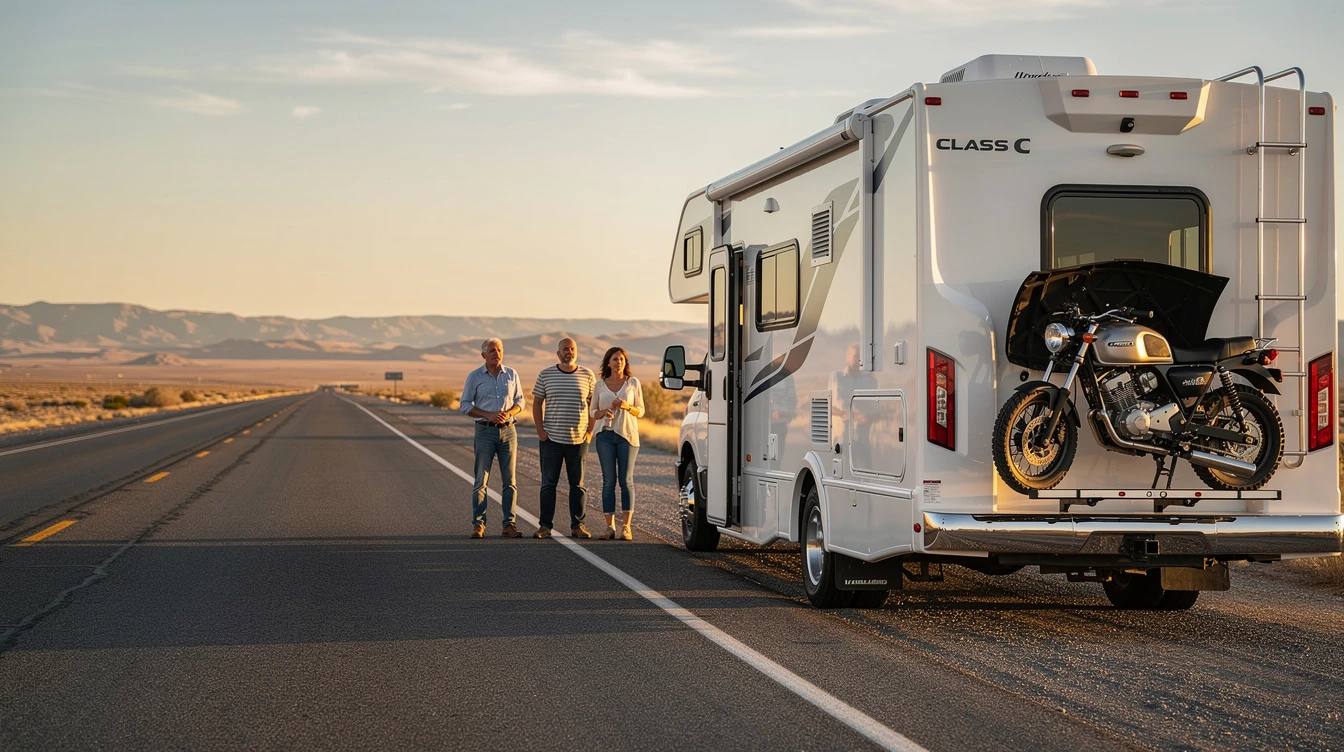
You've spent months planning the trip. The route is mapped, the reservations are made, and the rig is packed. Then something goes wrong on the road, a collision, a fire, a theft, and you find out that your insurance policy won't cover what you assumed it would. The claim gets denied. The repair bill lands in your lap. That trip of a lifetime turns into a financial spiral you didn't see coming.
This isn't a rare story. Plenty of RV owners carry a policy they've never truly read, trusting that "full coverage" means exactly that. It doesn't. The gaps between what you think you have and what you actually have are where financial disasters live.
Here's what those gaps look like, why they happen, and what you can do to close them before you're stranded on the side of the road wishing you had.
Why "Standard" RV Coverage Is Often a False Sense of Security
Most RV owners purchase a policy the same way they buy auto insurance: pick a tier, accept the quote, move on. The problem is that an RV is not a car. It's part vehicle, part home, part storage unit, and most auto-style policies treat it like only the first of those three things.
Personal belongings inside your RV? Often not covered unless you add a rider. A slide-out mechanism that fails mid-trip? Typically excluded as a mechanical breakdown. Your awning getting destroyed in a windstorm at a campsite? You'd be surprised how many policies exclude unattached structures or require a separate endorsement.
The financial exposure here isn't small. RV repairs regularly run into the tens of thousands. A total loss on a Class A motorhome without agreed value coverage could leave you holding an actual cash value payout that's $30,000 to $60,000 short of what it costs to replace what you had. That's not a minor inconvenience. That's the end of the lifestyle.
If your registration situation isn't as clean as your coverage, that creates compounding risk. A more detailed breakdown of how registration affects your ownership position is available through Montana RV Registration, a state-based option many full-timers use to simplify the administrative side of RV ownership.
Start Your Premium Registration →The Coverage Gaps Most Owners find Too Late
There are a handful of mistakes that come up time and time again. Not because RV owners are careless, but because the insurance industry makes these policies genuinely hard to read, and even harder to compare.
Ready to register your vehicle?
Join thousands of vehicle owners who use Ride Legal to handle their registration quickly.
Start Your Premium Registration →The biggest one is relying on actual cash value instead of agreed value. Actual cash value accounts for depreciation. Your five-year-old coach that cost $180,000 new might be worth $95,000 on paper when the insurer runs the numbers. Agreed value locks in a number upfront, so you're not negotiating during the worst week of your life.
Liability limits are the second major fault line. State minimums are rarely adequate for a vehicle the size of a small apartment. If you're involved in a serious accident and your liability ceiling is too low, your personal assets are at risk. Your savings, your property, everything you've built. Raising those limits costs less per year than most people spend on campground fees in a weekend.
Full-timers face a specific problem: standard RV policies often exclude coverage for anyone treating the RV as a primary residence. If you live in your rig more than a certain number of days per year, you may need a full-timer policy, which carries different terms for liability and personal property. Many owners don't know this distinction exists until they file a claim and get told their situation wasn't covered.
Car repairs and insurance costs are already rising, a trend worth understanding before your next renewal. The team at Dirt Legal covered the trajectory in detail: Car Repairs and Insurance Costs Set to Climb. The same pressures affecting standard vehicles are hitting the RV segment even harder, given parts availability and specialized labor.
| Coverage Type | What Most Policies Include | What You Often Need to Add |
|---|---|---|
| Personal Belongings | Minimal or excluded | Contents rider or separate policy |
| Total Loss Payout | Actual cash value (depreciated) | Agreed value or replacement cost |
| Full-Timer Liability | Excluded past residency threshold | Full-timer endorsement or dedicated policy |
| Emergency Expenses | Rarely included | Vacation liability, trip interruption rider |
| Mechanical Breakdown | Excluded | Extended warranty or breakdown endorsement |
The Registration and Title Connection You Can't Ignore
Here's something most insurance conversations skip entirely: your registration and title status directly affects your coverage eligibility. An insurer that discovers your RV has a title problem, an out-of-state registration mismatch, or a lien that wasn't properly released may have grounds to complicate or delay a claim.
Clean title, current registration, and a clear ownership record aren't just administrative details. They're the foundation your insurance policy sits on. If that foundation has cracks, the policy above it is weaker than it looks on paper.
It sounds like a technicality. In practice, an odometer discrepancy can raise questions about a vehicle's history that complicate both resale and insurance outcomes.
If your title situation isn't clean, that's worth fixing before something forces the issue. The Montana RV Title Recovery and Registration service exists specifically for owners who need to get their paperwork right. It's a better time to do it than mid-claim.
Seasonal riders face a related issue worth knowing about. Carrying a full policy year-round when the vehicle sits for months isn't always the smart financial move, but scaling back coverage at the wrong time creates exposure. The guide on how seasonal drivers can save money on registration and insurance breaks down how to approach that balance without creating gaps.
What Proper RV Financial Protection Actually Looks Like
Honest answer: it's not one product. It's a combination of the right policy structure, the right coverage limits, and a clean administrative foundation underneath it all.
On the policy side, agreed value coverage is non-negotiable for anyone with a rig worth more than $50,000. Full-timer endorsements matter if you spend more than 150 days a year living in your coach. Vacation liability covers you when you're parked and someone gets hurt near your vehicle. Emergency expense coverage pays for lodging and transportation if your RV becomes uninhabitable mid-trip.
On the ownership side, your title should be clear, your registration current, and your name (or your entity) correctly reflected on all documents. If you've purchased through an LLC for asset protection, that structure needs to be reflected in both your registration and your insurance policy. A policy in your personal name on a vehicle registered to an LLC creates a coverage question that no one wants to answer after an accident.
The connection between LLC ownership and vehicle registration is worth understanding before you assume your current setup is solid. The piece on the benefits of buying a vehicle under an LLC covers how that structure works and what it protects.
"The goal isn't to have more insurance. It's to have the right insurance, the kind that actually covers what you've built and how you live."
Freedom Isn't an Accident, It's a Structure
You bought an RV to gain something. Space, time, the open road. That lifestyle is worth protecting deliberately, not accidentally. Most of the insurance mistakes that cost RV owners the most money weren't made out of negligence. They were made because nobody sat down and mapped out what was actually at risk.
The same discipline that goes into planning a three-month route should go into auditing your coverage. Read the exclusions section. Call your insurer and ask directly whether full-timer liability applies to your situation. Compare your actual cash value payout against what it would cost to replace your rig today. Close the gaps before the road closes them for you.
Getting your registration foundation right is part of that same picture. Ride Legal works with vehicle owners who want their paperwork handled with the same precision they bring to every other part of ownership. If your registration needs attention, now is the right time to sort it.
Frequently Asked Questions
What's the difference between actual cash value and agreed value for RV insurance?
Actual cash value pays you the depreciated market value of your RV at the time of a loss. Agreed value locks in a specific payout amount when you buy the policy. For high-value rigs, agreed value typically pays out significantly more after a total loss, since it doesn't penalize you for depreciation. Most owners with newer or premium coaches should carry agreed value coverage.
Do I need a special policy if I live in my RV full-time?
Yes, typically. Standard RV policies often exclude coverage once an owner crosses a residency threshold, sometimes as low as 150 days per year. Full-timer policies include liability coverage for incidents that occur while the RV is parked as a residence. If you're living full-time without the right endorsement, you may have a large uninsured gap in your coverage.
How does my RV's registration status affect my insurance claim?
Insurers verify ownership and registration when processing a claim. A title discrepancy, lapsed registration, or ownership mismatch between your policy and your registration documents can complicate or delay a payout. Clean paperwork protects you at the worst possible moment. If your title or registration isn't current, fix it before you need to file.
What does vacation liability coverage do?
Vacation liability covers you for bodily injury or property damage that happens near your RV while it's parked at a campsite or other location. Think of it as a homeowner's liability equivalent for your RV when it's being used as temporary living space. Most standard RV policies don't include this automatically. It's typically an inexpensive add-on worth carrying.
Should my RV insurance policy reflect my LLC ownership?
Yes. If your RV is registered under an LLC for asset protection purposes, your insurance policy should list the LLC as the named insured or as an additional insured. A mismatch between the registered owner and the policyholder creates a potential coverage dispute. Verify that your registration documents and your policy are aligned, especially after any ownership structure changes.
Start Your Premium Registration →