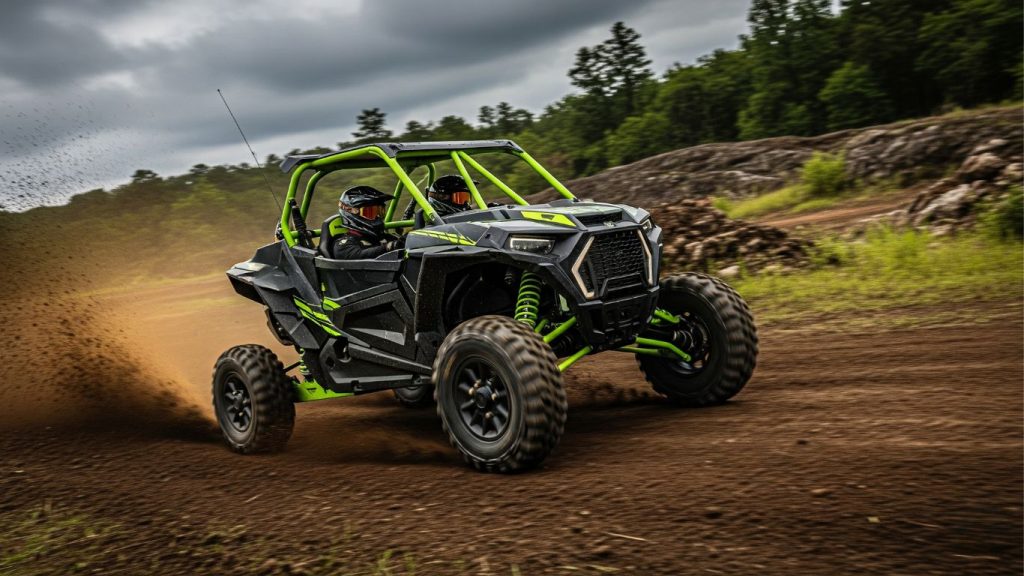
Beyond the Trailer: The Practical Evolution of a Street-Legal Off-Road Vehicle
05/04/2026 · Ride Legal
What happens when your weekend machine becomes part of your daily life?
There’s a specific kind of freedom that comes from pulling out of your driveway, heading straight to the trail, and then rolling into a restaurant parking lot without ever loading a trailer. That shift defines the street-legal off-road vehicle lifestyle.
At first, it feels surreal.
Then it starts to feel normal.
And that’s when everything changes.
The Shift From Trail Toy to Everyday Machine
For years, off-road builds lived in a separate category. They stayed in the garage until it was time to load up, drive out, unload, and repeat the process in reverse at the end of the day. That routine created friction and limited how often the vehicle actually got used.
However, once a build becomes street-legal, that barrier disappears. Now, the machine is always ready, and, instead of planning around logistics, you simply turn the key and go. That simplicity opens the door to more frequent use and a deeper connection with the vehicle itself.
According to the Bureau of Land Management’s off-highway vehicle guidelines, access and compliance play a major role in where and how these machines can be used. When a vehicle meets road requirements, those boundaries expand.
Utility Changes Everything
At first glance, plating an off-road machine feels like a novelty. However, the real value shows up in everyday moments. A quick run to the hardware store becomes effortless, a last-minute dinner plan doesn’t require switching vehicles, and a scenic backroad suddenly becomes part of your route instead of something you pass by.
These small shifts add up. The vehicle stops being something you plan around. It becomes something you live with. And that change in perspective is what makes the transition so impactful.
Access Expands Beyond the Trailhead
When your machine is no longer tied to a trailer, your access to local infrastructure increases immediately, and you’re not limited to designated loading zones or staging areas. Instead, you can move between paved roads and trail systems with far more flexibility. That means new routes, new connections, and more spontaneous experiences.
For example, organizations like onX Offroad map trail systems alongside public roads, showing how integrated routes can become when vehicles meet street requirements.
This kind of access changes how you plan your day. Or more accurately, it removes the need to plan so much at all.
Living With the Machine
Something interesting happens once the vehicle becomes part of your routine. You start noticing details you would have missed before. The way it handles on mixed terrain. The attention it draws at a stoplight. The conversations it sparks in parking lots.
Driving it to a familiar place feels unfamiliar in the best way. That first trip to a coffee shop or grocery store stands out. It feels slightly out of place, yet completely natural at the same time. Then, over time, it just becomes part of your lifestyle.
The Practical Side of the Evolution
Of course, this transition is not just about freedom. It requires attention to detail. Lighting, mirrors, tires, and safety equipment all need to meet specific standards depending on the state. Proper documentation matters just as much as the build itself.
Resources like SEMA’s state-by-state vehicle regulations highlight how requirements vary, which is why a structured approach is important.
Getting it right the first time saves time and avoids unnecessary complications later. Because once the vehicle is street-ready, the goal is to keep it that way.
The First “Normal” Drive That Wasn’t
Every owner who makes this transition remembers one specific moment. It’s not the first trail ride, not the first long trip, but the first completely normal destination.
Pulling into a restaurant. Parking outside a store. Sitting at a red light surrounded by everyday traffic.
That moment feels surreal.
It’s where the line between recreational machine and real-world vehicle disappears. And from that point on, the experience shifts permanently.
The Bridge: Removing Friction From Ownership
Complex paperwork, inconsistent state requirements, and registration challenges often stand in the way of fully enjoying your vehicle. Ride Legal simplifies that process.
We use a Montana LLC structure to help you register your vehicle in a way that reduces tax exposure, protects your privacy, and removes the need for in-person visits.
You can learn more about it in this article: Inside the Montana LLC Experience. What You Need to Know.
We’ve successfully registered over 80,000 vehicles for owners who expect a smoother experience.
Everything is handled remotely. Plates ship in as little as 1 day. Titles follow in about two weeks.
This is not legal or financial advice. Please consult your CPA/Attorney for all legal and financial guidance. Ride Legal is a privately owned website and is not operated by any government agency.