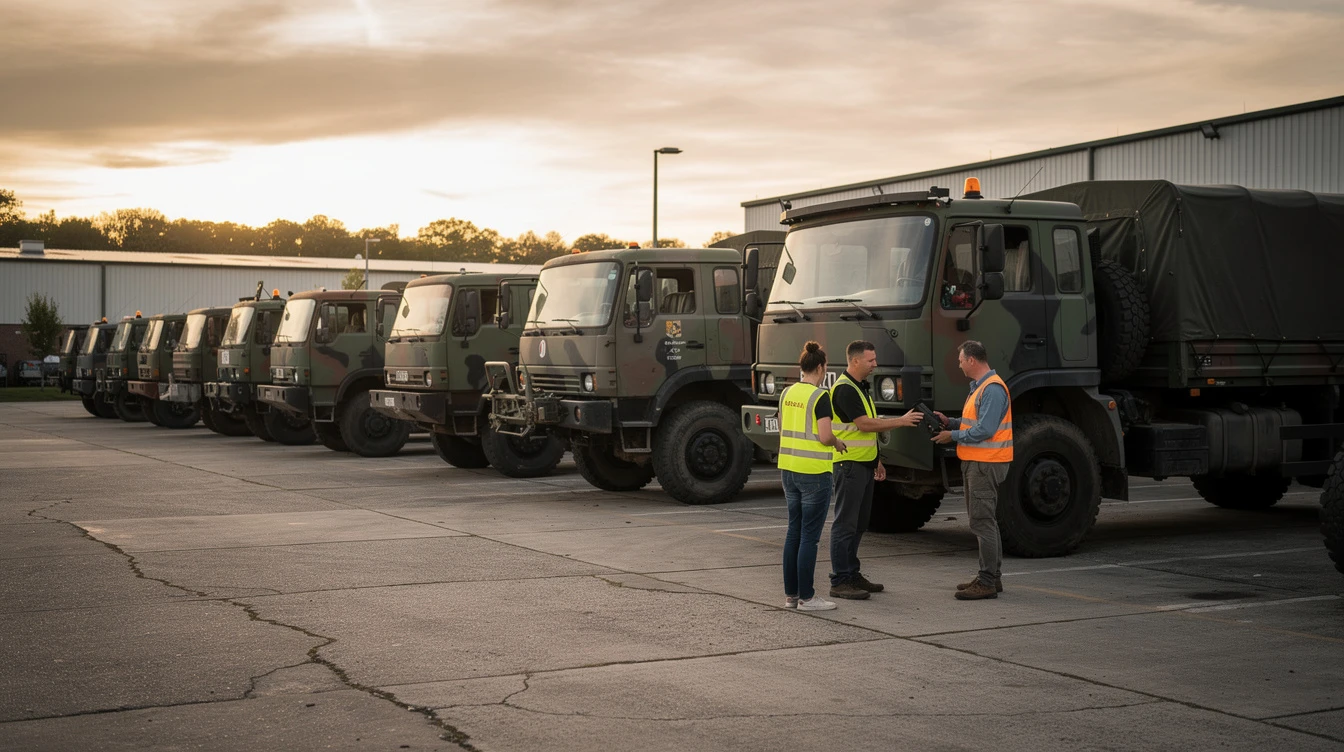
A surplus military vehicle title is the document that proves you own a decommissioned military vehicle sold to civilians. Most surplus military vehicles don't come with standard manufacturer titles; they were government property, plain and simple. You'll need to get a replacement title through your state's motor vehicle agency using military-specific documentation.
What Documentation Do Surplus Military Vehicles Come With?
Updated on October 26, 2026
Surplus military vehicles are sold without traditional manufacturer titles. Instead, they come with a bill of sale from the government auction house, typically the GSA or a military surplus dealer, plus a VIN verification form. These documents prove you bought the vehicle, but they don't establish ownership for registration purposes. Your state motor vehicle agency will ask you to submit a replacement title application backed by this supporting paperwork.
- Bill of sale: Official auction documentation showing purchase details and VIN
- VIN verification: Confirmation the vehicle identification matches GSA records
- Lien release: Proof the vehicle is free from federal government claims
- Form of application: Your state's title application (varies by state)
- Proof of ownership: Auction receipt or payment documentation
Can I Register a Surplus Military Vehicle Without an Original Title?
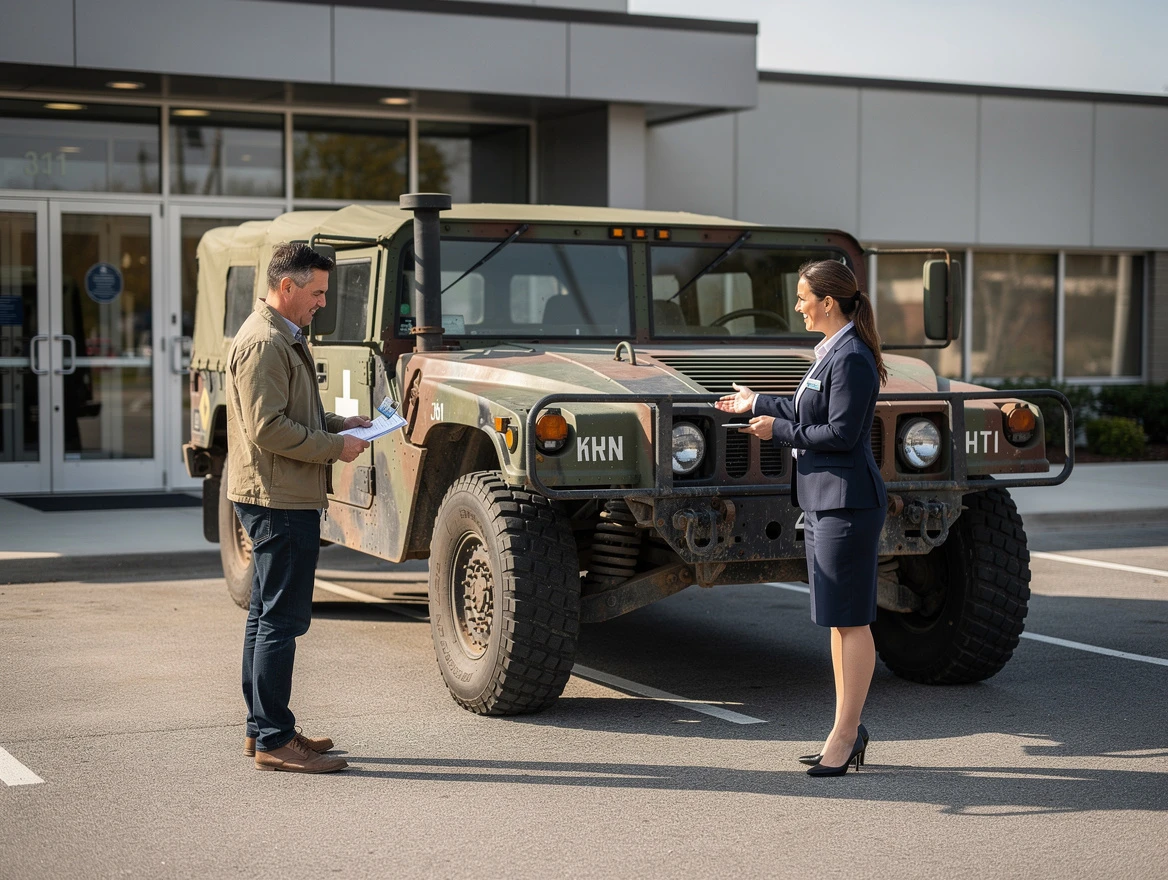
Yes, most states allow registration of surplus military vehicles through a replacement title application. The process skips the original manufacturer title requirement because the federal government held that title in the first place. Each state handles vehicle registration denied situations and missing titles differently. Most will accept an affidavit of ownership paired with supporting military documentation in place of the original title.
Ready to register your vehicle?
Join thousands of vehicle owners who use Ride Legal to handle their registration quickly.
Start Your Bespoke Registration →
Check your state's motor vehicle division website for a "replacement title" or "military vehicle title" application. Many states move faster on these because the transaction history is verifiable through public auction records; that's a real advantage over private vehicle title issues.
What Are the Steps to Title and Register a Surplus Military Vehicle?
The title and registration process for surplus military vehicles follows these core steps:
- Obtain your auction documents: Collect the bill of sale, VIN verification, and lien release from the GSA or surplus dealer
- Get a pre-purchase inspection: Have the vehicle inspected for safety and structural integrity (some states require this)
- Visit your: Submit the title application with all supporting documents
- Pay replacement title fees: Processing costs vary by state, but budget $50- $150
- Receive your title: Titled vehicles are mailed within 7- 14 business days
- Register the vehicle: Apply for registration plates using your new title
- Obtain liability insurance: Most states require proof of insurance before registration is finalized
State-by-State Surplus Military Vehicle Title Requirements
Title and registration processes vary significantly by state. Some states make military vehicle titles faster and simpler; others require bonded titles or additional affidavits. Here's a comparison of common approaches:
| State Category | Process | Timeline | Typical Cost |
|---|---|---|---|
| Simplified States (TX, CA, FL) | Direct replacement title with GSA bill of sale and VIN verification | 7, 10 days | $50, $100 |
| Affidavit States (NY, PA, OH) | Require notarized affidavit of ownership plus supporting documents | 10, 14 days | $75, $150 |
| Bonded Title States (CO, NV, UT) | May require a surety bond if historical ownership cannot be proven | 14, 21 days | $100, $300 (includes bond cost) |
| Inspection States (MA, VT, NH) | Require pre-registration safety or structural inspection | 14, 28 days | $100, $250 |
Special Considerations for Military Vehicle Registration
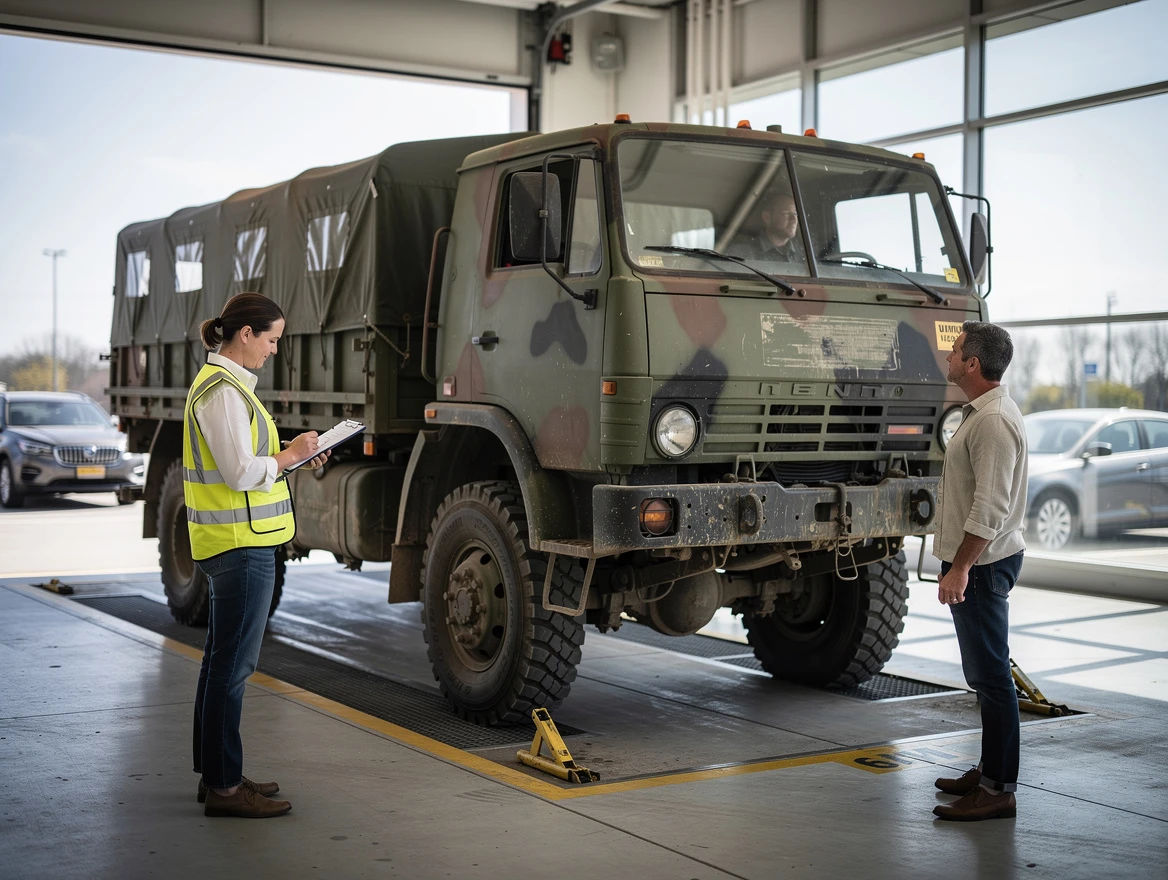
Surplus military vehicles often have characteristics that complicate titling and registration. Many can't pass emissions testing, have been modified from original factory specs, or carry limited service history records. Expect some additional scrutiny during registration.
If your military vehicle has an unsigned vehicle title status or a murky ownership history, you'll need documentation proving it moved through auction channels. A bonded title may be required if your state can't verify the full chain of ownership. Some states also accept alternative documentation, like a GSA certificate of sale or military discharge papers, to establish ownership when no manufacturer title exists.
Modified military vehicles need special attention. If the vehicle has been significantly altered from its original military configuration, your state may classify it as modified and require certification of those changes. Talk to your state's motor vehicle division before you buy, not after.
Can I Register a Surplus Military Vehicle in Another State?
Yes, surplus military vehicles can be registered in any state, but you'll need to follow that state's specific title and registration process. Some owners register in states with simpler military vehicle processes or favorable tax treatment. Montana and South Dakota, for example, offer straightforward registration options for out-of-state owners. If your home state has complex military vehicle requirements, going through a different state's process can be faster and cheaper.
Out-of-state registration typically requires proof of residency or intent to operate the vehicle in that state. Some states let you establish residency through a registered agent or business address. Depending on your situation, this can cut costs and eliminate bonded title requirements entirely.
Look at VIP Ownership Solutions
FAQ: Surplus Military Vehicle Titles
What is a motorcycle title?
A motorcycle title is a government-issued document proving ownership of a motorcycle. It includes the VIN, engine number, owner name, and any liens. Unlike surplus military vehicles, motorcycles typically arrive with manufacturer titles from the factory. A title is required before registration and transfers to a new owner through a signed bill of sale and title application.
What is a salvage title?
A salvage title flags a vehicle that has been damaged, flood, accident, theft recovery, and declared a total loss by an insurance company. A salvage vehicle can't be driven until it's repaired, inspected, and the title changes to rebuilt status. Surplus military vehicles are a different situation entirely: they're decommissioned government property with a clean ownership history and no accident or damage designation attached.
Why might a surplus military vehicle be denied registration?
Common denial reasons include missing documentation, mismatched VINs, unpaid government claims on the vehicle, or failure to meet state inspection requirements. Make sure all GSA documents match your state's application requirements. Some states deny registration if the surplus vehicle hasn't cleared an emissions or safety inspection. Call your state motor vehicle division to confirm specific requirements before you purchase, that one call can save weeks of headaches.
Do I need a bonded title for a surplus military vehicle?
Bonded titles are required in some states when ownership can't be fully documented. Surplus military vehicles typically have verifiable GSA ownership records, so bonded titles are less common here than with private vehicles. That said, states like Colorado and Nevada may still require a surety bond if you can't provide complete auction documentation. Check your state's policy before you buy.
Can I transfer ownership of a surplus military vehicle with an unsigned title?
Surplus military vehicles don't have unsigned titles because they never had original manufacturer titles to begin with. If you're buying from a private seller who already titled the vehicle, make sure the seller signs the title correctly before the transfer. A missing signature will delay registration. Learn more about title transfer issues for guidance on handling signature problems.
How long does it take to get a surplus military vehicle registered?
Timeline varies by state: simplified states process titles in 7, 10 days, affidavit-required states take 10, 14 days, and bonded or inspection states can run 21, 28 days. Expedited processing is sometimes available for an extra fee. Budget 30 days total to account for mail processing and registration issuance once the title is approved.
Stay Updated
Get the latest on registration tips, LLC insights, and exclusive offers.
No spam. Unsubscribe anytime.
This is not legal or financial advice. Please consult your CPA/Attorney for all legal and financial guidance. Ride Legal is a privately owned website and is not operated by any government agency.