You meant to handle it. The renewal notice sat on your counter for a few weeks, then disappeared under a stack of mail. Life got busy, the riding season ended, and suddenly it's spring again, and your motorcycle has been sitting with an expired registration sticker for the past six months. Sound familiar?
Here's what most riders don't realize: the clock doesn't stop when your bike does. Expired registration isn't just a minor oversight you can fix quietly at the DMV. It's a financial liability that compounds the longer you wait, and in some states it opens the door to consequences that have nothing to do with the registration itself.
Whether you ride a sport bike, a cruiser, or a premium adventure machine, the stakes of an expired sticker are the same. Let's look at exactly what you're risking, and what it actually costs you, when you let your motorcycle registration slip past its expiration date.
Why Expired Registration Hits Harder Than You Expect
Most riders assume an expired sticker means a small fine. Maybe $50 bucks, a quick trip to the DMV, done. The reality is messier than that.
Late registration fees vary by state, but they typically stack on top of your standard renewal fee, not replace it. In California, for example, penalties on a late registration can run anywhere from 20% to 80% of the annual fee depending on how late you are. Miss renewal by a full year and you could owe two years of fees plus a penalty that doubles your original cost. Other states use flat late fees, some as low as $10, others as high as $100 or more per month elapsed.
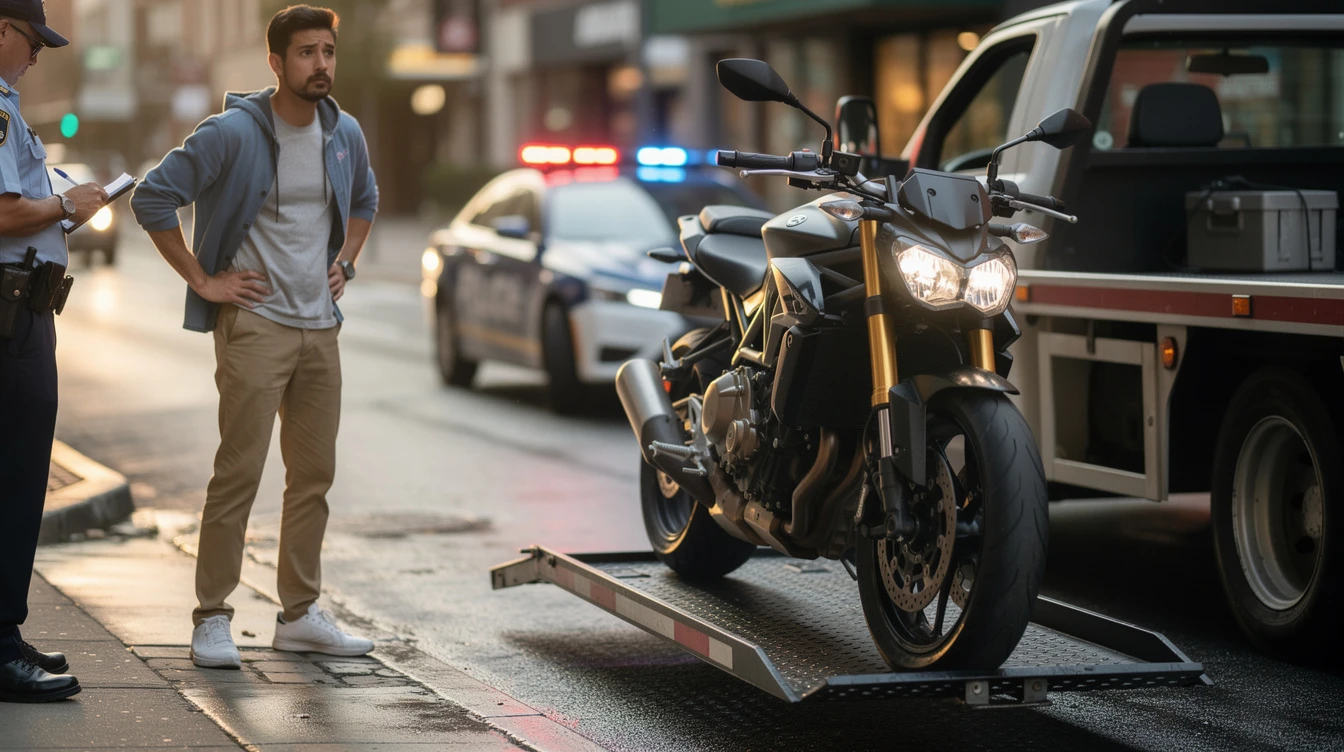
That's just the paperwork side. The moment you ride on an expired registration, you're also exposed on the road. A routine traffic stop for any reason, lane position, a taillight, nothing at all, can result in a fix-it ticket, a moving violation added to your record, or in more aggressive enforcement jurisdictions, impoundment of your bike on the spot.
Impoundment is where things get genuinely expensive. Towing fees, daily storage rates, and administrative costs to retrieve an impounded vehicle can easily run $300 to $700 or more before you even address the underlying registration issue. And if your bike sits in impound for more than a few days while you work through the paperwork, those storage fees compound fast.
Want a clearer picture of how states differ in their approach to registration requirements? The Dirt Legal team put together a solid breakdown on why some states make vehicle registration easier than others, which is worth reading if you're considering where your bike is registered long-term.
Get Your Bike Street-Legal Again →The Insurance Gap Nobody Warns You About
Here's the part that catches riders completely off-guard. Your motorcycle insurance policy may still be active even when your registration is expired. That feels like a safety net. It isn't always one.
Some insurance carriers include policy language that limits or voids coverage when a vehicle is being operated outside the bounds of the law. An expired registration can, in certain interpretations, put you in that category. If you're involved in an accident while riding on expired tags, your insurer has grounds, in some states, to deny the claim or reduce the payout based on that violation.
Even when insurers don't deny the claim outright, the police report from the accident will note the expired registration. That notation can affect your renewal rates, your claims history, and in worst-case scenarios, your ability to keep coverage at your current premium.
The cleaner your record and the tighter your paperwork, the stronger your position with your insurer. It's that straightforward.
Honestly, the best way to think about registration is the same way you think about the bike itself, as part of the ownership experience, not a bureaucratic afterthought. Premium riders don't let their machines fall into disrepair. The registration is part of what makes ownership effortless and above reproach.
For a deeper look at how title and registration issues can become costly title nightmares, the guide on fixing lost paperwork and ownership issues covers the practical side of what happens when documentation falls apart.
What Late Fees Actually Look Like Across States
Numbers make this real. Here's a general breakdown of how penalty structures typically work, though exact figures vary and change, always confirm with your state's DMV before assuming a total.
| How Late | Typical Penalty Range | Additional Risk |
|---|---|---|
| 1-30 days | $10, $50 flat fee or 10-20% of annual fee | Fix-it ticket if caught riding |
| 1-6 months | $50, $150+ or 40-60% of annual fee | Citation, possible court appearance |
| 6-12 months | $100, $300+ or up to 80% of annual fee | Vehicle impoundment, insurance risk |
| Over 1 year | Multi-year fees + maximum penalties | Possible title complications, re-registration required |
Some states also require a smog check or safety inspection before they'll process a renewal after a lapse. Montana, for the record, has no emissions testing requirement, one of the reasons so many premium motorcycle owners register their bikes there. You can review the official Montana fee structure directly on the Montana Motor Vehicle Division page.
If you've been considering Montana registration as a long-term solution for your motorcycle, our Montana Motorcycle Registration service walks you through exactly what's involved and what it costs. No surprises.
The Smart Path Forward: Don't Wait Longer Than You Already Have
Every additional day you wait adds to the penalty total, narrows your options, and increases the chance you'll ride the bike before the paperwork is resolved. That's the compounding problem with expired registration, it's rarely urgent enough to feel like an emergency, right up until it is.
The practical fix depends on how long your registration has been expired and what state your motorcycle is registered in. If you're less than 30 days out, most states let you renew online with a standard late fee added. Past that window, you may need to appear in person, show proof of insurance, and in some cases address any outstanding violations first.
For riders with bikes registered in states that make this process unnecessarily difficult, Montana is worth a serious look. No emissions testing, no inspections, and a registration process that can be handled remotely. That's not a workaround, it's a completely above-board path that thousands of motorcycle owners use every year. Our team at Ride Legal handles the entire process on your behalf.
One of our clients, a collector with three bikes and an ATV, described it this way: "I spent more time stressing about renewal deadlines and fee notices than I ever spent actually riding. Switching to Montana registration through Ride Legal was the first time I felt like the paperwork was actually working for me." That kind of peace of mind is what this service is built around.
If your situation involves a title complication on top of the registration issue, a lost title, a lien that was never properly released, or a bike purchased without proper documentation, our Montana Motorcycle Title Recovery and Registration service is designed specifically for those situations.
For ATV and UTV owners dealing with the same expired registration headache, the Montana ATV Title Recovery and Street-Legal Registration page covers the complete process for off-road machines that need to get street-legal.
Bringing It Full Circle: Registration Is Part of the Ride
The best riders treat their machines with precision. Every fluid, every service interval, every detail matters. Registration belongs in that same category. It's not paperwork, it's the document that says your machine belongs on the road, and that you belong on it without risk of a cash penalty, an impounded bike, or a denied insurance claim.
Letting your registration expire isn't a disaster. It happens. But every week you let it sit unresolved is a week of exposure you don't need, financially, legally, and practically. The fix is almost always simpler than the anxiety around it.
If you're unsure whether your current registration situation is clean, a quick VIN check can surface any outstanding issues before you deal with the renewal itself. It's a smart starting point that takes a few minutes and can save you from an unpleasant surprise at the DMV window.
And if you're ready to put the registration stress behind you permanently, our VIP Ownership approach is built exactly for riders who'd rather be riding than filing.
Frequently Asked Questions
How much does a late registration fee typically cost for a motorcycle?
Late registration fees for motorcycles vary widely by state. Most states charge either a flat late fee, typically $10 to $100, or a percentage of the annual registration fee, ranging from 10% to 80% depending on how long the registration has been expired. The longer you wait, the higher the penalty stacks. In some states, a lapse of over a year requires re-registration rather than a standard renewal.
Can I get pulled over just for an expired registration sticker?
Yes. In most states, law enforcement can stop you solely for an expired registration visible on your plate. The outcome ranges from a fix-it ticket to a citation on your driving record, and in some jurisdictions, impoundment of the vehicle at the officer's discretion. It's not a guaranteed outcome every time, but the exposure is real every time you ride.
Does my insurance still cover me if my registration is expired?
Your insurance policy may still be active, but that doesn't guarantee coverage in all situations. Some policies include language that limits or denies claims when the vehicle was being operated outside the bounds of state law. An expired registration can fall into that category. Always check your policy terms and consult with your insurer if you're unsure.
What is the easiest way to resolve expired motorcycle registration?
If your registration expired recently, most states allow online renewal with a late fee added. For longer lapses or title complications, in-person DMV visits are typically required. Montana registration is an increasingly popular alternative for riders who want a simpler, inspection-free process handled remotely. A motorcycle registration service online through a provider like Ride Legal can handle the entire process without you setting foot in a DMV.
Does Montana require emissions testing for motorcycle registration?
No. Montana has no emissions testing requirement for motorcycle registration. This, combined with Montana's low registration fees and remote-processing capability, makes it an attractive option for riders across the country. Official fee information is available through the Montana Motor Vehicle Division.
What if my motorcycle has a title problem in addition to an expired registration?
Title issues, lost titles, unreleased liens, missing paperwork from a private sale, need to be resolved before or alongside the registration renewal in most states. Montana has a title recovery process that handles both simultaneously, which is one reason many riders with complicated paperwork situations choose this route. Our Montana Motorcycle Title Recovery and Registration service covers exactly these cases.
Start Your Premium Registration →