
An unsigned vehicle title is a title document missing the seller's signature, which prevents you from completing ownership transfer and registering the vehicle. Most states won't process registration without a fully signed title, leaving you unable to operate the vehicle or prove ownership.
In This Guide
- What Is an Unsigned Vehicle Title?
- Why Do Vehicle Titles Go Unsigned?
- How Does an Unsigned Title Affect Vehicle Registration?
- How to Fix an Unsigned Vehicle Title
- What If a Car Title Was Never Transferred to You?
- Frequently Asked Questions
What Is an Unsigned Vehicle Title?
A vehicle title is a document proving ownership of a vehicle. An unsigned title is one where the seller failed to sign the document required to transfer ownership. Without this signature, the title remains in the seller's name, and you cannot claim ownership or register the vehicle.
When you purchase a vehicle, the seller must sign the title's assignment section, releasing their ownership claim to you. Their signature is the acknowledgment that ownership is changing hands. Without it, the document is incomplete and unacceptable to any state's motor vehicle agency.
This becomes a real problem because many states issue plates and registration cards only to the person whose name appears on the title. If the seller's signature is missing, the title hasn't been transferred, so registration is blocked.
Why Do Vehicle Titles Go Unsigned?

Unsigned titles typically result from simple oversight, miscommunication, or a seller who doesn't understand the requirement. Here are the most common causes:
Ready to register your vehicle?
Join thousands of vehicle owners who use Ride Legal to handle their registration quickly.
Start Your Bespoke Registration →
- Honest mistake: The seller forgets to sign the title during the sale, especially in casual or private transactions.
- Lack of awareness: Some sellers don't realize signing the title is a requirement for ownership transfer.
- Rushed transaction: In quick deals, paperwork details get overlooked.
- Death or unavailability: If the seller passes away or becomes unreachable, obtaining their signature becomes impossible.
- Dealer error: Even reputable dealers occasionally miss signatures on paperwork.
- Lost or damaged title: The original title may be damaged or illegible, making the signature section unclear.
Whatever the reason, an unsigned title creates an obstacle that must be resolved before you can complete vehicle registration.
How Does an Unsigned Title Affect Vehicle Registration?
An unsigned title will result in vehicle registration denial. When you submit paperwork to register a vehicle, the state's motor vehicle office cross-checks the title signature against ownership records. If the signature is missing or incomplete, they reject your application.
The impact spreads beyond registration:
- Cannot drive the vehicle: Without registration, operating the vehicle on public roads is not compliant, even if you own it.
- Insurance complications: Most insurers won't issue a policy for an unregistered vehicle or one with a title in someone else's name.
- Proof of ownership issues: You can't prove you own the vehicle to lenders, insurance companies, or future buyers.
- Liability risk: If you're in an accident with an unregistered vehicle, financial consequences multiply.
- Title transfer delays: The longer the title remains unsigned, the harder it becomes to reach the seller and resolve it.
How to Fix an Unsigned Vehicle Title
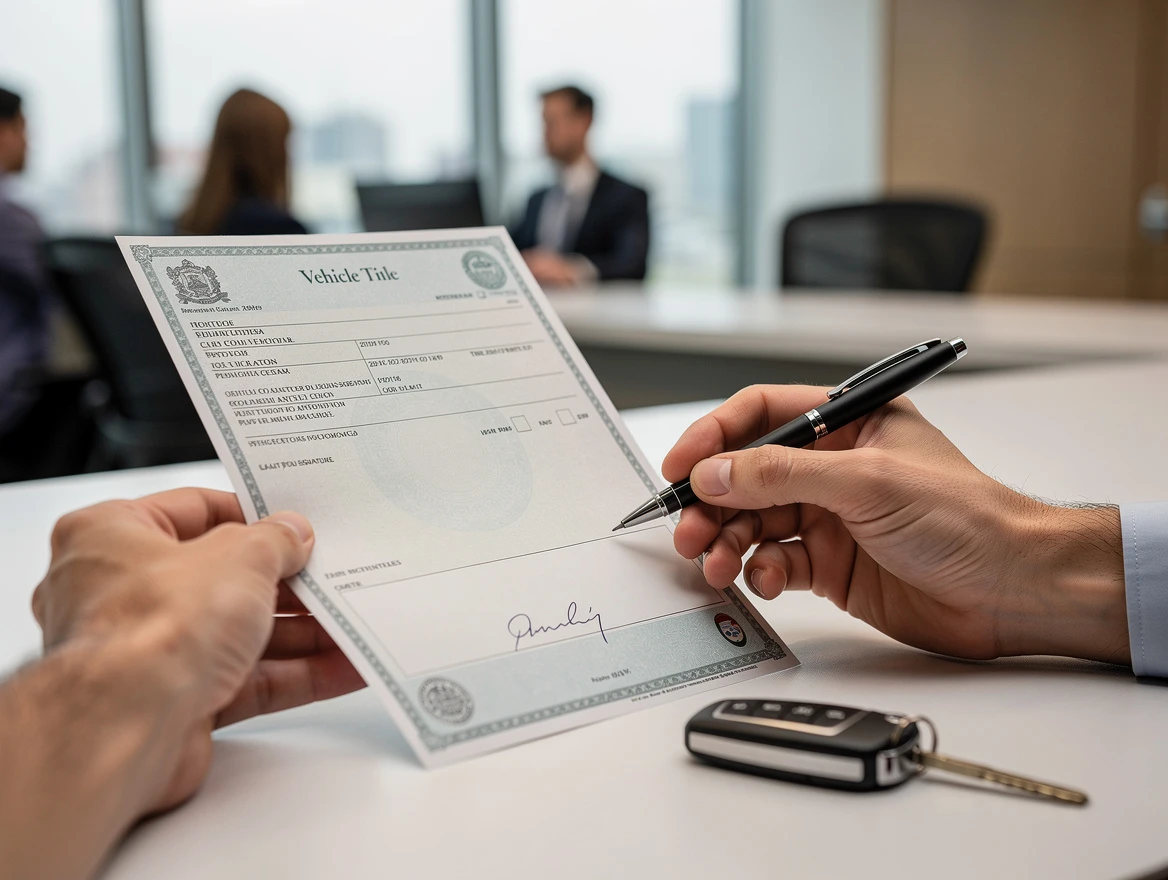
The solution depends on whether you can contact the seller and their willingness to sign. Here are the primary paths forward:
Step 1: Contact the Seller Immediately
Your first move is reaching out to the seller. Explain the situation and request that they sign the title. Most sellers are cooperative once they understand the problem. If you're on good terms, this is typically the quickest fix.
Step 2: Get the Title Signed
Once you've reached the seller, have them sign the title. Depending on your location and relationship:
- In-person: Meet the seller to have them sign the title in front of you.
- Notarized signature: Some states accept a notarized signature from the seller, allowing them to sign at a notary public office without you present.
- Mail signature: In limited cases, you can mail the title to the seller with instructions, though this is riskier.
Step 3: Obtain a Duplicate or Corrected Title
If the seller is unreachable or refuses to sign, or if the title is damaged, you may need to request a duplicate or corrected title through the state's motor vehicle office. The process and cost vary by state.
For a more complex situation, such as when the seller has passed away, you may need to work through probate or use an affidavit of ownership in some states.
Step 4: Use a Bonded Title
In states that allow it, a bonded title lets you register a vehicle when the original title is missing, unsigned, or disputed. You purchase a surety bond (a one-time fee) and file an application with the state. After a waiting period (typically 3-5 years), you can request the original title or receive a clear bonded title.
Bonded titles are particularly useful when the seller cannot be located or has passed away.
What If a Car Title Was Never Transferred to You?
A never-transferred title is similar to an unsigned title but worse, because the original seller still owns the vehicle. This happens when someone sold you a car but never completed the title transfer at all.
The solutions are nearly identical:
- Contact the original seller: Ask them to sign and submit the title transfer paperwork themselves or authorize you to do it on their behalf.
- Obtain a bill of sale: A signed bill of sale proves you purchased the vehicle, even if the title wasn't transferred. Many states allow registration based on a bill of sale and an affidavit of ownership.
- File an affidavit: If the seller is unavailable, some states let you file an affidavit stating you purchased the vehicle and cannot locate the seller for their signature. This must be notarized.
- Apply for a bonded title: As above, a surety bond and affidavit can help you register despite the missing transfer.
The sooner you address a never-transferred title, the better. The longer it sits unsigned, the more difficult it becomes to reach the seller and resolve the issue.
For more detailed guidance on this scenario, How to Title a Vehicle Without a Title covers compliance options and documents needed, and How to Resolve a Situation Where the Seller Forgot to Sign the Title provides step-by-step solutions for this exact problem.
Skip the Paperwork, Let Us Guide You ->
Frequently Asked Questions
What is a motorcycle title?
A motorcycle title is a Montana registration document proving ownership of a motorcycle. Like a car title, it must be signed by the seller during ownership transfer. Motorcycle titles serve the same purpose as vehicle titles, though some states issue them differently for motorcycles versus cars. Both require signatures to be valid and transferable.
What is a salvage title?
A salvage title indicates a vehicle has been declared a total loss by an insurance company due to damage exceeding repair costs. A salvage title vehicle can be repaired and retitled as rebuilt, but it retains a permanent mark on its history. Salvage titles can be signed and transferred like regular titles, though they require specific disclosure and inspection before registration.
How to appeal vehicle registration denial?
If your registration is denied, request a written explanation from the motor vehicle office. Common reasons include unsigned titles, VIN mismatches, or lien issues. Once you understand the cause, fix the underlying problem (get the title signed, resolve the lien, etc.), then resubmit. Some states allow formal appeals if you disagree with the denial; check your state's motor vehicle office for appeal procedures.
How to title a classic car in Montana?
Montana allows registration of classic cars through its straightforward process. Gather proof of ownership (signed title, bill of sale, or affidavit), a valid ID, and proof of residency. Classic vehicles benefit from Montana's no-emissions requirement and lower registration fees. Montana's process is simpler than many states, making it popular for exotic and classic car owners seeking efficient registration.
What does a vehicle need to be street-legal?
A street-legal vehicle must have current registration, valid license plates, proof of insurance, and an emissions test (if required by your state). The vehicle must also pass safety inspections, with functioning brakes, lights, and steering. An unsigned title prevents registration, which blocks street-legal status. Before a vehicle can operate on public roads, the title must be complete and transferred to the current owner.
What is clean title vs salvage title?
A clean title indicates the vehicle has never been declared a total loss and has no liens or major damage history. A salvage title means the vehicle was declared a total loss but has been repaired. Clean titles transfer more easily and command higher resale value. Salvage titles require disclosure and inspection but can be driven and transferred like clean titles once retitled as rebuilt.
Stay Updated
Get the latest on registration tips, LLC insights, and exclusive offers.
No spam. Unsubscribe anytime.
This is not legal or financial advice. Please consult your CPA/Attorney for all legal and financial guidance. Ride Legal is a privately owned website and is not operated by any government agency.