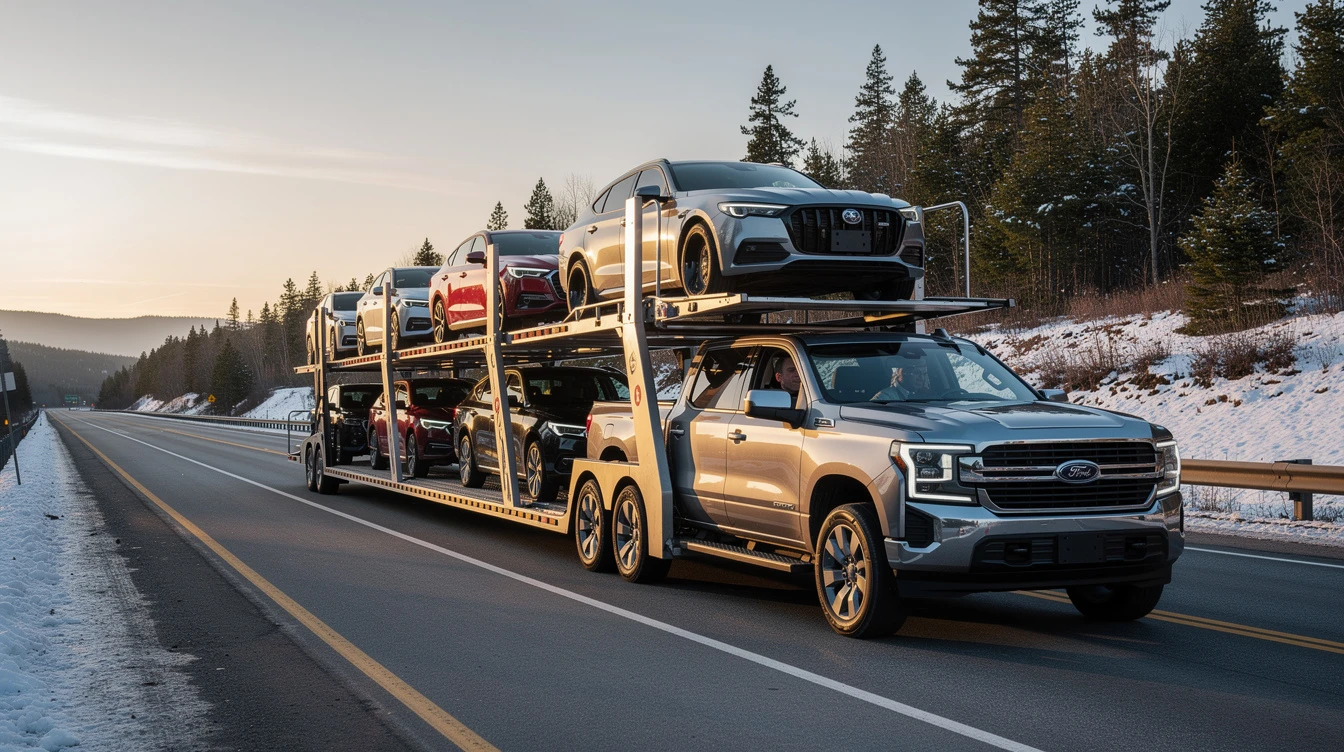
Transporting a vehicle from Canada to the United States requires careful attention to both countries' import regulations, border documentation, and US registration requirements, but the process becomes manageable when you understand the key steps and paperwork involved.
Look at Your Options ->In This Guide
- What Import Regulations Apply to Vehicles from Canada?
- What Documents Do You Need for Cross-Border Vehicle Transport?
- How Does Customs Clearance Work at the Border?
- How Do You Register an Imported Vehicle in the US?
- What Are the Typical Timelines and Costs?
- Are There Special Considerations for Motorcycles and Powersports?
- Frequently Asked Questions
What Import Regulations Apply to Vehicles from Canada?
The United States has strict import rules that govern which vehicles can cross the border and be registered for road use. Any vehicle imported from Canada must meet either current US safety and environmental standards or are eligible as a historic vehicle exempt from these requirements. The National Highway Traffic Safety Administration (NHTSA) and Environmental Protection Agency (EPA) enforce these rules at the federal level, though state registration requirements vary.
Canadian vehicles must have been manufactured to standards close enough to US specifications to pass inspection. Motorcycles, ATVs, and powersports vehicles have their own compliance pathways, often simpler than passenger cars. Some older or classic bikes can be eligible for historic vehicle status, which eliminates emissions testing but typically restricts use to show and event duty only.
- Age exemption: Vehicles 25 years or older are generally exempt from NHTSA safety recalls and EPA emissions regulations
- Canadian-spec compliance: Many newer Canadian vehicles meet or exceed US standards and cross with minimal modifications
- Powersports exception: Motorcycles, ATVs, and UTVs often are eligible for simpler import pathways than automobiles
- Title requirements: The vehicle must have a clear title in Canada; liens or holds prevent export
- VIN verification: NHTSA maintains an import database; your VIN will be checked against it
What Documents Do You Need for Cross-Border Vehicle Transport?
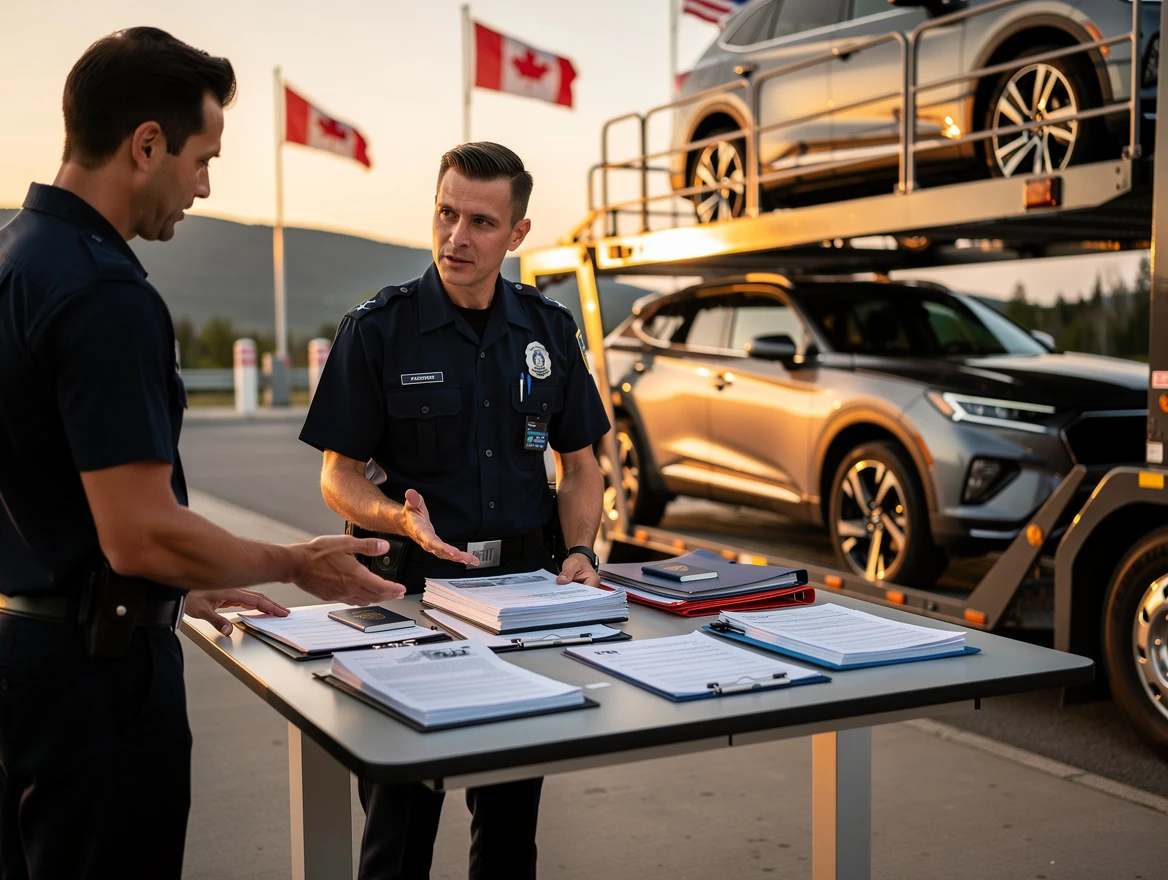
Documentation is critical for a smooth cross-border transport. You'll need proof of ownership, proof of residency or intended registration, and certificates of compliance from Canadian authorities. Missing or incomplete paperwork will delay your crossing and may result in the vehicle being turned back at the border.
Ready to register your vehicle?
Join thousands of vehicle owners who use Ride Legal to handle their registration quickly.
Start Your Bespoke Registration →
Your Canadian title or proof of ownership, your passport or identification, and an export permit from the province where the vehicle is registered are essential starting points. For motorcycles and powersports, the requirements are similar but often less complex than for passenger vehicles.
- Canadian vehicle title: Original or certified copy, proof of your ownership
- Proof of residency: US driver's license, lease, mortgage, or utility bill showing your intended US address
- Passport or identification: Valid travel documents for border crossing
- Export permit: Apply for at the Canadian provincial transportation office (requirements vary by province)
- Bill of sale: If recently purchased, showing sale price and transaction details
- Proof of emissions compliance: For newer vehicles, documentation that the vehicle meets emissions standards
- NHTSA HS 7 form: Declaration confirming the vehicle meets US safety standards or qualifies for exemption
- Insurance quote or proof: Some carriers require a US address; arrange this before crossing
How Does Customs Clearance Work at the Border?
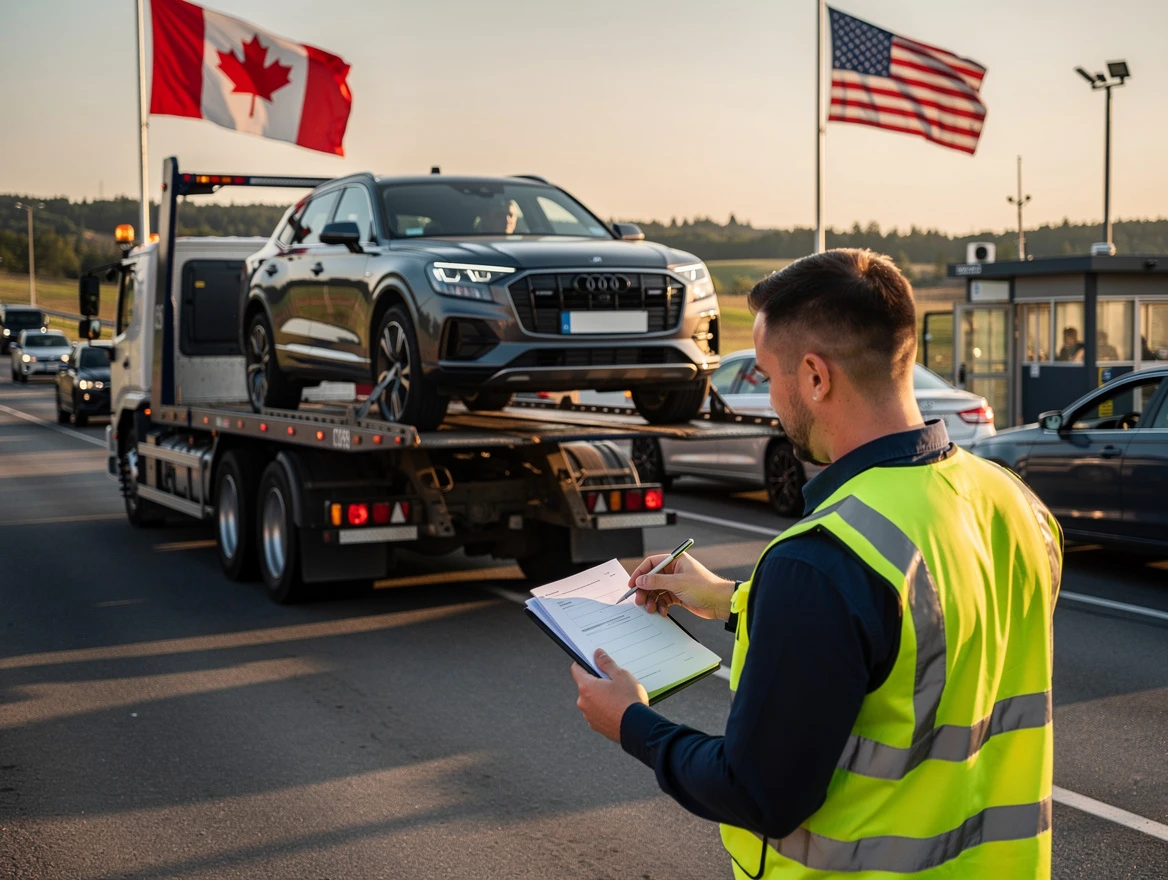
Customs clearance at the US border is straightforward for personal vehicles, but rules differ if you're importing commercially or importing multiple vehicles. You'll declare the vehicle to US Customs and Border Protection (CBP), provide your documentation, and await approval. For powersports and motorcycles, the process is typically faster and less scrutinized than for passenger cars.
The CBP officer will inspect the vehicle, verify the VIN, check that it complies with applicable standards, and clear it for entry. Once cleared, you receive a CBP release document allowing you to drive to your state of residence for registration. The entire border inspection typically takes 1-3 hours depending on volume and documentation quality.
- Declare the vehicle value: Be honest about purchase price or fair market value
- Have all documents ready: Organized, legible copies prevent delays
- Powersports priority: ATVs, UTVs, and motorcycles often move through more quickly than cars
- CBP inspection checklist: VIN match, structural condition, safety components, emissions equipment
- Conditional clearance: If the vehicle needs repairs or modifications to meet standards, CBP may issue a temporary import permit
- No registration at border: You cannot register the vehicle at customs; that happens in your home state
How Do You Register an Imported Vehicle in the US?
After crossing the border and receiving CBP clearance, you must register the vehicle in your state within a specific timeframe (usually 10-30 days, depending on the state). Registration requirements vary significantly by state. Some states require an inspection, proof of VIN matching, and emissions testing, while others have minimal requirements for imported vehicles.
For motorcycles and powersports, many states have simplified registration that works with the CBP release document alone. Work through your intended state's DMV early to understand their specific forms, fees, and timelines. Having a clear title transferred into your name before you cross makes registration much faster.
- State-specific requirements: Contact your DMV before crossing to confirm timelines and needed forms
- Imported vehicle title: Some states issue a separate title marking the vehicle as imported; this doesn't affect ownership or use
- VIN inspection: Some states require an inspection by an private registration specialist to verify the VIN on the vehicle matches documentation
- Emissions testing: States like California, New York, and Massachusetts may require pre-registration emissions testing
- Motorcycle registration: Often expedited; many states require only proof of ownership, insurance, and a completed application
- Temporary registration: Some states allow temporary plates or permits while your registration is processing
- Title transfer timeline: Budget 2-4 weeks from crossing the border to receiving your US registration and plates
If you own an exotic or high-value motorcycle, consider whether registering in a state with tax-friendly policies makes sense for you. Many elevated bike owners take advantage of states with lower registration fees and tax structures. Exotic registration solutions can simplify the process for bikes and specialty powersports.
What Are the Typical Timelines and Costs?
The total timeline from decision to road-legal registration typically spans 4-8 weeks, depending on paperwork preparation, border volume, and your state's DMV processing speed. Costs include export permits, shipping or transport, border crossing fees, and state registration, plus any modifications required to meet compliance standards.
Budget realistically for each phase. The good news is that for powersports, motorcycles, ATVs, and UTVs, both timelines and costs tend to be lower than for passenger vehicles.
| Phase | Timeline | Typical Cost Range | Notes |
|---|---|---|---|
| Export permit (Canada) | 5-10 days | $50-$150 | Varies by province; some include vehicle inspection |
| Vehicle transport/shipping | 1-7 days (depends on distance and method) | $500-$3,000+ | Driving yourself is cheapest; professional transport varies by distance |
| Border clearance | 1-3 hours (usually same day) | No federal fee; state port fees $0-$100 | Faster for motorcycles and powersports |
| Compliance modifications (if needed) | 1-4 weeks | $200-$2,000+ | Depends on vehicle age and emissions equipment |
| State registration and title | 5-20 business days | $50-$500 | Varies widely by state; motorcycles typically $25-$150 |
| Total | 4-8 weeks | $800-$6,000+ | Motorcycles and powersports at lower end |
Skip the Confusion, Let Us Guide You ->Are There Special Considerations for Motorcycles and Powersports?
Motorcycles, ATVs, side-by-sides, and other powersports vehicles have distinct import advantages over passenger cars. Many states treat powersports registration as a simplified process with lower fees, shorter timelines, and fewer compliance hurdles. Additionally, older or classic motorcycles often are eligible for historical or street-legal designations that make the import process straightforward.
If you're importing a high-performance or exotic motorcycle, consider the tax and registration benefits of importing through specialized registration channels. Some bike owners use out-of-state registration strategies to reduce ongoing costs while maintaining ownership and operation.
- Age advantage: Pre-1975 motorcycles typically face no emissions restrictions and minimal safety review
- Simplified registration: Most states register powersports vehicles in days, not weeks
- Lower fees: Motorcycle registration often costs one-third to one-half that of passenger vehicles
- No VIN inspection required (often): Many states skip formal VIN verification for bikes under a certain value
- Powersports title options: Some states allow dealer or casual sale titles for motorcycles without formal DMV transfer
- Street-legal paperwork: If your bike needs modifications to be street-legal, documentation is straightforward and inexpensive
- Elevated bike asset protection: High-value exotic motorcycles benefit from specialized registration and titling strategies that protect owner privacy and reduce liability
Riders importing specialty bikes often benefit from understanding title options and owner privacy structures. VIP ownership solutions can help you work through the best registration structure for your elevated powersports asset, whether you're prioritizing cost savings, liability protection, or operational simplicity.
Frequently Asked Questions
Can an LLC own a vehicle?
Yes, an LLC can own a vehicle. In fact, many vehicle owners use LLCs as a structure for asset protection, liability isolation, and tax efficiency. When an LLC owns a vehicle, the vehicle is registered to the LLC entity name rather than a personal name. For imported vehicles from Canada, you can register the vehicle directly to your LLC if the LLC is formed in the state where you plan to operate the vehicle. This structure is especially popular for high-value exotic motorcycles and powersports assets, where owners want to separate personal liability from vehicle ownership. The registration process is the same, but you'll provide your LLC's name, an Employer Identification Number (EIN), and proof of LLC formation documents instead of a personal driver's license.
How do I import a car to the US?
To import a car to the US, obtain an export permit from the Canadian province, gather your title and identification, drive or ship the vehicle to a US border crossing, declare it to US Customs and Border Protection with your documentation, and pass CBP inspection. Once cleared, you have 10-30 days (depending on your state) to register the vehicle with your state's DMV, which requires proof of ownership, proof of residency, and sometimes an inspection or emissions test. The entire process typically takes 4-8 weeks. Motorcycles and powersports follow a similar process but are often faster because many states have simplified registration requirements for bikes.
Do I need to pay duty or tariffs when importing a vehicle from Canada?
Personal vehicles imported from Canada for your own use typically do not incur US import duty or tariffs if the vehicle was manufactured in North America or meets current trade agreements. However, some older or specialty vehicles may be subject to tariffs depending on origin and value. Consult with CBP before crossing to confirm duty status for your specific vehicle. Additionally, your home state may charge sales tax on the vehicle's value or charge registration and title fees, so budget for state costs even if federal tariffs don't apply.
What if my Canadian vehicle doesn't meet US emissions standards?
If your vehicle fails to meet US EPA emissions standards, you have options. CBP may issue a conditional import permit allowing you to make corrections before final registration. You can install emissions equipment or modifications required by your state. Vehicles 25 years or older are exempt from EPA emissions requirements, so a classic motorcycle from Canada may need no modifications at all. Have your vehicle inspected before crossing to identify any required upgrades, which can cost $200-$2,000 depending on the vehicle. Working with a powersports specialist ahead of time can clarify compliance requirements for your specific bike or ATV.
Can I drive a Canadian vehicle in the US on a temporary basis while waiting for registration?
Not indefinitely. Once CBP clears your vehicle at the border, you typically have 10-30 days (depending on your state) to register it before it becomes non-compliant to operate on US roads. During this grace period, you must carry your CBP release document, proof of ownership, and proof of insurance. Do not drive across state lines without registering in your home state; interstate travel without valid registration invites traffic stops and potential fines. Some states offer temporary registration or permits that extend this window; contact your DMV immediately upon crossing to understand your state's exact timeline and temporary options.
Are there advantages to registering an imported motorcycle in Montana or South Dakota instead of my home state?
Yes. Montana and South Dakota both offer registration advantages, including low fees, no sales tax (in Montana), and simplified registration processes that appeal to powersports owners. If you establish residency or have a connection to these states, registering there can save thousands over time, especially for high-value bikes. Many exotic motorcycle owners use out-of-state registration strategies for cost and privacy benefits. However, your home state may challenge out-of-state registration if you live and operate the vehicle primarily there, so consult a registration specialist before proceeding. This strategy works best for owners who travel frequently or have legitimate business reasons for multi-state registration.
Stay Updated
Get the latest on registration tips, LLC insights, and exclusive offers.
No spam. Unsubscribe anytime.
This is not legal or financial advice. Please consult your CPA/Attorney for all legal and financial guidance. Ride Legal is a privately owned website and is not operated by any government agency.