
If a seller never signed your vehicle title, your registration is blocked until you get their signature. You cannot transfer ownership or register the vehicle in your name without the previous owner's signature. The good news: there are proven solutions to recover an unsigned title and get back on track.
What Happens When a Title Remains Unsigned by the Seller
Updated on November 18, 2026
An unsigned vehicle title means the seller completed the sale but forgot, or refused, to sign the document that transfers ownership to you. This creates a deadlock: the title still names the seller as the owner, so the state won't issue registration in your name.
- Registration denied: Your local DMV will reject your registration application because the title lacks the seller's signature.
- No ownership: You hold a bill of sale or receipt, but the title document is what matters.
- No insurance coverage: Most insurers won't cover an unregistered vehicle in your name.
- No plates issued: You cannot drive the vehicle on public roads.
Bottom line: you own the vehicle in practice, but the state doesn't recognize it yet. The title is the key to registration.
How to Get the Seller to Sign the Title
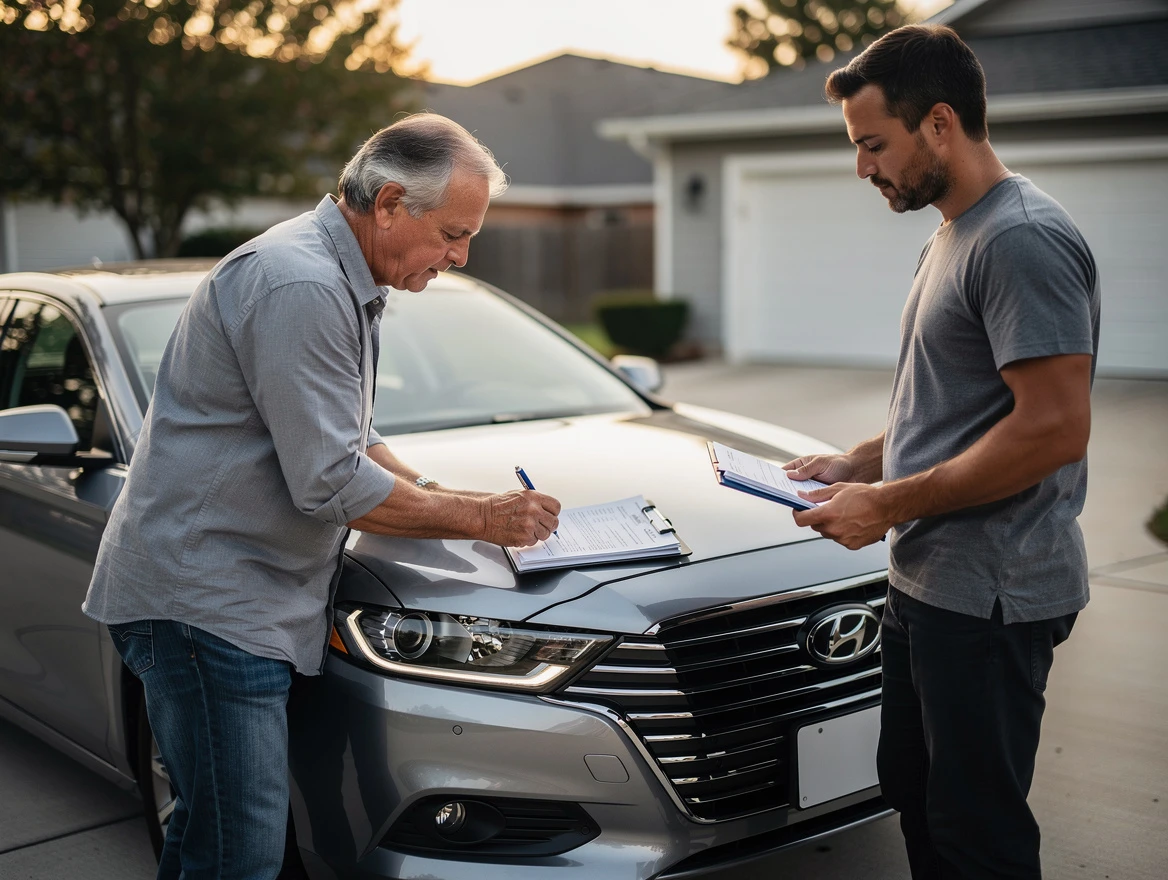
Your first move should always be contacting the seller directly. Most cases resolve quickly once they understand what's needed.
Ready to register your vehicle?
Join thousands of vehicle owners who use Ride Legal to handle their registration quickly.
Start Your Bespoke Registration →
- Contact them in writing: Send an email or letter explaining that the title was never signed and that you need their signature to register. Keep records of every exchange.
- Explain the deadline: Tell them you have a registration deadline (if applicable) and need their cooperation now.
- Offer to meet in person: If they're local, suggest meeting at a notary's office so they can sign the title on the spot.
- Send the title overnight: If they're out of state, ship the title with a prepaid return envelope and a simple instruction letter.
- Use a notary: Many sellers feel more comfortable signing with a notary present. Offer to cover the notary fee if needed.
If the seller cooperates, you'll have a signed title within days and can head straight to registration.
What If the Seller Won't Sign or Won't Respond
If the seller ignores you or flat-out refuses to sign, the path forward gets more involved. You still own the vehicle, proving it just takes some work.
- Bonded title: Many states, including Texas, California, and Florida, allow you to get a bonded title when the seller is unresponsive. You post a surety bond (typically $1,500, $5,000) and the state issues a new title in your name after a waiting period (usually 3- 5 years). Read more about unsigned vehicle title options and recovery timelines.
- Court-ordered title transfer: You can file a lawsuit to compel the seller to sign or force a title transfer. This runs hundreds to thousands in fees but works when the seller is acting in bad faith.
- Affidavit of ownership: Some states let you file an affidavit swearing you purchased the vehicle, backed by your bill of sale and payment proof. This won't create a full title but can access temporary registration.
- Montana LLC registration: There's another route worth knowing about: you can transfer the vehicle into a Montana LLC and register it there, bypassing your home state's requirements. This works especially well for high-value or exotic vehicles and adds asset protection benefits on top.
Each option carries different costs, timelines, and implications. Your state and your specific situation determine which path makes the most sense.
Comparing Your Options for Resolving an Unsigned Title
| Option | Timeline | Cost | Complexity | Best For |
|---|---|---|---|---|
| Seller Signs (Responsive) | 1-2 weeks | $0-50 | Minimal | Cooperative sellers, quick resolution |
| Bonded Title | 3-5 years (waiting period) + processing | $1,500-5,000 | Moderate | Unresponsive sellers, stable ownership |
| Court-Ordered Transfer | 6-18 months | $2,000-10,000+ | High | Sellers refusing in bad faith |
| Montana LLC Transfer | 1-3 weeks | Varies | Moderate | Exotic vehicles, asset protection, speed |
Look at VIP Ownership Solutions ->
Steps to Take Right Now

Don't wait on this. Here's the process to resolve it quickly.
- Gather documentation: Locate your bill of sale, payment records, and the unsigned title.
- Try contact first: Reach out to the seller via email, phone, or certified mail with a clear request and a firm deadline.
- Document everything: Save all correspondence in case you need to prove the seller was unresponsive.
- Check your state's rules: Visit your state DMV website to understand bonded title requirements, affidavit options, and registration timelines.
- Consult a title specialist: If the seller doesn't respond within two weeks, talk to a registration specialist who knows your state's specific laws.
Why This Happens and How to Avoid It in the Future
Unsigned titles usually come down to a few common mistakes:
- Seller forgetfulness: They signed the wrong line or missed the back of the form entirely.
- Confusion over paperwork: Multi-part titles trip up both buyers and sellers about which section actually needs a signature.
- Third-party complications: When a lender or lienholder is involved, the deal requires additional signatures that often get skipped.
- Rushed transactions: Private sales often skip the step of verifying all signatures before the buyer drives away with the vehicle.
Protect yourself this way: before leaving the seller, review the entire title document together. Check that both buyer and seller sections are signed. Take photos of all signatures. Verify no liens are listed on the back. These simple steps eliminate 90% of title problems before they start.
Frequently Asked Questions
What happens if the seller does not sign title?
If the seller doesn't sign, your registration gets denied. The title still names them as the owner, and the state won't issue a registration in your name. You'll need their signature, or you'll have to pursue alternatives, like a bonded title or court-ordered transfer, to move forward.
How to title a classic car in Montana?
Montana allows classic vehicle registration through its standard registration system. You'll need a completed title signed by the previous owner, proof of ownership, and the required application forms. If the classic car has no title at all, Montana offers bonded title options as well. Montana Registration Services can walk you through the specific process for collector vehicles.
How hard is it to get a title for a car without one?
It depends on your state and the vehicle's history. If you have a bill of sale and can prove ownership, most states, including Georgia, Arizona, and Ohio, let you apply for a bonded or affidavit-based title within weeks. Without proof of purchase, the process gets harder and may take months or require a court filing.
What is a bonded car title?
A bonded title is an official title your state issues when the original title is lost, damaged, or simply unobtainable. You buy a surety bond, file paperwork with the DMV, and wait out the required period, typically 3, 5 years. After that, the state issues a permanent title in your name, assuming no one files a claim against the bond.
Can you register a car without a title?
Not in most states. Registration requires proof of ownership, and the title is the official document that provides it. Some states offer temporary registration based on a bill of sale or affidavit, but permanent registration requires a signed title. Bonded titles exist specifically to solve this problem.
Can you get a title for a car that has no title?
Yes. If you own the car but have no title, your state almost certainly offers a bonded title process. You'll need a bill of sale, proof of ownership, and sometimes a vehicle inspection. After posting a bond and waiting 3- 5 years, you receive a permanent title. This is the standard recovery path for title-less vehicles, and it works.
Stay Updated
Get the latest on registration tips, LLC insights, and exclusive offers.
No spam. Unsubscribe anytime.
This is not legal or financial advice. Please consult your CPA/Attorney for all legal and financial guidance. Ride Legal is a privately owned website and is not operated by any government agency.