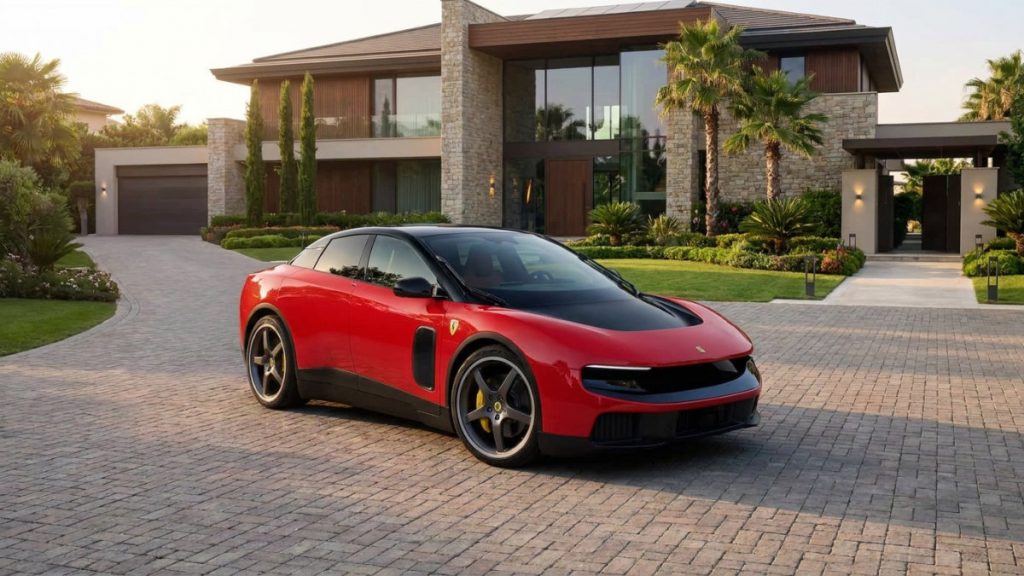
Ferrari Just Unveiled Its First EV And the Internet Is Already at War Over It
05/27/2026 · Ride Legal
Ferrari dropped a bombshell on May 25, 2026.
The Italian automaker finally revealed its first fully electric car, the Ferrari Luce. The name means “light” in Italian. But the reaction from fans, critics, and Wall Street was anything but enlightening.
Within 24 hours, Ferrari stock fell 8.4% in Milan trading and U.S.-listed shares slid 5.3%, according to the Associated Press. The internet lit up with criticism. And serious questions are now swirling about what this means for the future of Ferrari and for anyone thinking about buying one.
What the Ferrari Luce Actually Is And Why It Sparked Such a Fierce Reaction
Let’s start with the specs, because they are genuinely impressive.
The Luce delivers 1,000 horsepower. It sprints from 0 to 60 miles per hour in 2.5 seconds. It carries a range of more than 329 miles. It also has four electric motors (one for each wheel) and seats five passengers. Italian media reported the sticker price in Italy at 500,000 euros, according to the Associated Press. U.S. pricing has not been announced.
Ferrari president John Elkann even introduced the car to Pope Leo XIV at Castel Gandolfo. The Pope climbed into the driver’s seat.
So the car has presence. It has power. It has papal co-signs.
And yet the backlash came fast.
Why Critics and Fans Say the Luce Doesn’t Feel Like a Ferrari
The core complaint isn’t about performance. It’s about identity.
Matt Prior, editor-at-large at Autocar, put it plainly. He acknowledged the interior is well done, but said the car doesn’t “shout Ferrari.” The reason, he explained, is structural: because there’s no engine, the battery sits under the floor. That raises the ride height. That kills the low, predatory stance Ferrari has spent decades perfecting.
“For a company whose entire history is based on making dynamic-looking sleek cars, it’s maybe harder for Ferrari to get around than it is for other manufacturers,” Prior told the Associated Press.
Robby DeGraff, manager of product and consumer insights at AutoPacific, called the Luce “perhaps the most controversial model to bear the stallion on its fenders.” He questioned whether the market even needs another ultra-expensive EV right now.
The critics aren’t wrong to raise these points. Ferrari’s visual language (the aggressive nose, the wide hips, the crouching roofline) has always communicated that this machine exists to go fast and look dangerous doing it. A five-seat EV with a taller profile reads differently. It reads like a grand tourer trying to wear a supercar’s badge.
Ferrari Is Making a Calculated Bet in an Uncertain Market
To be fair, Ferrari isn’t operating in a vacuum.
The European Union mandates a 90% reduction in tailpipe emissions by 2035. Electric car sales globally hit 20 million last year, marking one in every four new cars sold worldwide as electric, according to the International Energy Agency. European EV sales grew more than 30% in 2025.
Ferrari has invested billions in electrification. It already sells hybrid models. But it recently scaled back its target from 40% of its lineup being fully electric by 2030 down to 20%, according to the Associated Press.
The Luce is a hedge. It’s Ferrari saying: we can compete in emissions-regulated markets without abandoning combustion entirely.
That’s a reasonable business position. Still, the timing is complicated. EV adoption in the U.S. remains volatile, particularly given current policy uncertainty. Multiple global automakers have already pulled back from aggressive electrification timelines after absorbing significant financial losses. Launching a half-million-euro EV into that climate is a calculated risk.
What This Moment Reveals About the Exotic Car Market
Here’s what the Ferrari Luce controversy is really about.
Exotic car buyers aren’t just purchasing transportation. They’re purchasing identity, history, and a very specific emotional promise. A Ferrari isn’t supposed to make sense financially. It’s supposed to make you feel something before you even turn the key.
The moment a brand moves toward practicality (five seats, a higher roofline, a battery pack under the floor), some buyers feel that promise starts to erode. They worry the soul is being traded for market share.
That tension is real. And it won’t go away quietly.
At the same time, the Luce will find buyers. There are collectors and enthusiasts who want the first of anything Ferrari makes. There are buyers in highly regulated markets who need a compliant exotic. And there will always be a market for 1,000-horsepower anything with a prancing horse on the hood.
The question is whether Ferrari can maintain its premium mystique while expanding its buyer base. Right now, the market is voting no. Ferrari’s stock price and the comment sections agree on that.
If You’re Buying a High-End EV Like the Luce, Here’s What You Can’t Afford to Ignore
Here’s the part nobody talks about in the headlines.
A 500,000-euro exotic car comes with an enormous tax exposure at the time of purchase. In most states, sales tax on a vehicle at that price point can run well into five figures, sometimes reaching $30,000 to $50,000 or more depending on where you register it.
That’s capital you’re handing to the state on top of the purchase price. Before you ever drive it.
Ride Legal has helped more than 80,000 vehicle owners use a Montana LLC structure to register their vehicles compliantly, with zero sales tax, no DMV visit required, and plates that can ship in as little as one day.
It’s the same structure used by serious collectors, RV owners, yacht buyers, and yes, exotic car enthusiasts across the country. It works because Montana charges no sales tax on vehicle purchases, and an officially formed LLC in Montana can own and register the vehicle for you.
It’s simple: you own the LLC, and the LLC owns the car.
If you’re watching the Ferrari Luce and thinking about what the future of high-end EV ownership looks like, start by making sure you’re not leaving tens of thousands of dollars on the table before the car ever leaves the lot.
This is not legal or financial advice. Please consult your CPA/Attorney for all legal and financial guidance. Ride Legal is a privately owned website and is not operated by any government agency.